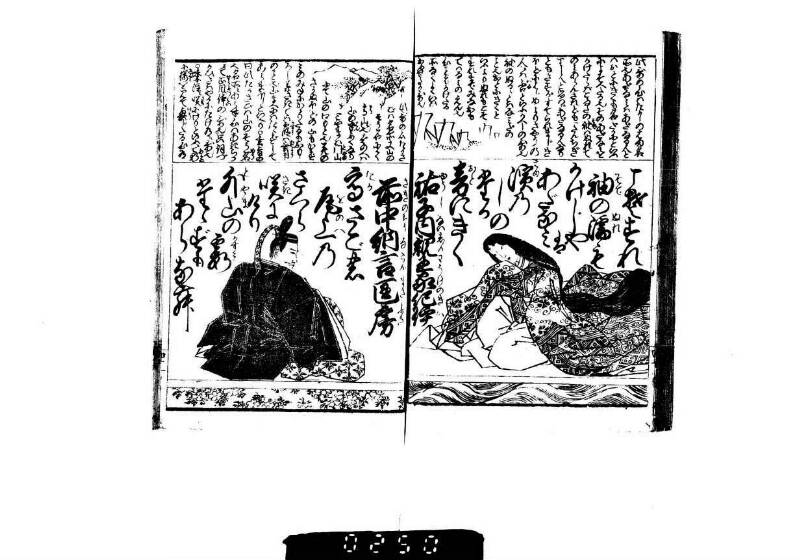
翻刻
【右頁中】 【見開き頁の中心から右に向かって書かれている】
こそすれ
袖(そで)の濡(ぬれ)も
かけじや
に
あだなみ
濱(はま)の
しの
たか
音(おと)にきく
祐子内親王家紀伊(ゆうしないしんわうけのきい)
【右頁上】
此哥の心はたかしのはま名
所也あだなみはあだなる人と
はおとにきくも名だかにといふ
によそへたる也そのあだなみを
かけたらばこなたの袖(そで)はぬれて
のみあらんされども一たんちぎ
りし人と思はゞあだなる人なり
ともさすがすてられまじき
ほどにはじめよりさやうの
人には否(いな)といふかへしの哥也
袖のぬるゝとはなみだの
こと也おとにきくと
いふよりぬれもこそ
すれまでみなおも
てはなみのえん也
心ことばかけたる
所なくよくいひ
あふせたるゝ哥也
【左頁中】
前中納言匡房(さきのちうなごんまさふさ)
高(たか)さごの
尾上(おのへ)の
さくら
咲(さき)にけり
外山(とやま)の霞(かすみ)
たゝずも
あらなむ
【左頁上】
此哥の心たかさ
ごは名所又山の
そう名にて
高(こう)山也をのへは
山の半(はん)ふくなり
とやまは門山(とやま)
にて山の口もと也花の
さかぬほどの山もかず
みのみねにかゝりたるもおもし
ろし花さきては霞(かすみ)は無用(むよう)
のこと也山まへにはたゝずして
あらまほしといへり〇玄旨の
曰此のたかさごは山のそう名(めう)
也名所にあらす心はあきらか
にて正風体(せうふうてい)の哥也只詞づ
かひさはやかにたけ有る哥也
〇季涯に咲(さき)にけりといふにて新(あらた)
に桜(さくら)を見て興(けう)じたる心有
現代語訳
【右頁中】
音に聞く
高師の浜の
あだ波に
濡れもこそすれ
袖のかけじや
祐子内親王家紀伊(ゆうしないしんのうけのきい)
【右頁上】
この歌の心は、高師の浜は名所である。「あだ波」は「あだなる人」と「音に聞く」も名高くということによそえたものである。そのあだ波をかけたならば、こちらの袖は濡れてしまうだろう。されども一度契りを交わした人と思えば、あだな人であってもさすがに捨てられないほどに、初めからそのような人には「いや」という返しの歌である。「袖の濡る」とは涙のことである。「音に聞く」ということから「濡れもこそすれ」まで、すべて表は波の縁である。心言葉をかけたところがなく、よく言い合わせた歌である。
【左頁中】
前中納言匡房(さきのちゅうなごんまさふさ)
高砂の
尾上の
桜
咲きにけり
外山の霞
立たずもあらなん
【左頁上】
この歌の心は、高砂は名所であり、また山の総名で高い山である。「尾上」は山の半腹である。「外山」は門山で山の入口である。花の咲かない頃の山も霞の峰にかかっているのも趣深い。花が咲いては霞は無用のことである。山の前には立たないでいてほしいと言っている。○玄旨の言うには、「この高砂は山の総名であり、名所ではない。心は明らかで正風体の歌である。ただ詞遣いがさわやかで威厳のある歌である」とある。○季涯によれば、「『咲きにけり』ということで新たに桜を見て興じた心がある」とある。
英語訳
【Right Page Center】
Famous though they are,
these fickle waves
of Takashi shore—
lest my sleeves get wet,
I shall not cast them there
Yūshi Naishinnō-ke no Kii
【Right Page Top】
The heart of this poem: Takashi shore is a famous place. "Fickle waves" is likened to "a fickle person" and "famous" refers to being well-known. If one were to cast those fickle waves, one's sleeves would surely get wet. However, thinking of someone with whom one has made a pledge, even if they are fickle, they cannot simply be abandoned—this is a reply poem saying "no" to such a person from the beginning. "Wet sleeves" refers to tears. From "famous" to "lest they get wet," everything on the surface relates to waves as a poetic association. There is no place where heart-words are employed, and it is a well-composed poem.
【Left Page Center】
Former Middle Counselor Masafusa
The cherry blossoms
on the peak
of Takasago
have bloomed—
if only the mist on the distant mountains
would not rise
【Left Page Top】
The heart of this poem: Takasago is a famous place and also a general name for mountains, being a high mountain. "Peak" refers to the middle slope of a mountain. "Distant mountains" refers to the entrance mountains at the foot of the mountain. Even when flowers are not blooming, mountains shrouded in mist over the peaks are interesting. When flowers bloom, mist becomes unnecessary. He wishes it would not rise before the mountains. According to Genshi's commentary, "This Takasago is a general name for mountains, not a famous place. The meaning is clear and it is a poem in the orthodox style. It is simply a poem with refreshing diction and dignity." According to Kigai, "The phrase 'have bloomed' shows a heart that takes pleasure in seeing cherry blossoms anew."