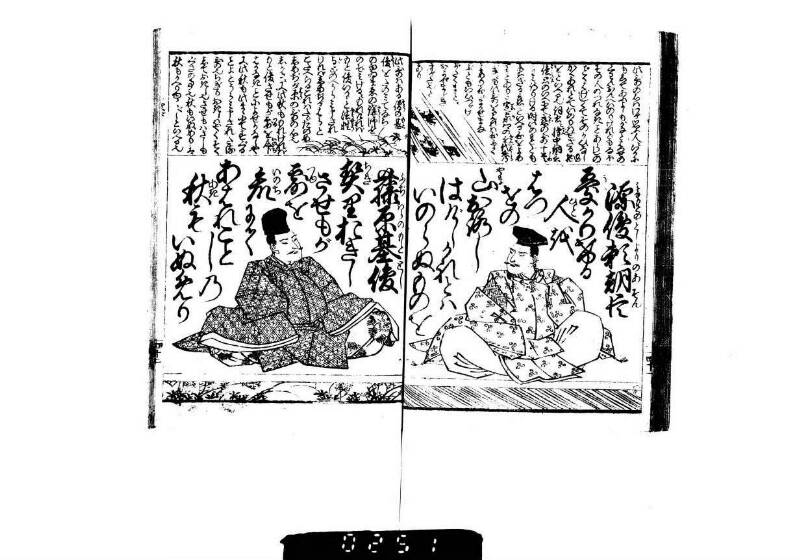
翻刻
【右頁中】
源俊頼朝臣(みなもとのとしよりのあそん)
憂(う)かりける
人(ひと)の
はつ
をの
山(やま)おろし
はげしかれとは
いのらぬものを
【右頁上】
此哥の心はわが思ふ人にいかに
もしてあふよしもがなとはつせの
くわんおんへいのりけれどもなほ
そのひとのつれなきことあらしの
ごとくはげしくてそのかひなし
かくあれとていのりはせざる物(もの)
をといへる也詞書に権(ごん)中納言
俊忠(としたゞ)のいへにて恋(こひ)の哥十 首(しゆ)【別刷はルビなし】
よみ侍りける時いのれども
あはざ【別刷は濁点なし】 る恋といへる心をよめ
りとあり〇 定家(ていか)卿の近代秀(きんだいしう)
歌にも此哥を見れは心ふかく
よめり心にまかせまな
ぶともいひつゞけ
がたくまことに
およぶまじき
すがた也と
あり
【左頁中】
藤原元俊(ふじわらのもととし)
契(ちぎり)りおきし
させもが
露(つゆ)を
命(いのち)にて
あはれことしの
秋(あき)もいぬめり
【左頁上】
此哥はある僧(そう)の基(もと)
俊(とし)をたのみてなら
のゆゐまゑの講師(かうし)を
のぞみけるにもれければ
もと俊いかゞと法性(ほうせう)
寺(じ)【別刷は「じ」のルビなし】 どのへうらみ申され
ければしめぢがはらと
こたへらるこれはたゞたのめ
しめちが原(はら)の哥の心也
しかるに又此秋ももれければ
もと俊させもが露(つゆ)を命(いのち)
はかなきことによせかなしや
又此秋も此まゝにてすぐる
ことよとうらみ申されたる
哥也ちぎりおきしはやくそく
しておきし也させもはさしも
ぐさの事也秋もいぬめりは
秋もかへりゆくべしといへる也
現代語訳
【右頁中】
源俊頼朝臣(みなもとのとしよりあそん)
憂かりける
人の初瀬の
山おろし
激しかれとは
祈らぬものを
【右頁上】
この歌の心は、私の思う人にどうにかして会う方法があればよいのにと初瀬の観音へ祈ったけれども、なおその人のつれないことが嵐のように激しくて、その甲斐がない。このようであれと祈ったわけではないのに、と言っているのである。詞書に「権中納言俊忠の家にて恋の歌十首を詠み侍りける時、祈れども会わざる恋という心を詠めり」とある。○定家卿の『近代秀歌』にもこの歌を見れば「心深く詠めり。心にまかせ学ぼうとも言い続けがたく、まことに及ぶまじき姿である」とある。
【左頁中】
藤原元俊(ふじわらのもととし)
契りおきし
させもが露を
命にて
あはれ今年の
秋もいぬめり
【左頁上】
この歌は、ある僧が元俊を頼んで奈良の唯摩会の講師を望んだけれども漏れたので、元俊に「いかがでしょうか」と法性寺殿へ恨み申されたところ、「しめぢが原」と答えられた。これは「ただ頼め しめぢが原の」の歌の心である。しかるに又この秋も漏れたので、元俊は「させもが露を命」という儚いことに寄せて、「悲しいことに、また今年の秋もこのままで過ぎることよ」と恨み申された歌である。「契りおきし」は約束しておいたということである。「させも」は「さしも草」のことである。「秋もいぬめり」は秋も帰っていくだろうと言っているのである。
英語訳
【Right Page Center】
Minamoto no Toshiyori Ason
How bitter it was—
this mountain wind from Hatsuse
of the one I love—
though I never prayed
for it to blow so fierce
【Right Page Top】
The heart of this poem: Though I prayed to the Kannon of Hatsuse for some way to meet the person I love, that person's coldness remains fierce like a storm, and my prayers were in vain. I never prayed for it to be this way, he says. The headnote states: "When composing ten love poems at the house of Provisional Middle Counselor Toshitada, he composed this expressing the heart of 'love where prayers go unanswered.'" According to Lord Teika's "Outstanding Poems of Recent Times," regarding this poem: "It is composed with deep feeling. Even if one wished to learn it by heart, it would be difficult to recite continuously—truly it has an incomparable form."
【Left Page Center】
Fujiwara no Mototoshi
With the promised
artemisia dew
as my very life—
alas, this year's autumn too
seems to be departing
【Left Page Top】
This poem: A certain monk relied on Mototoshi and sought to become a lecturer at Nara's Yuima-e, but was not selected. When Mototoshi complained to the Lord of Hōshōji asking "How about this?", he replied "shimejigahara." This refers to the heart of the poem "Just rely on me, shimejigahara." However, when he was passed over again this autumn, Mototoshi, relating it to the transience of "artemisia dew as life," composed this poem complaining: "How sad that this year's autumn too passes by just like this." "Having made a promise" means having made an agreement beforehand. "Sasemo" refers to "artemisia grass." "Autumn too seems departing" means autumn too will return and go away.