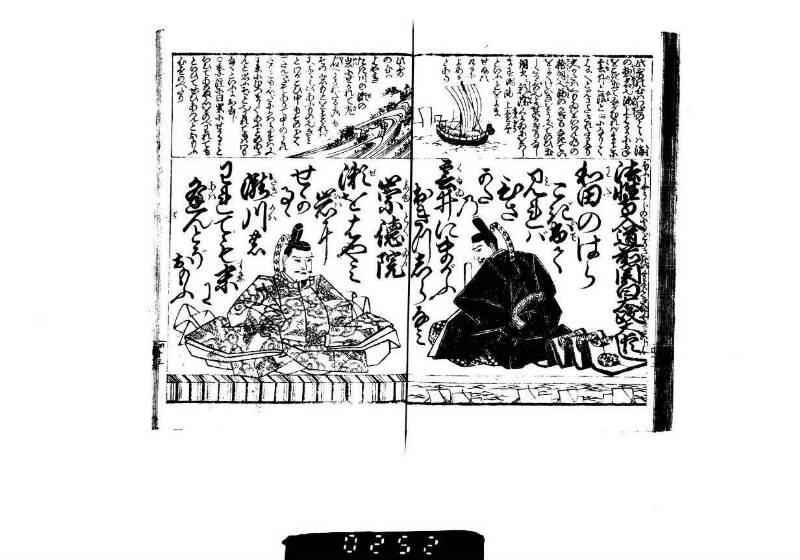
翻刻
【右頁中】
法性寺入道前関白太政大臣(ほうしやうじのにうどうさきのくわんばくだいじやうだいじん)
和田(わだ)のはら
こぎ出(いで)【別刷はルビなし】 て
見(み)れば
ひさ
かたの
雲井(くもゐ)にまがふ
おきつしらなみ
【右頁上】
此哥の心はわだのはらは海(うみ)
の惣名(そうめう)也 海上(かいせう)はるかにふね
をこぎ出てなかむれば【別刷は「は」】まことに
雲井(くもゐ)と浪(なみ)と一つになりて
はる〴〵と見わたされたるなり
久かたはくもゐをいはん為の
枕詞(まくらことば)也 海(うみ)のかぎりなきてい
をよくけいきをうかべ【別刷は「へ」】ていひ出
したる哥也よせいかぎりなし
詞書に新院(しんいん)くらゐにをはし
ます時海上 遠望(えんぼう)
といふことをよま
せ給ひ
けるに
よめる
とあり
【左頁中】
崇徳院(しゆとくゐん)
瀬(せ)をはやみ
岩(いは)に
せか
るゝ
瀧川(たきがわ)の
われても末(すゑ)に
逢(あは)んとぞ
おもふ
【左頁上】
此哥
の心は
はやき
たき川の瀬(せ)の
岩(いは)にせかれて左(さ)
右(いう)へわかれたる水も
その岩もとをすぐれば
又ふたたびあふもの也きみ
とはがこひ中もそのごとく
一たんへだてありて中のわれ
たりとも心だにかはらずは又
すゑにむつましくあふことのあら
んと思ふぞと也われてもはわり
なくといふにおなじ【別刷は「し」】
〇季注に曰岩にせかるゝと
いひてあはぬ心をのべわれても
といひてぜひあはんとおもふ
心をのへたり
海上
現代語訳
【右頁中】
法性寺入道前関白太政大臣(ほうしょうじにゅうどうさきのかんぱくだいじょうだいじん)
和田の原
漕ぎ出でて
見れば
久方の
雲居にまがう
沖つ白波
【右頁上】
この歌の心は、和田の原は海の総称である。海上はるかに船を漕ぎ出して眺めてみれば、まことに雲居と波とが一つになって、はるばると見渡されるのである。「久方」は雲居を言うための枕詞である。海の限りないようすをよく景色を浮かべて言い出した歌である。余情限りなし。詞書に「新院が皇位におられた時、海上遠望ということを詠ませなさったときに詠んだ」とある。
【左頁中】
崇徳院(すとくいん)
瀬を早み
岩に
せかるる
滝川の
われても末に
逢わんとぞ
思う
【左頁上】
この歌の心は、早い滝川の瀬の岩にせき止められて左右へ分かれた水も、その岩もとを過ぎれば又再び合うものである。君と私の恋仲もそのとおりで、一旦隔てがあって仲が分かれたとしても、心だけは変わらなければ又末に親しく会うことがあるだろうと思う、ということである。「われても」は「割りなく」というのと同じ。○季注に曰く「岩にせかるる」と言って会わない心を述べ、「われても」と言って是非会おうと思う心を述べた、とある。
英語訳
【Right Page Center】
Hōshōji Lay Priest, Former Regent and Grand Minister of State
From Wada Bay
rowing out
and gazing—
the distant white-capped waves
upon the offing
merge with the eternal
realm of clouds
【Right Page Top】
The heart of this poem: "Wada no hara" is a general name for the sea. When one rows a boat far out to sea and gazes upon it, truly the realm of clouds and the waves become one, stretching endlessly into the distance. "Hisakata" is a makura-kotoba (pillow word) used before "cloud realm." This is a poem that skillfully evokes the scenery and expresses the boundless appearance of the sea. Its lingering emotion is limitless. The headnote states: "Composed when the Retired Emperor Shin'in, while on the throne, had poems composed on the theme 'Distant View of the Sea.'"
【Left Page Center】
Sutoku-in (Emperor Sutoku)
The rapids so swift—
the torrent blocked
by rocks
divides, yet I believe
we shall meet again
at the river's end
【Left Page Top】
The heart of this poem: Even when the water of a swift torrent is blocked by rocks in the rapids and divides to left and right, once it passes around those rocks, it meets again. The love between you and me is the same—even if there is a temporary separation and our relationship divides, as long as our hearts remain unchanged, I believe we will intimately meet again in the end. "Warete mo" means the same as "wari naku" (unreasonably/helplessly). The Ki-chū commentary states: By saying "blocked by rocks," he expresses the feeling of not being able to meet; by saying "warete mo," he expresses the feeling of definitely wanting to meet.