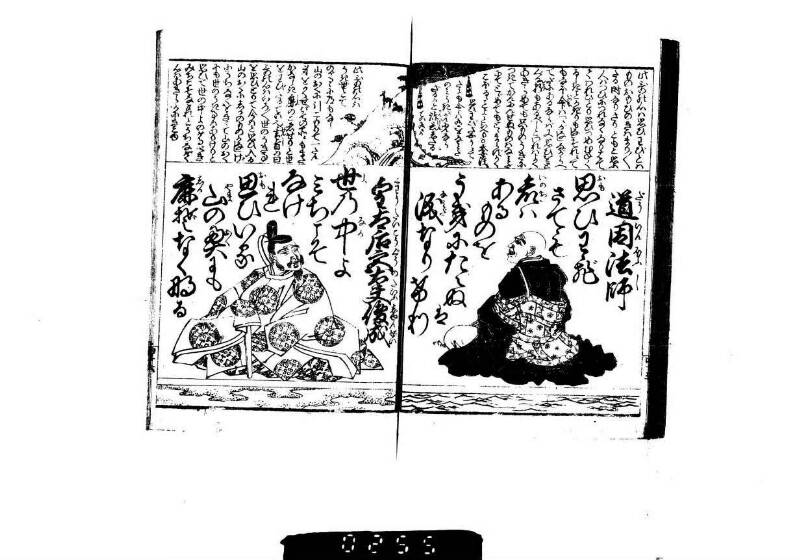
翻刻
【右頁中】
道因法師(だういんほふし)
思(おも)ひわび
さても
命(いのち)は
ある
ものを
うきにたえぬは
涙(なみだ)なりけり
【右頁上】
此哥の心は思ひわびとは
もの思ひのきはまり〳〵
たる時なりさりともと思ふ
人はつひにつれなくなりはて
てわれひとり思ひつめむねく
るしきことかぎりもなしそれにて
もなほ命(いのち)はつゝがなしながらへ
てだにあるならば又おもひをと
ぐる折(をり)もあるべしとわれはよく
あきらめても只ものうきに
つきてかんにんせぬものはなみだ
にてとゞめてもとゝまらずかく
こぼるゝことよといへり〇季注に
思ひわびさやうにて
だにも命は有をなみだ
のみうきにかんにんなら
ざるかと諫言(かんげん)したる
てい有か
【左頁中】
皇太后宮大夫俊成(くわうたいこうぐうのたいふしゆんぜい)
世(よ)の中(なか)よ
みちこそ
なけ
れ
思(おも)ひいる
山(やま)の奥(おく)にも
鹿(しか)ぞなくなる
【左頁上】
此哥の心は
うき世とて
のがるゝに道もなし
山のおくに引こもりて一たん
身をかくせばその所にもまた
かなしき鹿(しか)のこゑせりと世
をわびたるてい也玄旨(げんし)の曰
哥の心はいろ〳〵世のうき事
を思ひとりて今はと思ひ入る
山のおくに鹿のものかなしげ
にうちなくをきゝて山のおく
にも世のうき事はありけりと
思ひて世の中よのがるべき
みちこそなけれとうちなげく
心はあきらかにきこゆ
現代語訳
【右頁中】
道因法師(どういんほうし)
思い侘び
さても
命は
ある
ものを
憂きに堪えぬは
涙なりけり
【右頁上】
この歌の心は、思い侘びとは物思いが極まりに極まった時のことである。さりともと思う人はついにつれなくなってしまって、私一人思い詰め、胸苦しいことが限りもない。それでもなお命は無事で、長らえてでもあるならば、また思いを遂げる機会もあるだろうと、私はよく諦めても、ただ物憂きについて我慢できないものは涙で、止めようとしても止まらず、こうして溢れることよと言っている。○季吟の注に、「思い侘び、そのようであっても命はあるのに、涙のみが憂きに我慢できないのか」と諫言したような様子がある。
【左頁中】
皇太后宮大夫俊成(こうたいこうぐうのたいふしゅんぜい)
世の中よ
道こそ
なけれ
思い入る
山の奥にも
鹿ぞ鳴くなる
【左頁上】
この歌の心は、憂き世といって逃れる道もない。山の奥に引きこもって一旦身を隠せば、その所にもまた悲しい鹿の声がするということで、世を侘びた様子である。玄旨の曰く、歌の心はいろいろ世の憂いことを思い取って、今はもうと思い入る山の奥に、鹿が物悲しげに鳴くのを聞いて、山の奥にも世の憂いことはあったのだと思って、「世の中よ、逃れるべき道こそなけれ」と嘆く心は明らかに聞こえる。
英語訳
【Right Page Center】
Priest Dōin
Weary of longing,
even so
my life
continues—
but what cannot bear
this sorrow are my tears.
【Right Page Top】
The heart of this poem: "Weary of longing" refers to when one's romantic thoughts have reached their absolute limit. The person I thought would surely reciprocate has become completely indifferent, and I alone am consumed with thoughts, with endless heartache. Even so, my life continues unharmed, and as long as I live on, there may come another opportunity to fulfill my feelings—though I resign myself well to this, the only thing that cannot endure this melancholy are my tears, which flow unstoppably no matter how I try to stop them. ○Kigin's commentary suggests an admonishing tone: "Though you are weary of longing, your life continues—are only your tears unable to bear this sorrow?"
【Left Page Center】
Kōtaikōgū-no-Taifu Shunzei (Imperial Advisor Shunzei)
O world—
there is no path
of escape!
Even deep
in the mountains
where I retreat,
the deer cry mournfully.
【Left Page Top】
The heart of this poem: There is no path to escape from this sorrowful world. Even when one withdraws deep into the mountains to hide oneself away, there too the sad voice of deer can be heard—expressing one's weariness with the world. Genshi says: The heart of the poem takes in all the sorrowful matters of the world, and when retreating deep into the mountains thinking "this is the end," hearing deer cry so mournfully, one realizes that even in the mountain depths there are sorrowful things of this world, and the heart that laments "O world, there is no path of escape" is clearly heard.