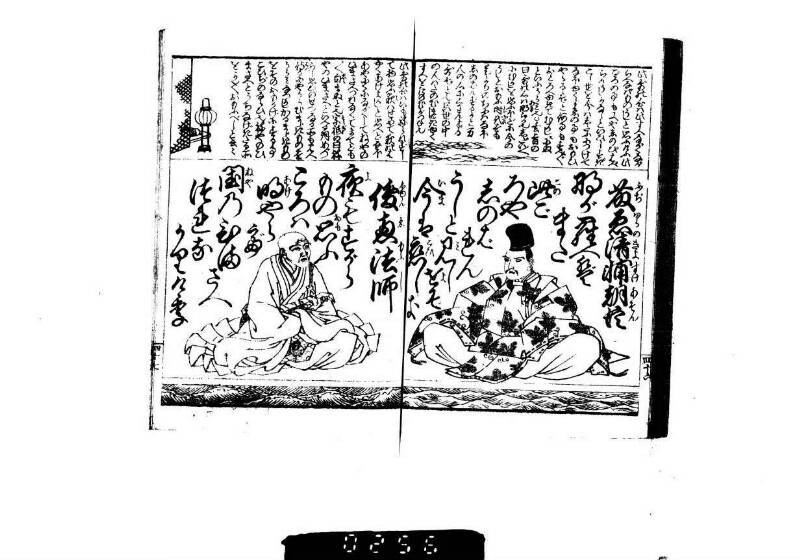
翻刻
【右頁中】
藤原清輔朝臣(ふぢはらのきよすけあそん)
ながらへば
また
此(この)ご
ろや
しのば
れん
うしと見(み)し
世(よ)そ
今(いま)は恋(こひ)しき
【右頁上】
此哥の心は此すへながくなが
らへなばものうしと思ふけふ此
ごろの事も又やしのびはべ
らんうしかなしといひしすぎ
たし世を今はしたふにつけて
なほゆくすゑの事もおもひ
やらるゝぞと何事もすへ〴〵
おとろへゆきてむかしににぬ
といふうらみ也〇玄旨の
曰此哥の心は明(あき)らか也しだい〳〵
にむかしを思ふほどに今の
うしとおもふ時代(じだい)をも
是よりのちにはなほ
しのばんするかと万
人の心にくわんずる
哥ぞと也只世の中
の人はたのむまじきゆく
すへをたのむかつね也
【左頁中】
俊惠法師(しゆんゑほふし)
夜(よ)もすがら
もの思(おも)ふ
ころは
明(あけ)やら
で
閨(ねや)のひまさへ
つれな
かりけり
【左頁上】
此哥の心はいもねられずし
て物思ふ夜(よ)はせめて夜のは
やくあけよかしと思へどなほ
あやにくにながくしてねやの
ひまさへつれなくてまてども
〳〵白(しら)まぬと也 宗祇(そうぎ)の曰ね
やのひまさへといへる詞めづ
らし思ひのせつなる所も見へ
侍(はべ)るにやうらむまじきものを
うらみなつかしかるまじきもの
をそのおもかげにする事
こひぢのならひ也ねやのひ
まさへとうちなげきたる所
をよく〳〵おもふべしと云々
現代語訳
【右頁中】
藤原清輔朝臣(ふじわらのきよすけあそん)
長らえば
また
この頃や
偲ばれん
憂しと見し
世ぞ
今は恋しき
【右頁上】
この歌の心は、この先長く長らえるならば、物憂しと思う今日この頃のことも、また懐かしく思われるだろうか。憂く悲しいと言った過ぎ去った世を今は慕うにつけて、なお行く末のことも思いやられるぞということで、何事も次第に衰えていって昔に及ばないという嘆きである。○玄旨の曰く、この歌の心は明らかである。次第に昔を思うほどに、今の憂しと思う時代をも、これより後にはなお懐かしむだろうかと、万人の心に感じる歌であると。ただ世の中の人は頼むまじき行く末を頼むのが常である。
【左頁中】
俊恵法師(しゅんえほうし)
夜もすがら
物思う
頃は
明けやらで
閨の隙さえ
つれなかりけり
【左頁上】
この歌の心は、眠ることもできずに物思いする夜は、せめて夜が早く明けてほしいと思うけれど、なおあいにく長くて、閨の隙間さえもつれなくて、待てども待てども白まないということである。宗祇の曰く、「閨の隙さえ」と言った言葉は珍しく、思いの切実な所も見えるだろうか。恨むまじきものを恨み、懐かしかるまじきものをその面影にすることは、恋路の習いである。「閨の隙さえ」と嘆いた所をよくよく思うべしと云々。
英語訳
【Right Page Center】
Fujiwara no Kiyosuke Ason
If I live long,
will I again
fondly remember
these present days?
This world I saw
as painful
now seems dear to me.
【Right Page Top】
The heart of this poem: If I continue to live long into the future, will I again fondly remember these current days that I find so melancholy? As I now yearn for the past world that I called painful and sad, I can imagine how things will be in the future as well—this expresses the lament that everything gradually declines and cannot match the past. ○Genshi says: The heart of this poem is clear. As one increasingly thinks of the past, even this present era that we find painful—will we not also long for it in times to come? This is a poem that resonates with everyone's heart. It is simply human nature to rely on a future that should not be relied upon.
【Left Page Center】
Priest Shun'e
All through the night
when I am lost
in thought,
dawn will not come,
and even the gaps
in my bedroom walls
seem heartless.
【Left Page Top】
The heart of this poem: On nights when I cannot sleep and am lost in thought, I wish at least for the night to end quickly, but unfortunately it drags on, and even the gaps in my bedroom walls seem heartless, as I wait and wait but dawn never comes. Sōgi says: The phrase "even the gaps in my bedroom walls" is remarkable, and shows how intense his feelings are. To resent what should not be resented, to find dear what should not be dear—this is the way of love's path. One should carefully contemplate the place where he laments "even the gaps in my bedroom walls."