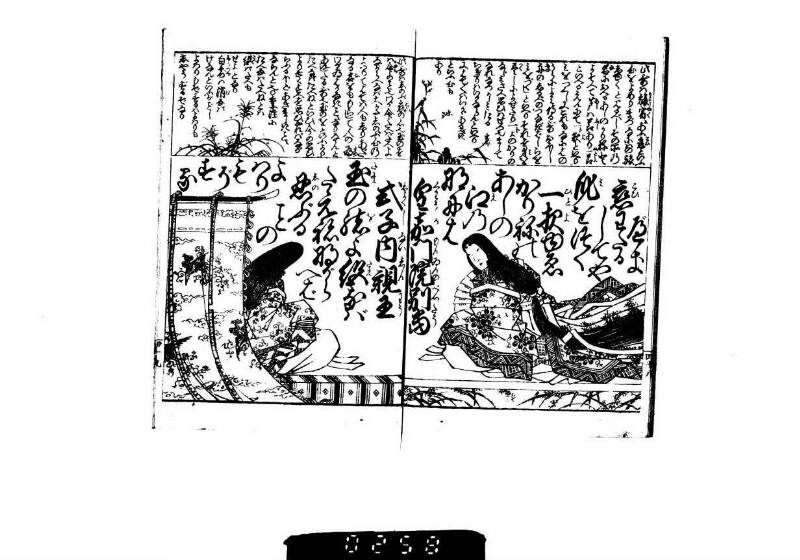
翻刻
【右頁中】 【(見開き頁の中心から右に向かって書かれている)】
べき
恋(こひ)わたる
してや
身(み)をつく
一夜(ひとよ)ゆゑ
かりねの
あしの
江(え)の
なには
皇嘉門院別当(くわうかもんゐんのべつたう)
【右頁上】
此哥は旅宿(りよしゆく)にあふ恋(こひ)といふ
心をよめりまづなにはの旅
しゆくと見るべしその所の
名(な)におへるあしのかりねと
よそへて芦((あし)【(別刷はルビなし)】は節(ふし)あり一節(ひとよ)
といへるえんにて一ト夜といへり
みをづくし又これもなにはの
うらによみ侍る哥おほし
舟(ふね)のしるべのつなぎばしらを
みをづくしといへりそれを身(み)を
尽(つく)しによせたり一トよのかりの
なじみさへ思ひはせつ也まして
なれなつかしみたる
ちぎりはいつならんといへり
又はて〳〵はいかゞあるべき
といふ心も
あり
【左頁中】
式子内親王(しよくしないしんわう)
玉(たま)の緒(を)よ絶(たえ)なば
たえねながら
へば
忍(しの)ぶる
ことの
よ
はり
も
ぞ
す
る
【左頁上】
此哥はしのぶ恋(こひ)の心也玉のを
は命(いのち)のこと也わが命たへば【(別刷は濁点なし)】たへよ
ながらへなば大かたしのぶ心の
よはりてはては人もしりあだ
なる名(な)をももらして人の為(ため)
わが為はかなきことになりなんと
あんじたる哥也玉のをといふより
たへなばたへねといひ今の思ひ
よりゆくすへを思ひやればなが
らふるほどあさましきことに
ならんと也〇季注に
たへなばたへねとは
絶(たへ)ばたへも
せよとなり
白露(しらつゆ)は消(け)なば
けなんといふがごとし
よはりもぞするはよはりも
しやうずるぞなり
現代語訳
【右頁中】
皇嘉門院別当(こうかもんいんのべっとう)
難波江の
芦のかりねの
一夜ゆえに
身をつくしてや
恋わたるべき
【右頁上】
この歌は旅宿で出会う恋という心を詠んだものである。まず難波の旅宿と見るべきである。その所の名にちなんだ葦の「かりね」と寄せて(葦は節があり、一節を「ひとよ」ということから「一夜」と言った)、身を尽くし(これも難波の浦に詠む歌に多い。船の標識の繋ぎ柱を「みをづくし」と言い、それを「身を尽くし」に寄せた)一夜の仮の馴染みさえ思いは切ないものである。ましてや馴れ親しんだ契りはいつになることだろうかと言っている。また、果ては一体どうなることだろうかという心もある。
【左頁中】
式子内親王(しょくしないしんのう)
玉の緒よ
絶えなば絶えね
ながらえば
忍ぶることの
弱りもぞする
【左頁上】
この歌は忍ぶ恋の心である。玉の緒は命のことである。わが命よ絶えるなら絶えよ、長らえるならば、おおかた忍ぶ心が弱って、ついには人も知り、いけない評判も漏らして、人のためにも自分のためにもはかないことになってしまうだろうと案じた歌である。「玉の緒」というところから「絶えなば絶えね」と言い、今の思いから行く末を思いやれば、長らえるほどにあさましいことになるだろうということである。○季吟の注に「絶えなば絶えね」とは「絶えるなら絶えてしまえ」ということになる。「白露は消えなば消えなん」というのと同じである。「弱りもぞする」は「弱りもするであろう」という意味である。
英語訳
【Right Page Center】
Kōkamon'in no Bettō
At Naniwa Bay,
on a single night's
temporary sleep
among the reeds—
should I exhaust myself
with endless longing?
【Right Page Top】
This poem expresses the heart of love encountered at a travel lodging. First, it should be understood as a travel lodging in Naniwa. It uses a play on words with "karine" (temporary sleep) of the reeds (ashi) famous in that place—since reeds have joints (fushi), and one joint is called "hitoyo," it refers to "one night" (hitoyo). "Miwozukushi" (exhausting oneself) also appears often in poems about Naniwa Bay—the mooring posts that serve as ship markers are called "miwozukushi," which is used as a pun for "exhausting oneself." Even a single night's temporary intimacy brings intense longing. How much more so would a familiar, cherished bond be? It also contains the sentiment wondering what will ultimately become of it all.
【Left Page Center】
Princess Shokushi
O cord of life,
if you must break, then break!
If I live on,
my power to keep
this secret love may weaken.
【Left Page Top】
This poem expresses the heart of secret love. "Tama no o" (cord of jewels) refers to one's life. "If my life must end, let it end; if I live on, my heart's ability to keep this secret will likely weaken, and eventually people will know, and scandalous rumors will spread, bringing ruin both to that person and to myself"—this is what the poem expresses with such concern. From "tama no o" comes "taenaba taene" (if it breaks, let it break), and thinking from present feelings to the future, the longer one lives, the more shameful things will become. ○ In Kigin's commentary, "taenaba taene" means "if it must break, then let it break completely." It's the same as saying "shiratsuyu wa kienaba kien" (if the white dew must vanish, let it vanish). "Yowari mo zo suru" means "it will likely weaken."