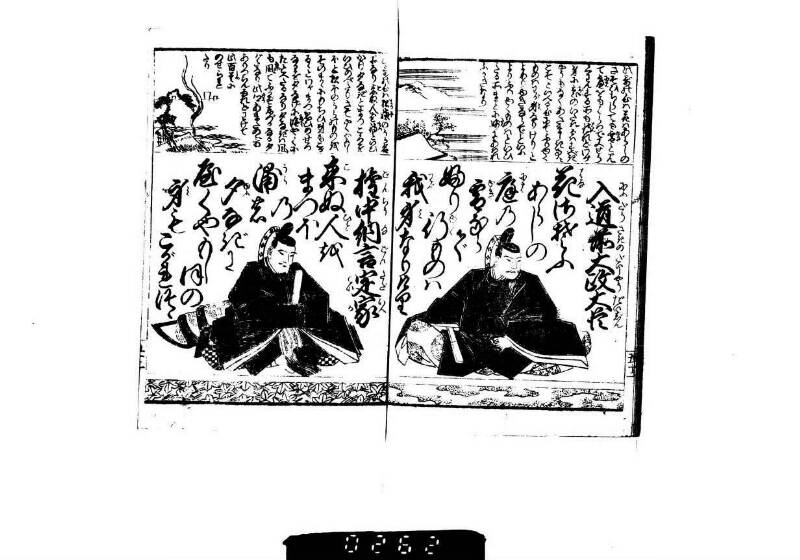
翻刻
【右頁中】
入道前太政大臣(にふだうさきのだいしやうだいじん)
花(はな)さそふ
あらしの
庭(には)の
雪(ゆき)なら
で
ふり行(ゆく)ものは
我身(わがみ)なりけり
【右頁上】
此哥の心は花はあらしの
さそひちらしても雪(ゆき)と見
て庭(にわ)をもはらはで又せう
くわんする所も侍(はべ)れどわが
身に老(おい)のいたれるはすべき
やうもなくあさましきことに
こそといへる心にてふりゆく
ものはわが身(み)なりけりと
よめりゆきならでといふ
よりふりゆくものはといひ
たる所まことに妙(たへ)にあはれ
ふかきなり
【左頁中】
権中納言定家(ごんちうなごんさだいへ)【(「定家」に「ていか」の左ルビあり)】
来(こ)ぬ人(ひと)を
まつほ
の
浦(うら)の
夕(ゆふ)なぎに
やくやもしほの
身(み)もこがれつゝ
【左頁上】
此哥の心は松穂(まつほ)のうら名
所なり来(こ)ぬ人を待(まつ)といひ
かけ夕なぎだとまつころを
いひのべたりさてやくやもし
ほと松ほのうらのものを
そのまゝにもちひ身もこが
るゝとわがまつ思ひのせつ
なるを夕なげに塩(しほ)やくに
たとへたるなり夕なぎは風
も凪(なげ)てふかずしづかなる夕
がたなり此 卿(けう)あまたの哥
ありつらんなれどわけて
此百 首(しゆ)に
のせられ
たり
現代語訳
【右頁中】
入道前太政大臣(にゅうどうさきのだいじょうだいじん)
花誘う
嵐の
庭の
雪なら
で
降り行くものは
我が身なりけり
【右頁上】
この歌の心は、花は嵐に誘われて散っても、雪と見て庭を払わずに、また賞観する所もあるけれど、我が身に老いが到れるのはどうすることもできず、情けないことであると言う心で、「降り行くものは我が身なりけり」と詠んだ。「雪ならで」と言うより「降り行くものは」と言った所、まことに巧妙で哀れ深い。
【左頁中】
権中納言定家(ごんちゅうなごんさだいえ)
来ぬ人を
松帆の
浦の
夕凪に
焼くや藻塩の
身もこがれつつ
【左頁上】
この歌の心は、松帆の浦は名所である。来ぬ人を待つと言いかけ、夕凪だと松の頃を述べた。さて「焼くや藻塩」と松帆の浦のものをそのまま用い、身もこがれると、我が待つ思いの切なるを夕凪に塩を焼くに例えたのである。夕凪は風も凪いで吹かず静かな夕方である。この卿は多くの歌があったであろうが、特にこの百首に載せられた。
英語訳
【Right page center】
Nyūdō Former Grand Minister (Nyūdō Saki no Daijō-daijin)
What the storm
scatters—not
the snow
in the garden
with flowers,
but my own body
grows old
【Right page top】
The heart of this poem: Though flowers may be scattered by storms and appear as snow in the garden, which one might not sweep away and could even admire, the aging that has come to my body is unavoidable and lamentable. With this sentiment, he composed "what falls is my own body." From saying "not snow" to "what falls," this is truly skillful and deeply moving.
【Left page center】
Gon-Chūnagon Teika (Associate Middle Counselor Teika)
Waiting for one
who does not come
at Matsuho
Bay
in the evening calm—
burning seaweed salt,
my heart too burns with longing
【Left page top】
The heart of this poem: Matsuho Bay is a famous place. He plays on "waiting (matsu) for one who does not come" and describes the time of evening calm at the pines (matsu). Then using "burning seaweed salt" as something from Matsuho Bay directly, he says "my heart burns too," comparing the intensity of his waiting thoughts to burning salt in the evening calm. Evening calm is a quiet evening time when the wind is still and does not blow. This lord must have had many poems, but this one was particularly selected for inclusion in this hundred poems collection.