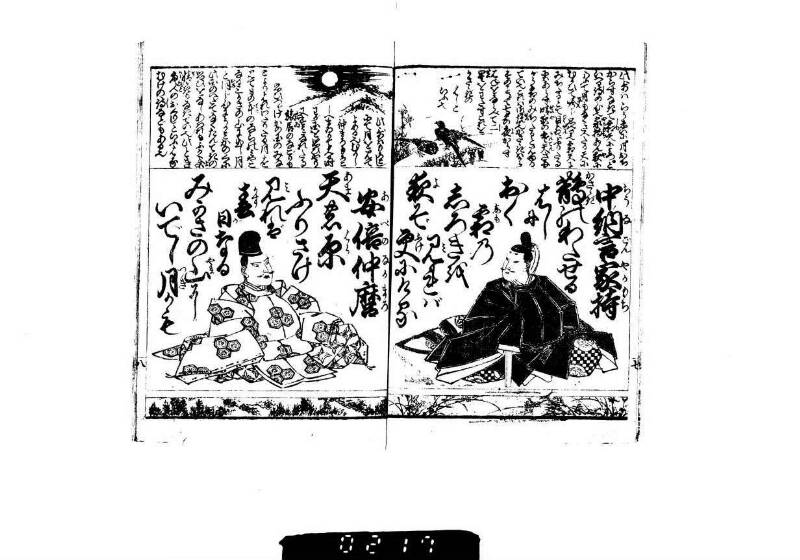
翻刻
【右頁中】
中納言家持(ちうなごんやかもち)
鵲(かさゝぎ)のわたせる
はし
に
おく
霜(しも)の
しろきを
見(み)れば
夜(よ)ぞ
更(ふけ)にける
【右頁上】
此哥はらうゑい【朗詠】に月おち
からすなきて霜(しも)天にみつと
いへる詩(し)の心也 家持(やかもち)あん夜(や)に
あふて月もなくさへたる天に
むかひて吟(きん)じ思へる也霜天に
みちたるとて目前(もくぜん)にふりたる
にはあらず晴夜(せいや)の寒天(かんてん)さな
がら霜のみちたると見ゆる
てい也これは御 説(せつ)也かさゝぎはから
すのことにて七夕の夜(よ)からす
はねをならべて二(じ)
星(せい)をわたすこれを
かさゝぎの
はしと
いふ也
【左頁中】
安倍仲麿(あべのなかまろ)
天(あま)の原(はら)
ふりさけ
見(み)れば
春(かす)
日(が)なる
みかさの山(やま)に
いでし月(つき)かも
【左頁上】
此哥はもろこし
にて月を見て
よめる也むかし
仲まろもろこ
しへまゐりてかへる時
わが国を思ひやり
又すみなれたる
旅居(たびゐ)のなごりも
思ひつゞけかの国のみな
とよりはれわたりたる月を
見て日の本(もと)のならのみやこ
なる三かさの山に出し月
と同(おな)じ心にうかみかのくに
此国のへだてなくたんてき【端的】の
思ひをなしあはれもふかく余(よ)
情(せい)かぎりなきてい也此とき
唐人(からびと)のおくりしといふはな
むけの詩(し)などもある也
現代語訳
【右頁中】
中納言家持
鵲の渡せる
橋に
置く
霜の
白きを
見れば
夜ぞ
更けにける
【右頁上】
この歌は朗詠に「月落ち烏鳴きて霜天に満つ」という詩の心である。家持が暗夜に遭って月もなく冷えた天に向かって吟じ思ったのである。霜天に満ちたというのは目の前に降ったのではなく、晴夜の寒天がそのまま霜で満ちたと見える様子である。これは御説である。鵲は烏のことで、七夕の夜に烏が羽を並べて二星を渡す、これを鵲の橋というのである。
【左頁中】
安倍仲麿
天の原
振り仰け
見れば
春日なる
三笠の山に
出でし月かも
【左頁上】
この歌は中国で月を見て詠んだものである。昔、仲麿が中国へ参って帰る時、わが国を思いやり、また住み慣れた旅居の名残も思い続け、かの国の港より晴れ渡った月を見て、日本の奈良の都にある三笠の山に出た月と同じ心に浮かび、かの国この国の隔てなく率直な思いをなし、哀れも深く余情限りない様子である。この時、唐人が送ったという餞別の詩なども ある。
英語訳
【Right Page Middle】
Chūnagon Yakamochi
On the bridge
That the magpies
Have built across—
Seeing the whiteness
Of the frost
That lies there,
I know the night
Has grown late
【Right Page Top】
This poem captures the spirit of the verse in Rōei that says "The moon sets, crows cry, and frost fills the sky." Yakamochi encountered a dark night and, facing a sky without moon that had grown cold, composed this in contemplation. "Frost filling the sky" does not mean it fell before one's eyes, but rather describes how the cold sky of a clear night appears to be filled with frost. This is the authoritative interpretation. The magpie refers to a crow; on Tanabata night, crows spread their wings to bridge the two stars—this is called the magpie's bridge.
【Left Page Middle】
Abe no Nakamaro
When I look up
At the vast plain
Of heaven,
Is this the same moon
That rose over
Mount Mikasa
In Kasuga?
【Left Page Top】
This poem was composed while viewing the moon in China. Long ago, when Nakamaro went to China and was returning, he thought longingly of his homeland, and also reflected on the lingering attachment to his familiar temporary dwelling. Seeing the moon shining clearly from a harbor in that foreign land, the same moon that had risen over Mount Mikasa in the capital of Nara in Japan came to mind, and he felt a direct, unmediated emotion that transcended the separation between that country and this one, with deep pathos and boundless lingering feeling. At this time, there were also farewell poems that the Chinese people are said to have presented to him.