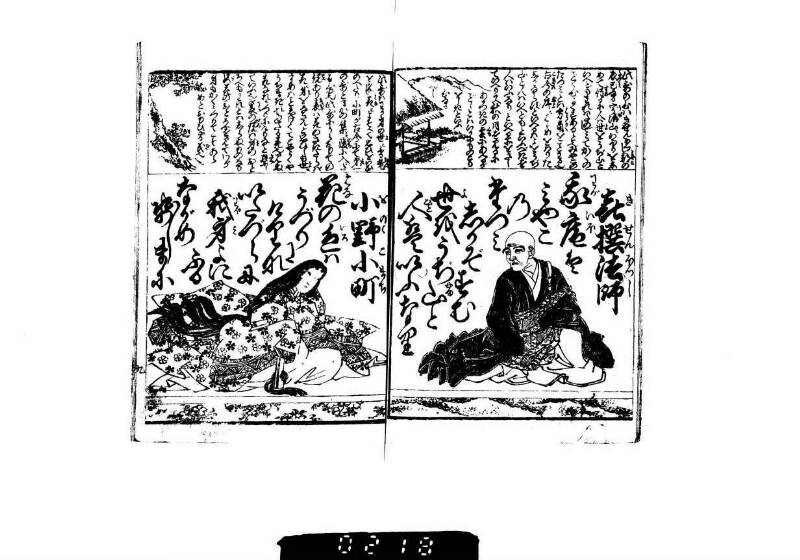
翻刻
【右頁中】
喜撰法師(きせんほつし)
我庵(わがいほ)は
みやこ
のたつみ
しかぞすむ
世(よ)をうぢ山(やま)と
人(ひと)はいふなり
【右頁上】
此哥の心はきせんほつし都(みやこ)の
辰巳(たつみ)なる宇治(うぢ)山にいほりをし
めて住(すめ)るに人は世(よ)をうぢ山と
いへどもわれはたのしみてかくの
ごとく心よくすめると也みやこの
たつみとは方角(ほうがく)をことわる也
古今(こきん)の序(じよ)にはじめをはりた
しかならずといへるはよをうぢ
山と人はいへどもといふべきを
人はいふなりといへる所をさし
ていへり又秋の月を見るに
あかつきの雲(くも)にあへるが
ごとしとはいかにものこり
をしきといふ
心なる
べし
【左頁中】
小野小町(をのゝこまち)
花(はな)の色(いろ)は
うづ【別刷は「つ」】りに
けりな
いたづらに
我身(わがみ)よに
ふる
ながめ
せしまに
【左頁上】
此哥はわか身の世(よ)にふる老い(おひ)
をかんじ花(はな)によそへて思ひをいひ
のへたり小町が古今にて第(たい)一
の歌とすかの集に後(のち)に入れた
る哥也此哥にうらおもての
説(せつ)あり表(おもて)は花のさきたらば
花に 身(み)をなさんと思ひしも世(よ)に
すめはことしけくてとやかくや
うちまぎれ過たる花也見ぬ
花なれうつりにけりなと察(さつ)し
ていふ也 裏(うら)の説(せつ)は身(み)のおと
ろへもわれとはしらぬものなり
只(たゝ)花のおとろへを見てわが
身もかくうつりてこそあら
めとおもひやる義(ぎ)也
現代語訳
【右頁中】
喜撰法師
我が庵は
都の
辰巳
しかぞ住む
世を憂し山と
人は言うなり
【右頁上】
この歌の心は、喜撰法師が都の辰巳(東南)にある宇治山に庵を結んで住んでいるが、人は「世を憂し」と言うけれども、私は楽しんでこのように心地よく住んでいるということである。都の辰巳というのは方角を説明したものである。古今和歌集の序に「初めと終わりがはっきりしない」と言っているのは、「世を憂し山と人は言えども」と言うべきところを「人は言うなり」と言っている部分を指して言ったものである。また「秋の月を見るのに暁の雲に遇ったようだ」というのは、いかにも名残惜しいという心であろう。
【左頁中】
小野小町
花の色は
移りに
けりな
いたずらに
我が身世に
経る
長雨
せし間に
【左頁上】
この歌は、わが身の世に経る老いを感じ、花に寄せて思いを述べたものである。小町が古今和歌集で第一の歌とされ、その集に後に入れられた歌である。この歌には表と裏の解釈がある。表の解釈は、花が咲いたなら花を見ようと思ったが、世に住んでいると煩わしいことが多く、あれやこれやと紛れて過ぎた花を見ない間に、花は色褪せてしまったなあと察して言うのである。裏の解釈は、身の衰えも自分では分からないものである。ただ花の衰えを見て、わが身もこのように変わってしまったのだろうと思いやることである。
英語訳
【Right Page Middle】
Kisen Hōshi
My humble hut
Is in the southeast
Of the capital—
There I live apart,
Though people say
The world is a mountain of sorrows
【Right Page Top】
The meaning of this poem is that Kisen Hōshi built a hermitage on Mount Uji in the southeast of the capital and lives there, but while people say "the world is sorrowful," he himself lives there joyfully and comfortably. "Southeast of the capital" explains the geographical direction. What the preface to the Kokin Wakashū calls "unclear beginning and end" refers to the part where he says "hito wa iu nari" (people say) instead of what should be "yo wo ushi yama to hito wa iedomo" (though people say the world is a mountain of sorrows). Also, "viewing the autumn moon is like encountering clouds at dawn" must express a heart that finds things deeply regrettable.
【Left Page Middle】
Ono no Komachi
The color of flowers
Has faded away
While I vainly
Spent my time
In this world
During the long rains
【Left Page Top】
This poem expresses her feelings about aging in this world, using flowers as a metaphor. This is considered Komachi's finest poem in the Kokinshū and was included in that collection later. This poem has both surface and deeper interpretations. The surface interpretation is that she thought to appreciate the flowers when they bloomed, but living in this world brings many troubles, and while she was distracted by various things, the flowers she failed to see had faded. The deeper interpretation is that one's own physical decline is imperceptible to oneself. She simply sees the flowers' decline and reflects that her own body must have changed in the same way.