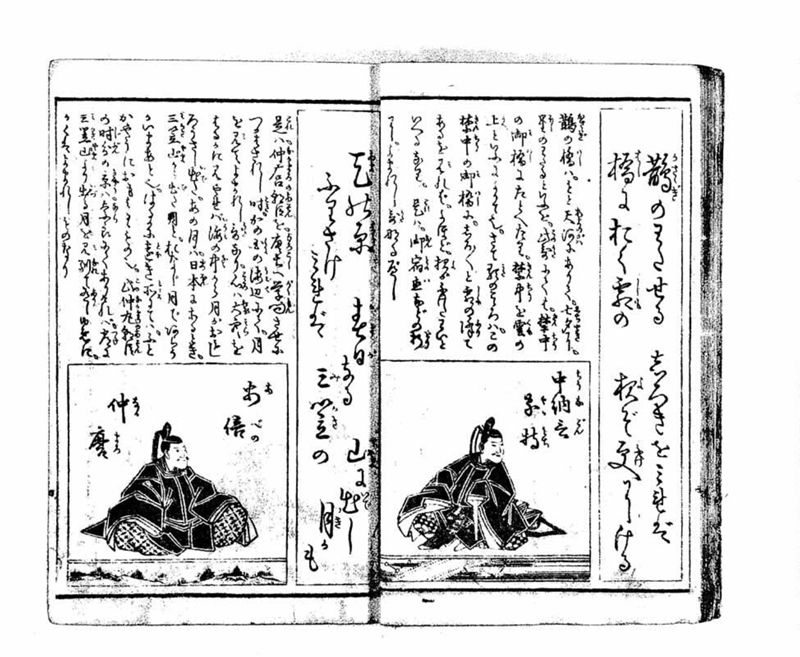
翻刻
【右丁】
鵲のわたせる しろきをみれば
橋におく霜の 夜ぞ更けにける
鵲の橋はもと天河にありて七夕に
星のわたるといふを此哥にては禁中 中納言
の御橋にとたてたり禁中を雲の 家持
上戸いふによりて也さて歌のこゝろはこの
禁中の御橋ににしろ〳〵と霜の降て
あるを見ればかほどよがふけたわいと
いへるなり是は御宿直などの折
■■によまれし哥なるべし
【左丁】
天つ原 春日 山に
ふりさけ なる 出し
みれば 三笠の 月か
も
是は仲麻呂朝臣を唐土へ学問させに
つかはされし時かの国の浜辺にて月 安
を見てよまれし哥なりけん心は大空を 倍
はるかに見やれば海の中から月がおもし
ろうさし出たあの月は日本にあるとき
三笠山から出た月とおなじ月であらう
かいまあと也はるかに遠き所にてふと
かやうにおもはるゝもの也此の仲丸朝臣 仲
の時分の京は奈良にてありければ常に 丸
三笠山より出る月を見慣て有しゆゑに
かく■よまれしものなり
現代語訳
【右丁】
鵲の渡せる橋に置く霜の
白きを見れば夜ぞ更けにける
鵲の橋は元来天の川にあって、七夕に星が渡るというものを、この歌では禁中(宮中)の御橋に例えている。禁中を雲の上と言うことから来ている。さて歌の心は、この禁中の御橋に白々と霜が降りているのを見れば、これほど夜が更けたことよ、ということである。これは御宿直(宮中での宿直)などの折に詠まれた歌であろう。
中納言家持
【左丁】
天の原振り仰け見れば春日なる
三笠の山に出でし月かも
これは仲麻呂朝臣を唐土へ学問のために遣わされた時、かの国の浜辺にて月を見て詠まれた歌である。心は、大空を遥かに見やれば、海の中から月が美しく差し出た。あの月は日本にある時、三笠山から出た月と同じ月であろうか、ということである。遥かに遠い所で、ふとこのように思われるものである。この仲麻呂朝臣の時代の京は奈良であったので、常に三笠山より出る月を見慣れていたゆえに、このように詠まれたものである。
安倍仲丸
英語訳
【Right Page】
"On the bridge built by magpies / The frost lies white— / Seeing this, I know / The night has grown deep"
The magpie bridge originally exists in the Milky Way, where stars cross on Tanabata, but in this poem it is used as a metaphor for the bridge in the imperial palace. This comes from referring to the imperial palace as "above the clouds." The meaning of the poem is: seeing the white frost fallen on this bridge in the imperial palace, I realize how deep the night has become. This was probably composed during a night duty watch at the palace.
Middle Counselor Yakamochi
【Left Page】
"Looking up at the vast heavens / And gazing far— / Is that the same moon / That rose over Mount Mikasa / In Kasuga?"
This poem was composed by Abe no Nakamaro when he was sent to Tang China for learning, as he gazed at the moon from a seashore in that country. The meaning is: looking far across the vast sky, the moon rises beautifully from the sea. Is that moon the same moon that used to rise over Mount Mikasa when I was in Japan? Being in such a distant place, one naturally thinks such thoughts. Since the capital in Nakamaro's time was in Nara, he was accustomed to seeing the moon rise over Mount Mikasa, which is why he composed this poem in this way.
Abe no Nakamaru