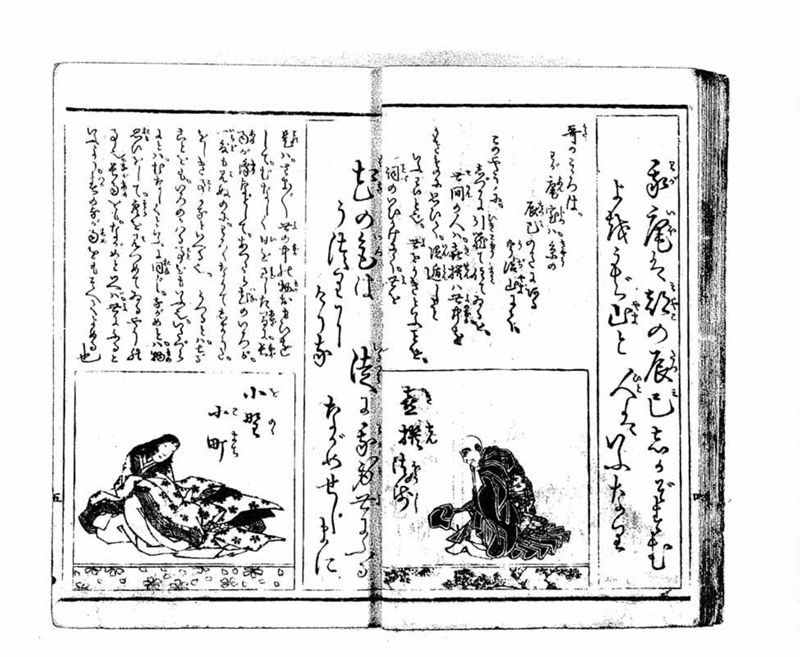
翻刻
【右丁】
我庵は都の辰巳しかぞすむ
よをうぢ山と人はいふなり
哥のこゝろは
わが庵室は京の
辰巳のかたにある
宇治山にて
このやうに
しづかに引籠て住てゐると
世間の人は喜撰は世中を
うきものに思ひて隠遁しき
いふわいと也世をうきといふことを 喜撰
詞のいひかけにて世を 法師
【左丁】
花の色は 徒に我身世にふる
うつりに ながめせし
けりな まに
此れはさま〳〵世の中の物おもひを
してむなしく日を過した間に長
雨が降などしてあつたら花のいろが 小野
一度も見ぬのにわろくなりてしまうた 小町
をしき事かなといへる也 うつるとはちる
ことをもいろのかはる事をもいふ也いたづら
にとはむなしくといふに同じながめとは物
思ひをして空を見つめてゐるやうの
事也長雨をもながめといへば世にふると
いふより春のなが雨をもそへてよめる也
現代語訳
【右丁】
わが庵は都の辰巳しかぞ住む
世をうじ山と人は言うなり
歌の心は:
わが庵室は京の辰巳の方にある宇治山にて、このようにしずかに引きこもって住んでいると、世間の人は「喜撰は世の中を憂きものに思って隠遁した」と言うことよ、ということである。「世をうき」ということを言葉の掛け合いにて「世を宇治」と表現している。
喜撰法師
【左丁】
花の色はうつりにけりないたずらに
わが身世にふるながめせしまに
これは様々世の中の物思いをして虚しく日を過ごした間に、長雨が降ったりしていたら、花の色が一度も見ないうちに悪くなってしまった。惜しいことだなあ、ということである。「うつる」とは散ることも色の変わることも言う。「いたずらに」とは虚しくということと同じ。「ながめ」とは物思いをして空を見つめているような事である。長雨をも「ながめ」と言えば、「世にふる」ということより春の長雨をも添えて詠んだのである。
小野小町
英語訳
【Right Page】
"My hermitage lies / In the southeast of the capital / There I dwell in quiet / People call it 'Uji Mountain of the weary world'"
The meaning of the poem is:
My hermitage is on Mount Uji, in the southeast direction from Kyoto. Living in such quiet seclusion, worldly people say "Kisen thinks the world is full of sorrow and has become a recluse." This uses a play on words between "yo wo uki" (the world is sorrowful) and "yo wo Uji" (the world is Uji).
Monk Kisen
【Left Page】
"The color of flowers / Has faded away / While I spent my days in vain / Lost in melancholy gazing"
This means: while spending days in vain, lost in various worldly sorrows, and with long rains falling, the color of the flowers turned poor without my having seen them even once - how regrettable this is. "Utsuru" means both to scatter and for colors to change. "Itazura ni" means the same as "in vain." "Nagame" refers to gazing at the sky while lost in melancholy thoughts. Since long rains are also called "nagame," this poem combines both the meaning of "living in the world" and adds the spring long rains.
Ono no Komachi