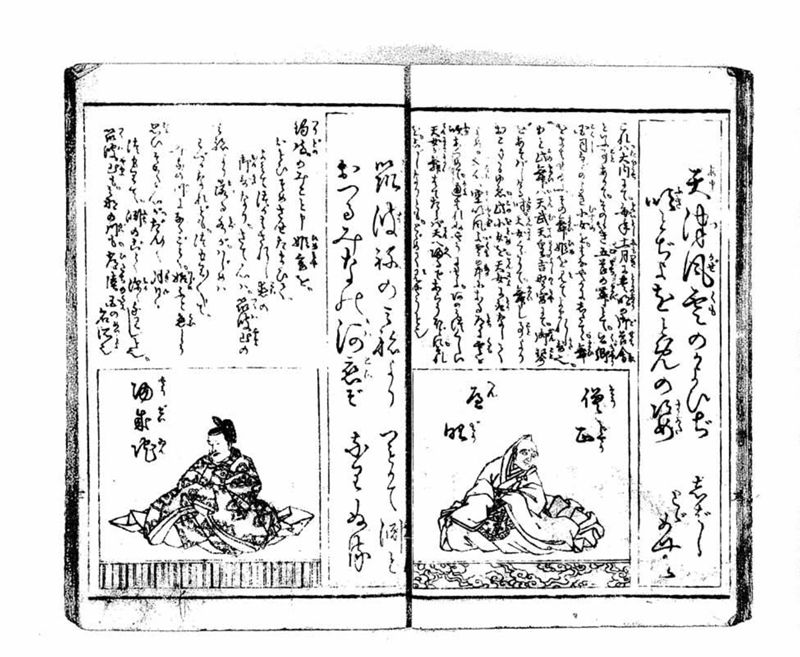
翻刻
【右丁】
天津風雲のかよひぢ しばし
吹とぢよをとめの姿 とゞ
めむ
これは大内にて毎年 月に豊明の御節会
といふ事ありてそのとき五節の童とて公卿 僧
国司などのとき小女をはなやかにしたてゝ舞 正
をまはせ給ふそのその舞姫を見てよまれし哥也
もと此の舞は天武天皇野宮にて御琴
をあそばしける時天女くだりて舞し事より
おこ■【りたヵ】るゆゑ此小女を天女に取なして
よめる也心は空吹風よ雲の中にある道に雲を 遍
吹あつめて其通はれぬやうによせてあのうつくしい 照
天女か舞はてたらば天へ帰るであらうほどにそれ
をしばしなりともとゞめて見やうと也
【左丁】
筑波ねのみねより つもりて淵と
おつるみなの河恋ぞ なりぬる
釣殿のみこと申す姫宮を
おもひそめさせたまひて
よみてつかはされし恋の
御哥なりさて心は筑波山の
みねより落ちる水がはめば
わづかなれどもつもり〳〵て
みなの川になるごとく始ふと恋しう
思ひそめた心がだん〳〵月日々
つもりて淵のごとく深くなりし 也 陽成院
筑波山もみなの常陸國の名所也
現代語訳
【右丁】
天つ風雲の通ひ路吹き閉ぢよ
乙女の姿しばしとどめん
これは大内にて毎年十一月に豊明の御節会という行事があって、その時五節の舞という公卿や国司などの幼い娘を華やかに装わせて舞を舞わせることがある。その舞姫を見て詠まれた歌である。もともとこの舞は天武天皇が吉野宮にて御琴を弾かれた時、天女が降りて舞ったことに由来するため、この少女を天女に見立てて詠んだのである。歌の心は、空を吹く風よ、雲の中にある道に雲を吹き集めて、その道を通れないようにふさいで、あの美しい天女が舞い終えたら天へ帰ってしまうだろうから、それをしばしの間でもとどめて見ていよう、ということである。
僧正遍昭
【左丁】
筑波嶺の峰より落つるみなの川
恋ぞ積もりて淵となりぬる
陽殿の御子という姫宮を思い初められて、詠んで送られた恋の御歌である。さて歌の心は、筑波山の峰より落ちる水は、始めはわずかであるけれども積もり積もってみなの川になるように、始めはほんの少し恋しく思い初めた心が、だんだん月日が積もって淵のように深くなったということである。筑波山もみなの川も常陸国の名所である。
陽成院
英語訳
【Right Page】
"Heavenly winds that blow / Along the cloud-bound pathways— / Close them for a while / That I may longer gaze upon / The maiden's graceful form"
This poem was composed at the imperial court during the annual Toyoakari no Gosechie (Harvest Festival) held in the eleventh month, when young daughters of court nobles and provincial governors were dressed magnificently to perform the Gosechi dance. The poem was written while watching these dancing maidens. Originally, this dance originated when a celestial maiden descended and danced while Emperor Tenmu was playing the koto at Yoshino Palace. Therefore, the poet likened these young girls to celestial maidens. The meaning is: "O winds that blow through the sky, gather the clouds on the pathways through the clouds and block the passage, so that when that beautiful celestial maiden finishes her dance and is about to return to heaven, I may detain her and watch her for a little while longer."
Archbishop Henjō
【Left Page】
"Like the Mina River / Falling from Tsukuba's peak— / My love has deepened, / Growing ever stronger / Into a fathomless pool"
This is a love poem composed and sent when the poet fell in love with a princess called Tsuredono no Miko. The meaning of the poem is: Just as the water falling from the peak of Mount Tsukuba begins as a mere trickle but accumulates to become the Mina River, so too my heart, which at first felt only a slight affection, has gradually grown deeper with each passing day and month, becoming as deep as a pool. Both Mount Tsukuba and the Mina River are famous places in Hitachi Province.
Emperor Yōzei