翻刻
【右丁】
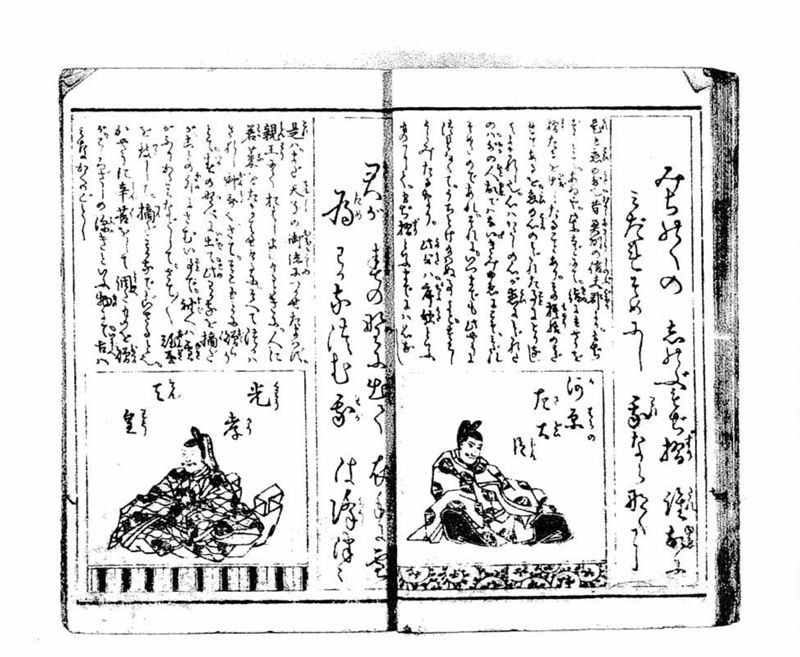
みちのくの しのぶのぢ摺 誰故に
みだれそめにし 我ならなくに
是も恋の哥也昔奥州の信夫郡よりもぢ
ずるものにてあゐや紫などにて絹にもやうを 河原
摺たるを出したることありその模様のみだ 左大
れてあるを恋の心のみだれた事にとりなし 臣
てよまれし也心はわたしの心が恋にみだれた
のは外の人故ではないきみゆゑにこそみだれ
そめたのであれはそれにいつまでも此やうに
つれなくてうちとけ給はぬ事よとすこし
うらみたるなり此方は序詞といふ
ものにてもぢ摺といふまでには意なし
【左丁】
君が 春の野に出て 衣手に雪
為 わかなつむ我 は降つゝ
これは天子の御位につかせたまはず
親王にておはしましけるときに人に
若菜をたまはせけるにそへてつかは 光
されし御哥也さてそこもとに送らう 孝
とて春の野べに出て此わかなを摘だ
がことの外にさむい事で袖は雪
がふりかゝりなどしてさて〳〵難儀 天
を致して摘だわかなでござると也 皇
かやうに辛苦をして調えたものを贈る
がこゝろざしの深きといふ物にて古は
みなかくのごとし
現代語訳
【右丁】
陸奥のしのぶもぢ摺誰ゆえに
乱れそめにし我ならなくに
これも恋の歌である。昔、奥州の信夫郡から「もぢ摺」というものを作っていた。これは藍や紫などで絹に模様を摺り付けたもので、その模様が乱れているのを恋心の乱れに見立てて詠まれた歌である。歌の意味は「私の心が恋に乱れたのは、他の人のせいではない。あなたのゆえにこそ乱れ始めたのである。それなのに、いつまでもこのように冷たくして心を開いてくださらないとは」と少し恨みがましく詠んだものである。「陸奥のしのぶもぢ摺」の部分は序詞というもので、「もぢ摺」というところまでには特別な意味はない。
河原左大臣
【左丁】
君がため春の野に出でて若菜摘む
我が衣手に雪は降りつつ
これは天皇の位に就かれず、親王でいらっしゃった時に、人に若菜を差し上げる際に添えて送られた御歌である。その意味は「あなたにお送りしようと思って春の野辺に出てこの若菜を摘んだのですが、思いのほか寒くて、袖には雪が降りかかったりして、本当に苦労して摘んだ若菜でございます」ということである。このように辛苦をして調えたものを贈るのが真心の深さを表すものとして、昔はみなこのようであった。
光孝天皇
英語訳
【Right Page】
"In Michinoku, / The patterns of Shinobu cloth— / For whose sake have I / Begun this tangled confusion / When it was not meant to be?"
This is also a love poem. Long ago, in Shinobu District of Ōshū Province, they produced something called "moji-zuri" (pattern-rubbing). This was silk with patterns rubbed onto it using indigo or purple dyes. The poet used the disordered appearance of these patterns as a metaphor for the confusion of his heart in love. The meaning is: "My heart's confusion in love is not due to anyone else. It is because of you that I began to feel this turmoil. Yet why do you remain so cold and distant, never opening your heart to me?" This is composed with a slight tone of reproach. The phrase "In Michinoku, the Shinobu cloth patterns" is what's called a jo-kotoba (preface), and the part up to "moji-zuri" has no particular meaning beyond setting up the wordplay.
Minister of the Left Kawara
【Left Page】
"For your sake / I went out to the spring fields / To gather young herbs— / While upon my sleeves / The snow keeps falling"
This is a poem sent along with young herbs as a gift when the poet was still a prince and had not yet ascended to the imperial throne. The meaning is: "I went out to the spring meadows to pick these young herbs to send to you, but it was unexpectedly cold, with snow falling on my sleeves and such—I truly suffered hardships to gather these herbs for you." Presenting gifts that required such effort and hardship was considered a sign of deep sincerity, and in ancient times everyone did likewise.
Emperor Kōkō