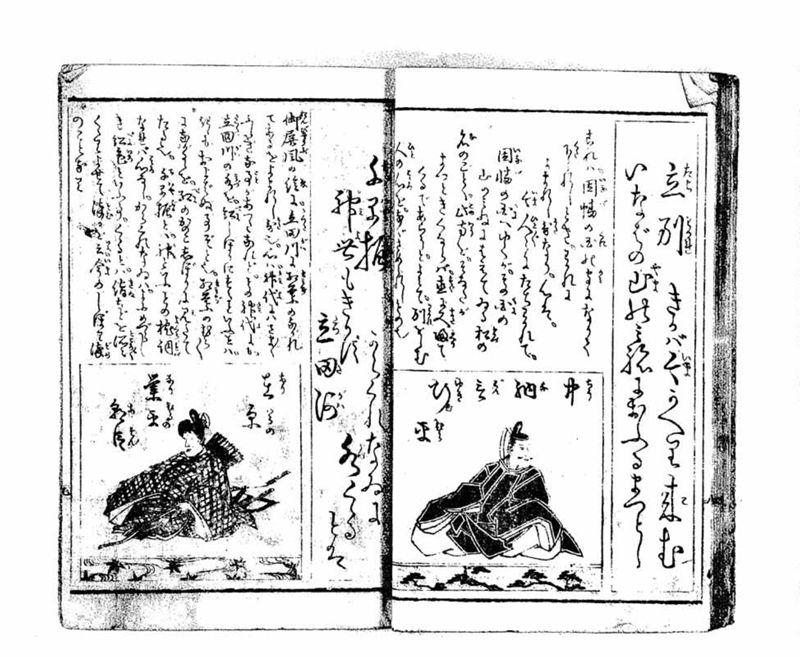
翻刻
【右丁】
立別 きかば今かへり来るむ
いなばの山のみねにおふるまつとし
これは因幡の国の守になりて
下られしときわかれに 中
よまれし哥なり心は
今人々とにたちわかれて 納
因幡の国へゆくがその国の
山のみねにはえてゐる松の 言
名のごとく此の此方をそなたが
まつときくならば直に立帰て 行
くるであらうとよみて別をしむ
人の心をなぐさめられしもの也 平
【右丁】
千早振 からくれなゐに
神代もきかず 水くゝる
立田川 とは
御屏風の絵に立田川に紅葉のながれ
てあるをよまれし哥なり心は神代にはさま〳〵 在
ふしぎな事あまたあれど神代に 原
立田川の水を紅しほりにするといふをは
きゝもおよばぬ事ぞと也紅葉のはら〳〵
にながるゝを紅のかのこしぼりに見たて
たる也千早振とは神といふことの枕詞
なれば心なしからくれなゐはよにめづから 業平
きべき紅色といふ事くゝるとは絹などに所々
くゝりよせて染るを云う今のしぼり染 朝臣
のことなり
現代語訳
【右丁】
立ち別れいなばの山の峰に生ふる
松としきかば今帰り来む
これは因幡の国の守となって
下られた時の別れに
詠まれた歌である。歌の意味は
今人々と別れ立って
因幡の国へ行くが、その国の
山の峰に生えている松の
名のように、この私をそなたが
待つと聞くならば、すぐに立ち帰って
来るであろうと詠んで、別れを惜しむ
人の心を慰められたものである。
中納言行平
【左丁】
千早振る神代も聞かず立田川
からくれなゐに水くくるとは
御屏風の絵に立田川に紅葉の流れて
あるのを詠まれた歌である。歌の意味は、神代にはさまざまな
不思議な事が多くあったけれど、神代に
立田川の水を紅絞りにするということは
聞いたこともない事であると。紅葉がはらはらと
流れるのを紅の鹿の子絞りに見立て
たのである。「千早振る」とは「神」という言葉の枕詞
なので意味はない。「からくれなゐ」は世にも美しい
紅色という意味。「くくる」とは絹などの所々を
括り寄せて染めることを言う。今の絞り染め
のことである。
在原業平朝臣
英語訳
【Right Page】
"When we part ways / If I should hear that you wait / Like the pine trees growing / On Mount Inaba's peaks / I will return at once"
This is a poem composed at the time of parting when he went down to become the governor of Inaba Province. The meaning of the poem is: "Now I part from everyone and go to Inaba Province, but if I should hear that you wait for me like the pine trees (matsu) growing on the mountain peaks of that province—playing on the word 'matsu' meaning both 'pine' and 'wait'—I will immediately return." This poem was composed to comfort the hearts of those who grieved at the parting.
Middle Counselor Yukihira
【Left Page】
"Even in the age of gods / Such wonders were never heard— / The Tatsuta River / Tie-dyeing its waters / In deep crimson"
This is a poem composed about a painting on a folding screen depicting autumn leaves floating down the Tatsuta River. The meaning is: "Though many wondrous things happened in the age of the gods, even then we never heard of the Tatsuta River tie-dyeing its waters in crimson." The poet likened the scattered falling autumn leaves to crimson tie-dyed cloth. "Chihayafuru" is a makura-kotoba (pillow word) for "kami" (god) and has no particular meaning. "Karakurenai" means the most beautiful crimson color in the world. "Kukuru" refers to binding sections of silk and dyeing it—what we now call tie-dyeing.
Ariwara no Narihira, Court Noble