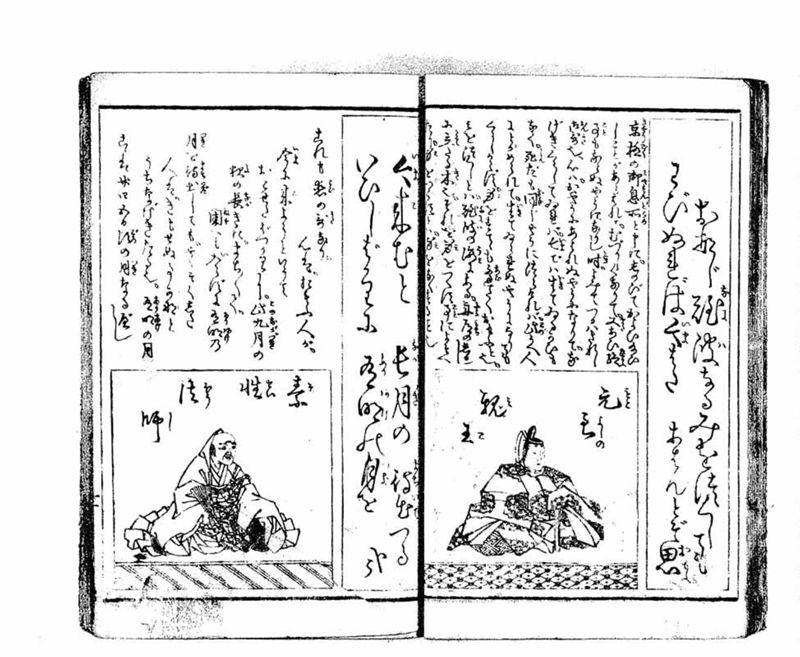
翻刻
【右丁】
おなじ難波なるみをつくしても
わびぬれば今はた あはんとぞ思
京極の御息所と申にしのびてかよひ給ひ
しことがあらはればむづかしくなりて又あひ給 元
事もあらぬやうになりし時よみてつかはされし 良
御哥也心はかやうにあはれぬやうになりてな
げきくらしてゐれば今では生てゐるかひも
なく死だも同じやうにつらければ此うへ人
にとがめられて生てゐられぬやうになりても
くるしからず身をすてゝも逢たくおもふと也 親
みをつくしとは難波の海にある船道のしるし 王
に立たる木也それを身をつくすことによそへ
たり身をつくすとは身をなくする事なり
【左丁】
今来むと 長月の 待出つる
いひしばかりに 有明の月を 哉
これも恋の哥なり
心はおもふ人が 素
今に来ようというて
おこせたばつかりに此の九月の 性
夜の長きにまち〳〵て
閨へも入らずに有明の
月を待出してもやくそくした 法
人はきもせぬことかなと
うちなげきたる也有明の月 師
これ廿四五日頃の月なるべし
現代語訳
【右丁】
難波なるみをつくしても
わびぬれば今はたおなじ
あはんとぞ思ふ
京極の御息所と申し上げる方に、こっそりと通っていらっしゃった
ことが明らかになって面倒なことになり、また逢うこと
もないようになった時に詠んで送られた
お歌である。歌の意味はこのようである。逢えないようになって
嘆き暮らしていると、今では生きている甲斐も
なく、死んだのと同じように辛いので、この上人に
咎められて生きていられないようになっても
苦しくない。身を捨てても逢いたく思うということである。
「みをつくし」とは難波の海にある船の航路の目印
に立てられた杭のことである。それを身を尽くすことに喩えて
いる。身を尽くすとは身を亡くすることである。
元良親王
【左丁】
今来むと
いひしばかりに長月の
有明の月を待ち出でつるかな
これも恋の歌である。
歌の意味は、思う人が
今に来ようと言って
寄越した言葉だけに、この九月の
夜の長いのを待ち続けて
寝室にも入らずに有明の
月を待ち出してしまった。約束した
人は来もしないことだなあと
嘆いたのである。有明の月、
これは二十四、五日頃の月であろう。
素性法師
英語訳
【Right Page】
"Even if I exhaust myself
at Naniwa's markers,
in my wretchedness now
I think only of meeting you."
This is a poem composed and sent when a secret affair with the Imperial Consort of Kyogoku was discovered, causing difficulties, and it became impossible for them to meet again. The meaning of the poem is as follows: Having become unable to meet and spending days in lamentation, now life has no meaning and is as painful as death itself. Even if people censure me further and I can no longer live in society, it would not be painful. I would throw away my life just to meet you. "Miotsukushi" refers to the wooden stakes set up as markers for ship routes in Naniwa Bay. This is used as a metaphor for exhausting one's life. To exhaust one's life means to lose one's life.
Prince Motoyoshi
【Left Page】
"You said you would come—
just for those words alone
I waited through the long ninth month night
and saw the dawn moon rise."
This is also a love poem.
The meaning is: Just because the person I love
said they would come today,
through this long September
night I kept waiting,
not even entering my bedchamber,
and ended up watching the dawn
moon rise. The person who promised
never even came, the poet laments.
The dawn moon—
this would be the moon of around the 24th or 25th day of the month.
Sosei Hoshi (Buddhist Priest Sosei)