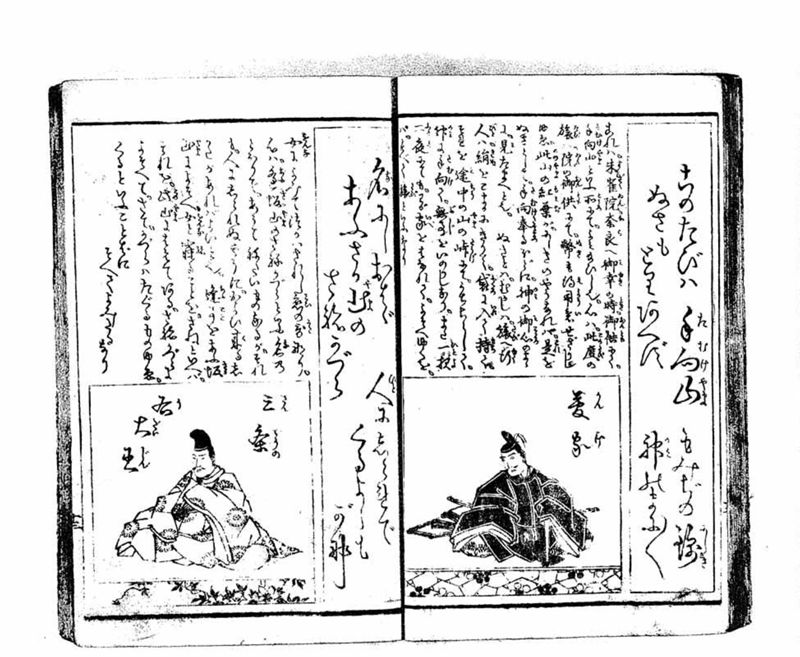
翻刻
【右丁】
このたびは 手向山 もみぢの錦
ぬさも
とりあへず 神のまに〳〵
これは朱雀院奈良へ御幸の時御供【供】にて
手向山といふ所にてよみ給ひし也心は此度の
旅は院の御供にて幣も得用意せざりし 菅家
ゆゑ此山の紅葉がにしきのやうなれば是を
ぬさとして手向奉るほどに神の御心のま【ま】ゝ
に見たまへと也 ぬさとは昔は旅へ行
人は絹をこまかにきりて袋に入れて持て
それを途中の山の峠にてうちちらして
神に手向て無事をいのりしなりまた一夜
二夜にてもわが家をはなれてよそへゆくを
ばすべて旅といふなり
【左丁】
名にしおはゞ 人にしられで
あふさか山の くるよしも
さねかづら がな
女によみてつかはされし恋の哥なり
心は逢坂山のさねかづらといふ名の
とほりであうとねたいものなるがそれ 三
も人にしられぬやうにかよひ来る■ 条
かたがあればよいと也あふ事をあふ坂
山によそへ女と寝ることをさねといへば
これを此山にはえていあるさねかづらに 右
よそへてさてかづらはたぐるものゆゑ 大
くるといふことばに 臣
へてよみしたるなり
現代語訳
【右丁】
このたびは幣も取り敢えず手向山
紅葉の錦神のまにまに
これは朱雀院が奈良へ行幸された時、お供をしていて、手向山という所で詠まれたものである。心は、この度の旅は院のお供であって、幣も十分に用意できなかったので、この山の紅葉が錦のようであるから、これを幣として手向け奉る。神様のお心のままに受け取ってください、ということである。幣とは、昔は旅に行く人は絹を細かく切って袋に入れて持参し、それを途中の山の峠で撒き散らして神に手向けて無事を祈ったものである。また一夜二夜でも我が家を離れてよそへ行くことを、すべて旅というのである。
菅家
【左丁】
名にし負わば逢坂山の
さねかずら人に知られで来る由もがな
女性に詠んで送られた恋の歌である。
心は、逢坂山のさねかずらという名の通りで、逢うということを願うものであるが、それも人に知られないように通って来る方法があればよい、ということである。「逢う」ことを逢坂山に例え、女性と寝ることを「さね」といえば、これをこの山に生えているさねかずらに例えて、さてかずらは手繰るものゆえ「来る」という言葉にかけて詠んだものである。
三条右大臣
英語訳
【Right Page】
On this journey, without even preparing offerings,
at Mount Tamuke, the brocade of autumn leaves—
according to the gods' will.
This was composed when Emperor Suzaku made an imperial visit to Nara, and the poet accompanied him. At a place called Mount Tamuke, he composed this poem. The meaning is: on this journey as part of the emperor's retinue, I was unable to properly prepare ritual offerings (nusa), so since the autumn leaves on this mountain are like brocade, I offer these as offerings to the gods. Please accept them according to your divine will. "Nusa" refers to how in ancient times, travelers would cut silk into small pieces, put them in bags, and scatter them at mountain passes along the way as offerings to the gods while praying for safe passage. Also, leaving one's home for even one or two nights to go elsewhere was called "travel."
Kanke (Sugawara no Michizane)
【Left Page】
If it lives up to its name, Mount Osaka's
sanekazura vine—would that there were a way
to come without people knowing.
This is a love poem composed and sent to a woman.
The meaning is: just as the name "sanekazura" of Mount Osaka suggests, one wishes to meet ("au"), and it would be good if there were a way to visit secretly without people knowing. "Meeting" (au) is compared to Osaka Mountain (Ausaka-yama), and sleeping with a woman is called "sane," so this is compared to the sanekazura vine that grows on this mountain. Since vines are things that one pulls toward oneself, he connected this to the word "kuru" (to come) in composing the poem.
Sanjō no Udaijin (Fujiwara no Sadakata)