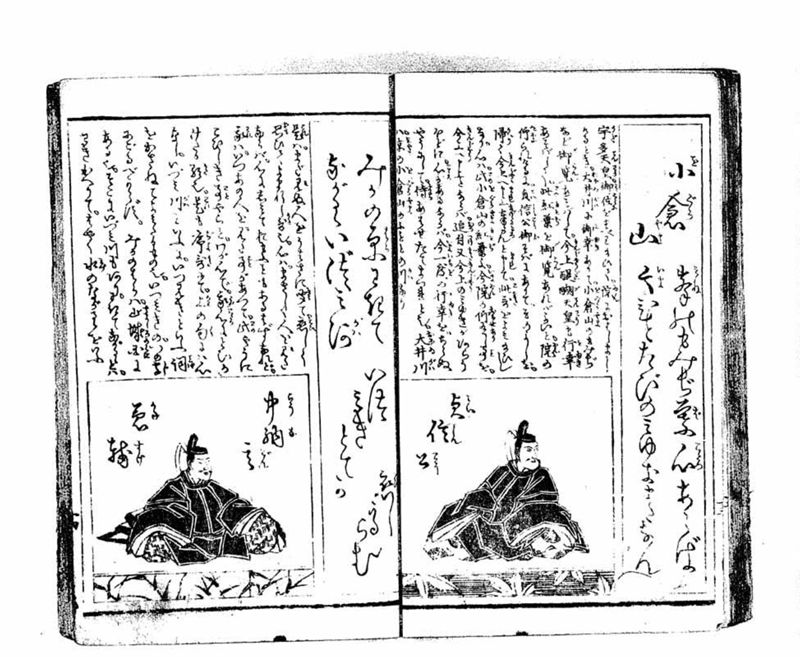
翻刻
【右丁】
小倉 峯のもみぢ葉心ああらば
山 今ひとたびのみゆきまたなん
宇多天皇位をすべり給ひて院におはしまし
けるとき大井川に御幸さりて御座山のもみぢ
など御覧あそばして今上醍醐天皇も行幸
あそばして此紅葉をご覧あればよいと院の
仰せられけるに貞信公そばにありて
帰て今上へ申上奉らんと申て此哥をよみ給ひし
なり心は此の小倉山の紅葉に今院の仰せ有て哥を
今上へ申上たならば追付又今上のみゆきがあらう 貞
ほどに心があるならば今一度の行幸をちらぬ 信
やうにして侍あはせたてまつれと也大井川は 公
京の御座山のふもとの川なり
【左丁】
みかのわきて いつ 恋し
ながるゝいづみ河 みき かる
とてか らむ
これはまだ見ぬ人をうはさに聞て恋しく
思ひてよまれし哥心心は人を見た
ならば心にしみておもふ事があるはずなれど 中納
我はいつあの人を見た事があつて此やうに 言
こひしき事やらとわが心で我心にとひか
けたる■也是も序詞にて上の句には心
なしいづみ川といふにいつ見きといふ詞
をかさねてよみたるもの也いつみきのつの
字にごるべからずみかのはらは山城国に 兼
ある也そこにいづみ川もありわきてながるゝとは 輔
わきかへりてはやく水のながるゝをいふ
現代語訳
【右丁】
小倉山峰の紅葉葉心あらば
今一度の御幸待たなむ
宇多天皇が位を退かれて上皇でいらっしゃった時、大井川に行幸されて御座山の紅葉などをご覧になって、今の醍醐天皇も行幸されてこの紅葉をご覧になればよいと上皇が仰せられたところ、貞信公がそばにいて、帰って今上天皇に申し上げましょうと申して、この歌を詠まれたのである。心は、この小倉山の紅葉に、今上皇の仰せがあって歌を今上天皇に申し上げたならば、すぐにまた今上天皇の行幸があるだろう。心があるならば今一度の行幸を散らないようにして、お待ち申し上げてくださいということである。大井川は京の御座山の麓の川である。
貞信公
【左丁】
みかの原わきて流るる泉川
いつ見きとてか恋しかるらむ
これはまだ見たことのない人を噂に聞いて恋しく思って詠まれた歌である。心は、人を見たならば心に染みて思うことがあるはずであるが、私はいつあの人を見たことがあって、このように恋しいことなのだろうかと、自分の心で自分の心に問いかけたものである。これも序詞で、上の句には意味がなく、泉川というのに「いつ見き」という言葉を重ねて詠んだものである。「いつみき」の「つ」の字を濁らせてはならない。みかの原は山城国にある。そこに泉川もあり、「わきて流るる」とは、湧き返って速く水が流れることをいう。
中納言兼輔
英語訳
【Right Page】
O maple leaves on Ogura Mountain's peak, if you have hearts,
please wait for one more imperial visit.
When Emperor Uda abdicated and became retired emperor, he made an imperial visit to the Oi River and viewed the autumn leaves of Mount Goza and other sights. He remarked that it would be good if the current Emperor Daigo also made an imperial visit to see these autumn leaves. Teishin-kō (Fujiwara no Tadahira) was nearby and said he would return and report this to the current emperor, whereupon he composed this poem. The meaning is: regarding these autumn leaves of Ogura Mountain, now that the retired emperor has spoken and I will report this poem to the current emperor, there will soon be another imperial visit by the current emperor. If you have hearts, please do not scatter and wait for one more imperial visit. The Oi River is a river at the foot of Mount Goza in Kyoto.
Teishin-kō (Fujiwara no Tadahira)
【Left Page】
At Mikano Plain, where the spring river
flows forth with force—when did I see her
that I should long for her so?
This is a poem composed about longing for someone the poet had never seen, having only heard rumors about her. The meaning is: if I had seen this person, there should be something that touches my heart, but when did I ever see that person that I should feel such longing? This is the poet questioning his own heart with his heart. This also uses a preface (jo-kotoba), where the first part has no meaning—it simply layers the words "itsu miki" (when did I see) with "Izumi River." The "tsu" in "itsu miki" should not be voiced. Mikano Plain is in Yamashiro Province. There is also an Izumi River there, and "wakite nagaruru" means water gushing forth and flowing swiftly.
Chūnagon Kanesuke (Fujiwara no Kanesuke)