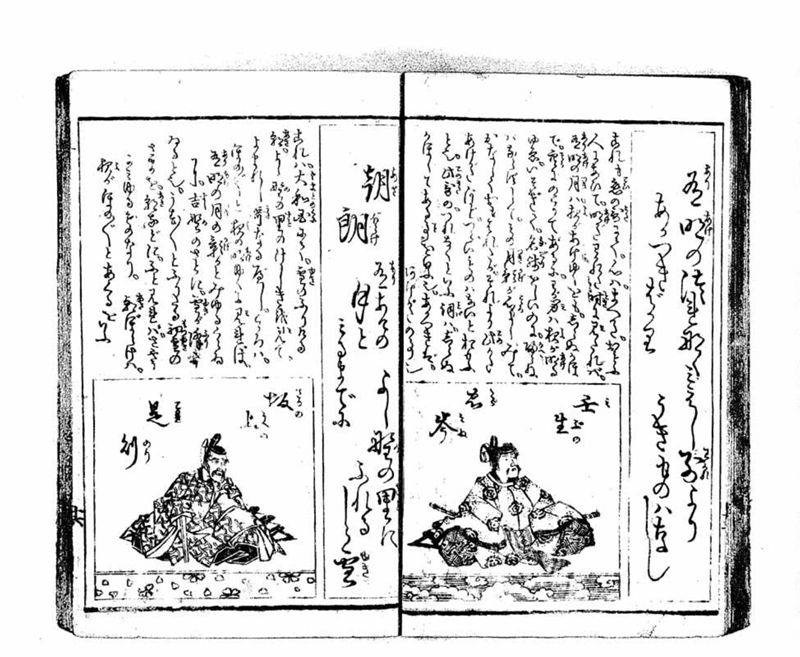
翻刻
【右丁】
有明のつれなくみえし別より
あかつき うきものはな
ばかり し
これも恋の哥にて心はまへにおもふ
人にあひて明がたわかれた時に見たれば 壬
有明の月は夜があけゆくともしらぬかほ 生
で空にのこりてあるにわが身は夜が明る
ゆゑいそぎて名残ををしいのに帰らね
はならずしてその月影が心にしみて
かなしくおもはれたがそれより此かた
あけがたほどつらいものはないとおもふ 忠
と也此の身のつれなくといふ詞はしらぬ 岑
かほしてある事といふ也あかつきは
あけがたの事也
【左丁】
朝 有あけの よし野の里に
朗 月と ふれる
みるまでに しら雪
これは大和国にて雪のふりける
朝よりよし野の里のけしきを見て 坂
よまれし哥なるべしこゝろは 上
ほの〴〵と夜のあけゆくに見れば
有明の月の影かとみゆるくらゐ
吉野のさとに雪が降■
ゐると也すうす〳〵とふりたる初雪の
さまを朝などにふと見ばさやう 是
にみゆるものなり 朝ぼらけは 則
夜がほの〴〵とあくるをいふ
現代語訳
【右丁】
有明のつれなく見えし別れより
暁ばかり憂きものはなし
これも恋の歌で、心は、前に思う人に逢って明け方別れた時に見たところ、有明の月は夜が明けていくとも知らぬ顔で空に残っているのに、わが身は夜が明けるゆえ急いで、名残惜しいのに帰らねばならず、その月影が心にしみて悲しく思われたが、それより以来、明け方ほどつらいものはないと思うということである。この「身のつれなく」という言葉は、知らぬ顔をしていることをいう。暁は明け方のことである。
壬生忠岑
【左丁】
朝ぼらけ有明の月と見るまでに
吉野の里に降れる白雪
これは大和国にて雪が降った朝から、吉野の里の景色を見て詠まれた歌であろう。心は、ほのぼのと夜が明けていくのを見れば、有明の月の光かと見えるくらい、吉野の里に雪が降っているということである。薄々と降った初雪の様子を朝などにふと見れば、そのように見えるものである。朝ぼらけは、夜がほのぼのと明けることをいう。
坂上是則
英語訳
【Right Page】
Since that parting when the dawn moon
seemed so indifferent to our farewell,
nothing is more painful than daybreak.
This is also a love poem. The meaning is: when I met with the person I love and parted at dawn, I saw that the moon of dawn remained in the sky with an indifferent face, as if unaware that night was breaking, while I had to hurry home reluctantly as day was breaking, leaving behind precious moments. That moonlight pierced my heart with sadness, and since then, I think there is nothing more painful than daybreak. The expression "mi no tsurenaku" means acting with an indifferent face, pretending not to know. Akatsuki means daybreak.
Mibu no Tadamine
【Left Page】
At daybreak, the white snow
falling on Yoshino village
looked like the light of the dawn moon.
This is probably a poem composed after seeing the scenery of Yoshino village on a morning when snow had fallen in Yamato Province. The meaning is: looking as night gradually breaks into dawn, the snow falling on Yoshino village appears so bright it could be mistaken for the light of the dawn moon. When one suddenly glimpses the appearance of lightly fallen first snow in the morning, it appears just like this. Asaborake refers to the gradual breaking of night into dawn.
Sakanoue no Korenori