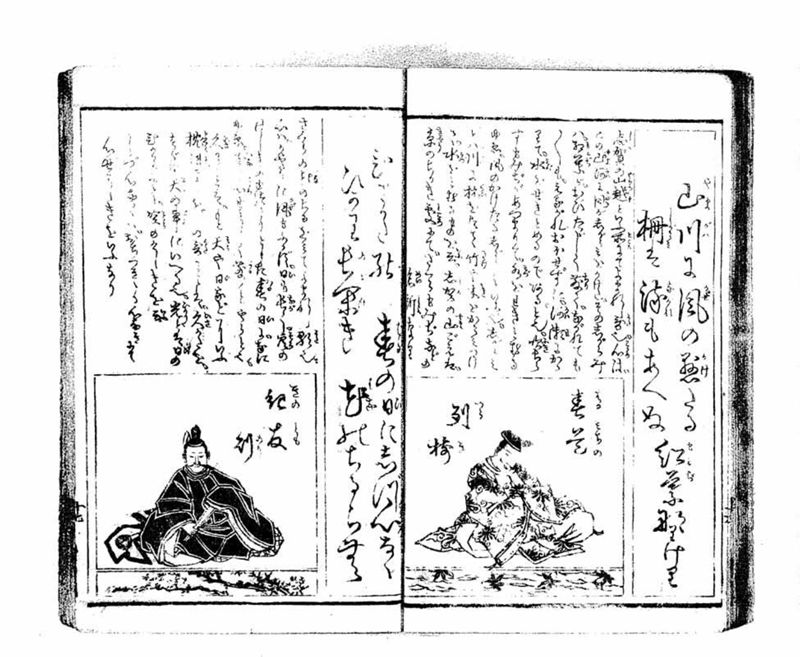
翻刻
【右丁】
山川に風の懸たる
紅葉なりけり
しがらみ柵は流もあへぬ
志賀の山越といふ所にてよまれし哥也
この山河に風がしがらみをかけてそのしがらみ
は紅葉がおびたゞしく散てながれても 春道
〳〵もえながれおほせずに河瀬にかゝ
りて水をせきとめるのであると吹散ら
すもみぢあつまりて水をせきとむる
ゆゑ風のかけたるしらがみといふ也しらがみ
とは川に杭をたてゝ竹■■をからみつけ 列
て水をとめるのであると云志賀の山ごえは 樹
京のちかき所にてさくらもみぢなどの
名所なり
【左丁】
ひさかたの 春の日にしづ心なく
ひかりのどけき 花のちるらむ
さくらの花のちるをみてよまれし哥也
心はかやうに風もふかず日も長く空の 紀友
けしきの■■■■とした春の日になに
ゆゑ■■なく■■■とやらと也 則
久方のとはもと天や日などにいふ
枕詞■■■の■■■久からを
天の事にいへる也光とそ
ひか■■■■空のけしきを云
しづ心なくとはおちつきたる心なきにて
心せわしきをいふなり
現代語訳
【右丁】
山川に風のかけたる
しがらみは流れもあえぬ
紅葉なりけり
志賀の山越えという所で詠まれた歌である。
この山川に風がしがらみをかけて、そのしがらみは紅葉がおびただしく散って流れても流れきることができずに川瀬にかかって水をせき止めているのであると。吹き散らす紅葉が集まって水をせき止めるゆえ、風のかけたしがらみというのである。しがらみとは川に杭を立てて竹木をからみつけて水を止めるものであるという。志賀の山越えは京の近き所で、桜紅葉などの名所である。
春道列樹
【左丁】
ひさかたの
光のどけき春の日に
しづ心なく花の散るらん
桜の花の散るのを見て詠まれた歌である。
心はこのように、風も吹かず日も長く空の景色ののどかとした春の日に、なにゆえ静心なく散るのであろうかということである。
「ひさかたの」とはもと天や日などにいう枕詞である。「ひさかたの」の「ひさ」は「久しき」を天のことにいったものである。「光」とは日光や空の景色をいう。「しづ心なく」とは落ち着いた心なきで、心せわしきをいうのである。
紀友則
英語訳
【Right Page】
The barrier that wind has set
across the mountain stream—
it is fallen autumn leaves
that even the current cannot wash away.
This is a poem composed at a place called Shiga no Yamakoe (Shiga Mountain Pass). The meaning is: the wind has created a barrier in this mountain stream, and this barrier is made of autumn leaves that have fallen abundantly and, though they flow, cannot flow away completely but catch at the river shallows and dam up the water. Because the scattered maple leaves gather and block the water, it is called "a barrier set by the wind." A shigarami is something made by driving stakes into a river and weaving bamboo and wood together to stop the water. Shiga no Yamakoe is a place near the capital, famous for cherry blossoms and autumn leaves.
Harumichi no Tsuraki
【Left Page】
On this tranquil spring day
of gentle heavenly light,
why do the cherry blossoms
fall with such restless hearts?
This is a poem composed upon seeing cherry blossoms fall. The meaning is: on such a calm spring day when no wind blows, the days are long, and the sky's appearance is peaceful, why do the flowers scatter with such restless hearts?
"Hisakata no" is originally a makurakotoba (pillow word) used with "heaven" or "sun." The "hisa" in "hisakata no" refers to "long duration" when speaking of heavenly matters. "Hikari" refers to sunlight or the appearance of the sky. "Shizu-gokoro naku" means "without a calm heart," referring to a restless state of mind.
Ki no Tomonori