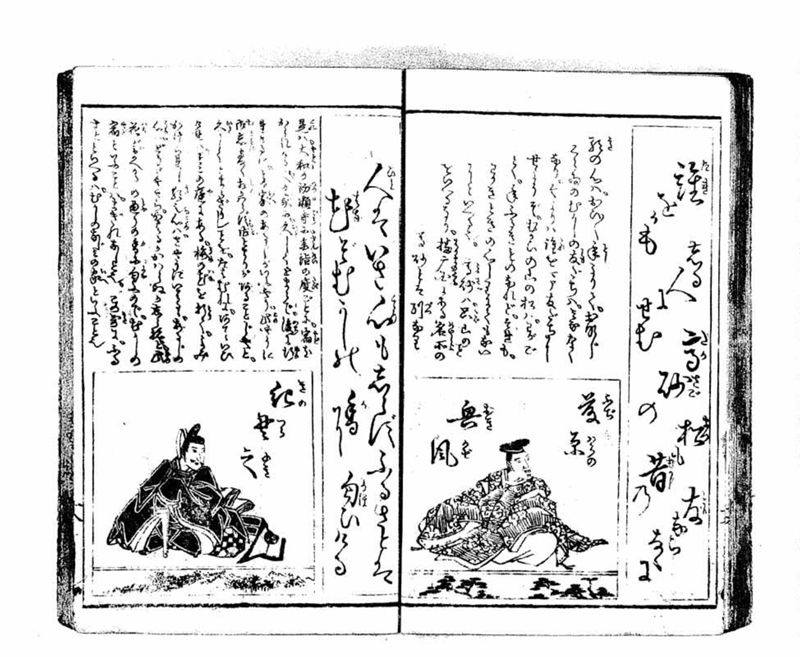
翻刻
【右丁】
誰 しる 高 松 友
を 人 砂 も なら
か に の 昔 なく
も せむ の に
歌の心はおひて年とりておなじ 藤
くらゐの友だりはみななく 原
なり今よりは誰をマア友だちに
せようぞむかいの山の松はわがご
とく年ふるきものなれどそれも
わかきときの心■■■■もない 興
にといへる也高砂は只山のことを 風
いへるなり播磨国にある名所の
高砂とは別なり
【左丁】
人はいさ心もしらずふるさとは
花ぞむかしの 香 匂ひ
に ける
是は大和の初瀬寺に参詣の度ごとに宿を
かられける人の家に久しくとまらで後に行 紀
きけるにその家のあるじがいふやう此やうに 貫
■■もなく相かはらずとまりがあることじやと 之
久しくとまらざりしをたはむれにあてゝいひ
ければそこの庭にある梅の花を折てよみ
かけられし歌也心はさやうにいはるゝあるじの
花■■かへから通りの■に匂ふのでむかしの
宿といふことはまぎれなしと也この哥はふる
さとといへるはむかしのなじみの家といふこと也
現代語訳
【右丁】
誰をかも知る人にせむ
高砂の松も昔の友ならなくに
歌の心は、老いて年を取って同じくらいの友達はみな亡くなってしまった。今よりは誰を友達にしようか。向かいの山の松は私のごとく年古いものであるけれど、それも若いときの心を知っているわけでもないということである。高砂はただ山のことを言ったのであり、播磨国にある名所の高砂とは別である。
藤原興風
【左丁】
人はいさ心も知らず故郷の
花ぞ昔の香ににおいける
これは大和の初瀬寺に参詣のたびごとに宿を借りていた人の家に、久しく泊まらずにいて後に行ったところ、その家の主人が言うには「このように久しく変わらずに泊まりがけることだ」と、久しく泊まらなかったことをたわむれにあてて言ったので、そこの庭にある梅の花を折って詠みかけた歌である。心は、そのように言われる主人の心は変わったかもしれないが、庭に咲く梅の花は昔と変わらず香っているので、昔の宿ということは間違いないということである。この歌の「故郷」というのは、昔のなじみの家ということである。
紀貫之
英語訳
【Right Page】
Whom shall I now make
my companion and friend?
Even the pine of Takasago
was not my friend in days of old.
The meaning of this poem is: having grown old and aged, all friends of the same age have died. From now on, whom shall I make my friend? The pine on the facing mountain is as old as I am, but even that does not know the feelings of my youth. "Takasago" here simply refers to a mountain, and is different from the famous place called Takasago in Harima Province.
Fujiwara no Okikaze
【Left Page】
I know not what people think,
but in this old familiar place
the flowers still bloom
with the same fragrance as of old.
This poem was composed when the poet visited a house where he used to lodge whenever he made pilgrimages to Hasedera Temple in Yamato. After not staying there for a long time, when he went there again, the master of the house said jokingly, "How long it has been since you stayed here without change!" Referring playfully to his long absence, the poet picked a plum blossom from the garden and composed this poem. The meaning is: the heart of the master who speaks thus may have changed, but the plum blossoms in the garden bloom with the same fragrance as before, so there is no mistake that this is the lodging of old. In this poem, "furusato" (old home/familiar place) refers to the house of an old acquaintance.
Ki no Tsurayuki