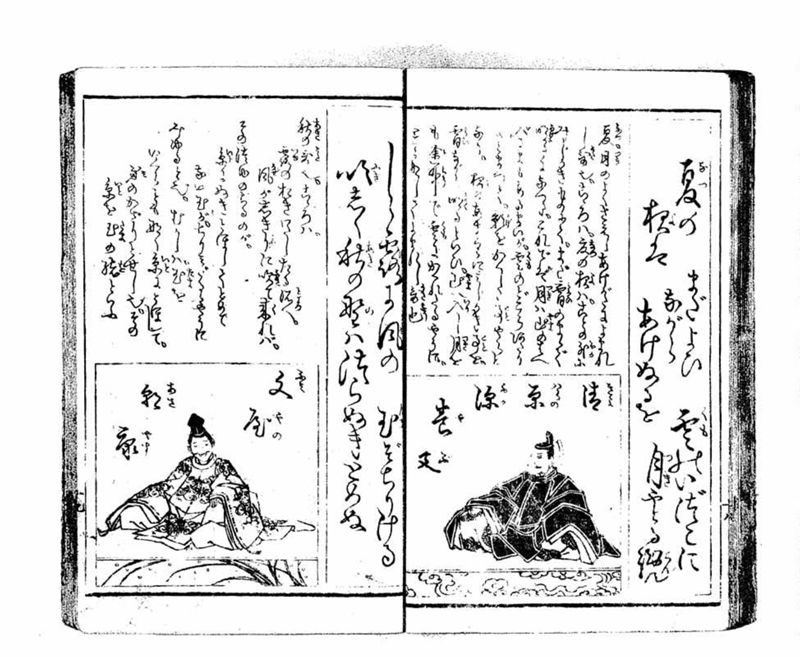
翻刻
【右丁】
夏の まだよひ 雲のいづこに
夜は ながら 月やとる
あけぬるを 覧
夏月のよくさえしあけがたによまれ
し哥也こゝろは夏の夜はことの外に 清
みじかきものにてまだ宵のま
明かたになつたこれでぞ月は山のはへ 原
入るまもあるまいが雲のどこらあたり
■とまつて影をかくした事やらと 深
なり夜のあま■■にみじかき事を
宵ながら明るといひ山へ入し月を 養
も■■で雲にかくれたるやう
ともなしてよまれし哥也 父
【左丁】
しら露に風の 玉そちりける
吹しく秋の野はつらぬきとめぬ
秋の哥也こゝろは
露のおきわたしたる所へ 文
風がしきりに吹て来れば
そのつゆのちるのが 屋
糸にぬきことほしてとめて
玉がちりてゐるやうに
みゆると也むかしは玉を
いくらともなく糸にとほして 朝
身のかざりとせし也その
糸を玉の緒といふ 康
現代語訳
【右丁】
夏の夜はまだ宵ながら明けぬるを
雲のいづこに月宿るらむ
夏の月がよく冴えた明け方に詠まれた歌である。心は、夏の夜は格別に短いものであって、まだ宵のうちに明け方になってしまった。これでは月は山の端へ入る間もあるまいが、雲のどのあたりに留まって影を隠したことだろうかということである。夜があまりにも短いことを「宵ながら明ける」と言い、山へ入った月をも見ないで雲に隠れたようにも表現して詠まれた歌である。
清原深養父
【左丁】
白露に風の吹きしく秋の野は
つらぬきとめぬ玉ぞ散りける
秋の歌である。心は、露の置きわたった所へ風が激しく吹いてくれば、その露の散るのが、糸に貫き通して留めておいた玉が散っているように見えるということである。昔は玉をいくつともなく糸に通して身の飾りとしたのである。その糸を玉の緒という。
文屋朝康
英語訳
【Right Page】
The summer night, still seeming like early evening,
has already dawned—
in which cloud does the moon lodge?
This poem was composed at dawn when the summer moon shone clearly. The meaning is: summer nights are exceptionally short, and dawn has come while it still seemed like evening. In such a short time, the moon would hardly have time to set behind the mountains, so in which cloud might it be staying, hiding its reflection? The poem expresses how remarkably short the night is by saying "dawn breaks while still evening," and describes the moon as if it had hidden in the clouds without even being seen setting behind the mountains.
Kiyohara no Fukayabu
【Left Page】
White dewdrops blown by the wind
across the autumn fields
scatter like jewels
that have broken loose from their string.
This is an autumn poem. The meaning is: when wind blows intensely across a place where dew has settled everywhere, the scattering of those dewdrops looks like jewels that had been strung on a thread and fastened, now scattering. In ancient times, people would string countless jewels on thread as personal ornaments. That thread was called "tama no o" (jewel cord).
Bun'ya no Asayasu