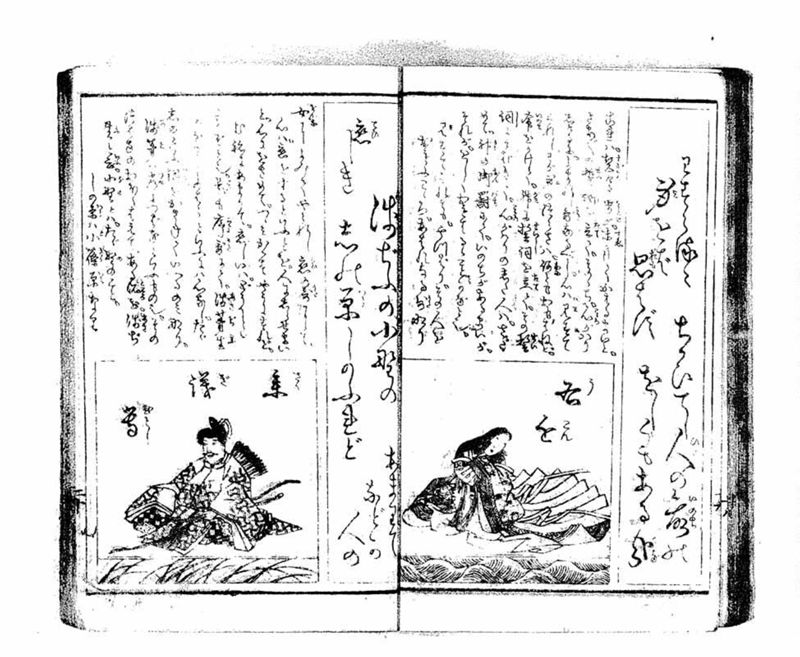
翻刻
【右丁】
わすらるゝ ちかひてし人の命の
身をば をしくもあるかな
思はず
これは契ける男が末かけてかはるまいと
さま〴〵に誓詞を立てそのゝち心かはり 右
しけるをよめる哥なるべし心は見すて
られしわが身のつらさは何ともおもはねど 近
命をかけて神に誓詞を立てその誓
詞にそむきて心がはりのした人はさだ
めて神の御罰にていのちがあるまいが
それがをしくおもはるゝことかなと也
見すて■■これをもやつぱりその人を
をもふこゝろあはれなる哥なり
【左丁】
浅ぢふの小野の あまりて
恋 などか
しき しの原しのぶれど 人の
女によみてやるへし恋哥にて
心は恋をするといふ事を人にしらせまい 参
と心におさめてつゝみかくすやいすれど
むねにあまりて恋しいはどうした
ことぞと也これも序詞にて浅茅生
■■■■■■■といふには心なしたゞ 議
しの■■にかさねているのみなり
浅茅は常につばなといふもの也その
つばなのおほくはえてある所を浅ぢ 等
生と云小野とはたゞ野のこと
しの原とは小篠原なり
現代語訳
【右丁】
忘らるる身をば思はず誓ひてし
人の命の惜しくもあるかな
これは契りを結んだ男が、末永く変わるまいとさまざまに誓いを立て、その後心変わりをしたのを詠んだ歌であろう。心は、見捨てられた我が身の辛さは何とも思わないが、命をかけて神に誓いを立て、その誓いに背いて心変わりをした人は、きっと神の御罰で命があるまい、それが惜しく思われることだなあ、ということである。見捨てられてもなお、その人を思う心があり、哀れな歌である。
右近
【左丁】
恋しくてあまりて
浅茅生の小野のしの原しのぶれど
などか人の
女が(男に)詠んで送るべき恋歌である。
心は、恋をするということを人に知らせまいと心に納めて包み隠すけれども、胸にあふれて恋しさはどうしたことだろうか、ということである。これも序詞で、浅茅生の小野のしの原というのには(特別な)意味はなく、ただ「しのぶ」に掛けているのみである。浅茅は普通「つばな」というもので、そのつばなが多く生えている所を浅茅生という。小野はただ野のこと。しの原とは小篠原のことである。
参議等
英語訳
【Right Page】
Not thinking of my own forgotten self,
how precious seems the life
of the one who made those vows!
This is probably a poem about a man who made a pledge, swearing in various ways that he would never change until the end, but later had a change of heart. The meaning is: I do not think anything of the pain of my abandoned self, but the person who staked his life to make vows to the gods and then betrayed those vows with his change of heart will surely lose his life due to divine punishment—how precious that life seems to me! Even after being abandoned, there remains a heart that still cares for that person; this is a piteous poem.
Ukon
【Left Page】
So full of longing—
though I hide my feelings like the grass
in the fields of Ono with bamboo grass,
why do people...
This should be a love poem composed by a woman to send to a man. The meaning is: I try to keep my love secret in my heart, concealing and hiding it so that people won't know I'm in love, but it overflows in my breast—what is this longing? This is also a jo-kotoba (prefatory phrase), where "asajiu no Ono no shino-hara" has no special meaning but merely plays on the word "shinobu" (to hide/endure). Asaji commonly refers to "tsubana" (a type of grass), and a place where much tsubana grows is called "asajiu." Ono simply means "field." Shino-hara refers to a field of small bamboo grass.
Sangi Hitoshi