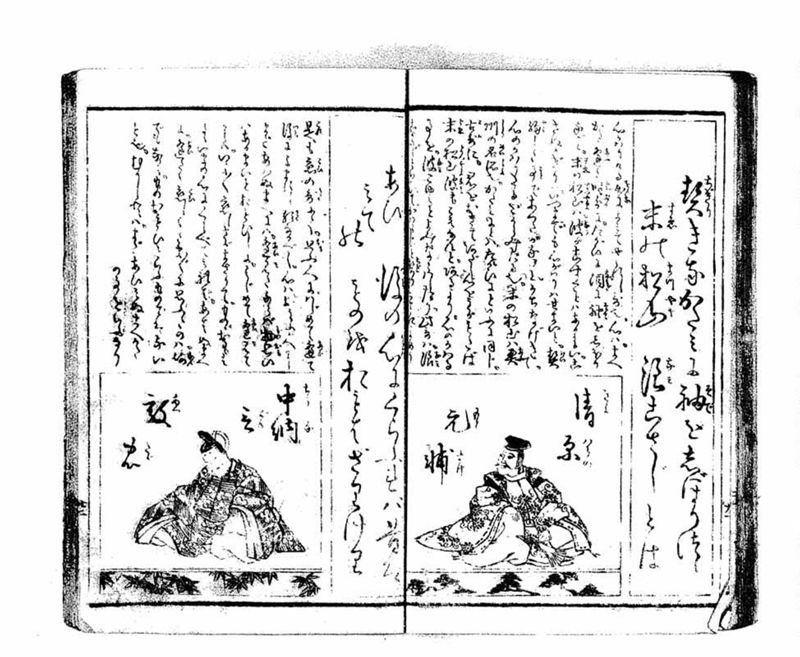
翻刻
【右丁】
契りきなかたみに袖をしぼりつゝ
末の松山 波こさじとは
心かはれる女によみてやられし哥也こころ心はまへ
かた逢た時分にたがひに泪に袖をしほり 清
つゝ末の松山は波がこすことはあるまいこ
さぬかぎりいつまでも心がはりせまいと契 原
約した事であつたがなをとうちなげきて
心のかはりたるをうらみたるなり末の松山は奥
州の名所也かたみにとはたがひにといふるに同じ
古哥に君をおきてあだし心をわがもたば
末の松山波もこえなんとあるより心のかはる 元
事を波こゆるとよみならはしたり此哥は波
こさじと ひてかはらじと契り よめり 輔
【右丁】
あひ 後の心にくらぶれば昔は
みて
の ものをおもはざりけり
是も恋の哥にて思ふ人にはじめて逢て
後によまれし歌なるべし心はおもふは人に 中納
まだあはぬまへには逢見たんらば物思ひ
はあるまいとおもひしにはじめて逢見て 言
からはいよ〳〵恋しさがまさりてものおもは
るゝいまのこころにくらべてみればあはぬまへ
に逢たく恋しくこま〴〵に思ふたのは
でもなくものおもひといふものではない 敦
と也むかしとはまだあひまだあひみぬまへかた
の事をいふなり 忠
現代語訳
【右丁】
契りきな かたみに袖を絞りつつ
末の松山 波越さじとは
心変われる女に詠んで遣わした歌である。心は、前に逢った時分にお互いに涙に袖を絞りつつ、末の松山は波が越すことはあるまい、越さぬ限りいつまでも心変わりすまいと契約したことであったが、なお嘆いて心の変わったことを恨んだのである。末の松山は奥州の名所である。「かたみに」とは「互いに」ということと同じ。古歌に「君を置きてあだし心をわが持たば末の松山波も越えなん」とあるより、心の変わることを波が越えると詠み習わしたり。この歌は波越さじと言って変わらじと契って詠めり。
清原元輔
【左丁】
逢い見ての後の心に比ぶれば昔は
物を思わざりけり
これも恋の歌にて、思う人に初めて逢って後に詠まれし歌なるべし。心は、思う人にまだ逢わぬ前には、逢い見たならば物思いはあるまいと思いしに、初めて逢い見てからは、いよいよ恋しさが勝りて物思わるる今の心に比べてみれば、逢わぬ前に逢いたく恋しく困々に思うたのは何でもなく、物思いというものではないということである。「昔」とは、まだ逢い見ぬ前方のことを言うなり。
中納言敦忠
英語訳
【Right Page】
We promised each other, wringing our sleeves with tears,
that waves would never cross
Mount Sue no Matsuyama
This is a poem composed and sent to a woman whose heart had changed. The meaning is: Previously when we met, we both wrung our sleeves with tears and made a covenant that as long as the waves never cross Mount Sue no Matsuyama, our hearts would never change, but now I lament and resent that her heart has changed. Mount Sue no Matsuyama is a famous place in Ōshū. "Katami ni" means the same as "互いに" (mutually). From the ancient poem "If I were to harbor a fickle heart while leaving you behind, even the waves would cross Mount Sue no Matsuyama," it became customary to express a changing heart as waves crossing over. This poem uses "waves will not cross" to mean "will not change" in making the vow.
Kiyohara no Motosuke
【Left Page】
Compared to my heart after meeting you,
in the past I never truly
knew what longing meant
This is also a love poem, likely composed after first meeting the person one loves. The meaning is: Before I had met the person I love, I thought that if I could meet them, I would have no worries. But after meeting them for the first time, my longing has only intensified, and comparing it to my current heart filled with yearning, what I thought was painful longing before we met—wanting desperately to see them—was really nothing at all, not true suffering. "Mukashi" (the past) refers to the time before we had met.
Middle Counselor Atsutada