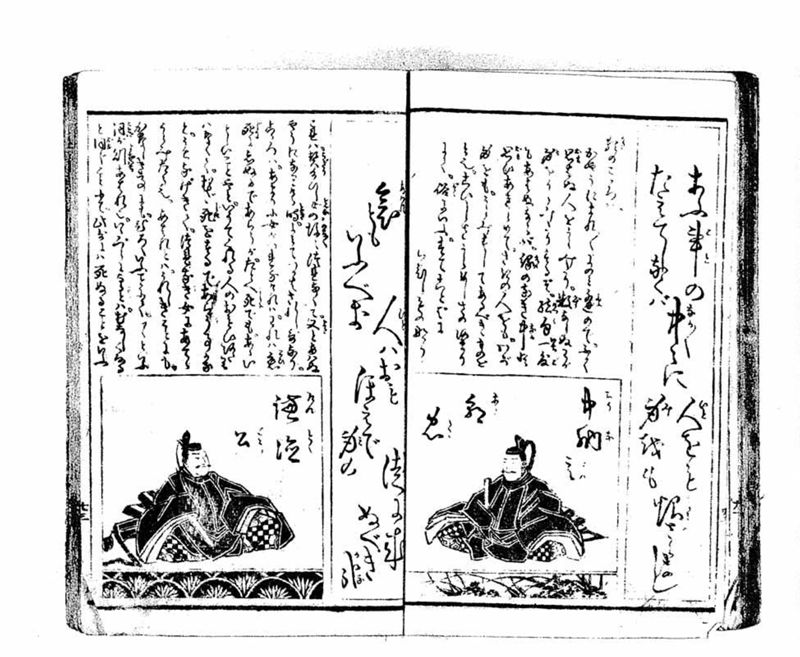
翻刻
【右丁】
あふ事の 人をも
中々に 恨みざらまし
たえてしなくば 身をも
歌のこゝろは
かやうにまれ〳〵にのみ逢のでふかく 中納
思はぬ人をうらみたり数ならぬわが 言
身をうらみたりするぞ結句一度
もあはぬもならば縁のなき中
思ひあきらめてさきの人をもわが
身をもうらみすしてあるべきものを
と也こひしさうらめしさのあまり 朝
にて俗にいふすてことばに
いひしものなり 忠
【左丁】
哀 人はおも 徒に成
とも ほえで ぬべき
いふべき 身の 哉
これは契給ひし女の後々つれなくて又とあはぬ
やうになりける時よみてつかわされし哥なり 謙徳
こゝろはあまりに女のつれなければ我は恋
死にしぬるであらうがたとへ死でもあゝい 公
としいことやいうてくれる人のおもひあたり
はなくてむだ死にをするであらう事かな
とうちなげきてつれなき女にあてゝ
うらみたるあはれとはうれしきことにも
かなしき事にもひろくいふことにて■■といふ
詞が則あはれ也いたづらになるとはむなしくなる
と同じことにて此哥には死ぬることをいふ
現代語訳
【右丁】
逢うことの 絶えてしなくば 中々に
人をも身をも 恨みざらまし
歌の心は
このようにまれまれにのみ逢うので、深く思わぬ人を恨んだり、数ならぬわが身を恨んだりするのである。結局、一度も逢わぬものならば、縁のない仲と思い諦めて、その人をもわが身をも恨みなどしてあるべきものをということである。恋しさ、恨めしさの余りにて、俗に言う捨て言葉に言ったものである。
中納言朝忠
【左丁】
哀れとも いうべき人は 思ほえで
徒になりぬべき 身の哉
これは契りを交わした女の後々つれなくて、また逢わぬようになりけるとき詠んで遣わされし歌なり。心は、あまりに女がつれないので、我は恋死にしてしまうであろうが、たとえ死んでも「ああ、いとしいことよ」と言ってくれる人の思い当たりはなくて、無駄死にをするであろうことかなと嘆いて、つれない女に当てて恨んだのである。「哀れ」とは嬉しきことにも悲しきことにも広く言うことにて、[判読困難]という詞が則ち哀れである。「徒になる」とは虚しくなると同じことにて、この歌には死ぬることを言う。
謙徳公
英語訳
【Right Page】
If we had never met at all,
then at least I would not
resent both you and myself
for these infrequent meetings
The heart of the poem is:
Because we meet only so rarely like this, I resent the person who does not think deeply of me, and I resent my own worthless self. In the end, if we had never met even once, I would have given up, thinking we had no connection, and would not be resenting either that person or myself. This was spoken as what is commonly called "abandoning words" (harsh words), out of excessive longing and resentment.
Middle Counselor Asatada
【Left Page】
There seems to be no one
who would call my death pitiable—
my body is destined
to die in vain
This is a poem composed and sent when a woman with whom he had exchanged vows later became cold and they no longer met. The heart is: Because the woman is so heartless, I will probably die of love, but even if I die, there is no one I can think of who would say "Oh, how pitiful," and I will die a meaningless death. He lamented this and directed his resentment toward the heartless woman. "Aware" (pitiable/touching) is a word used broadly for both joyful and sad things, and [illegible text] is precisely "aware." "Becoming徒 (in vain)" is the same as becoming empty/meaningless, and in this poem it refers to dying.
Duke Kentoku