翻刻
【右丁】
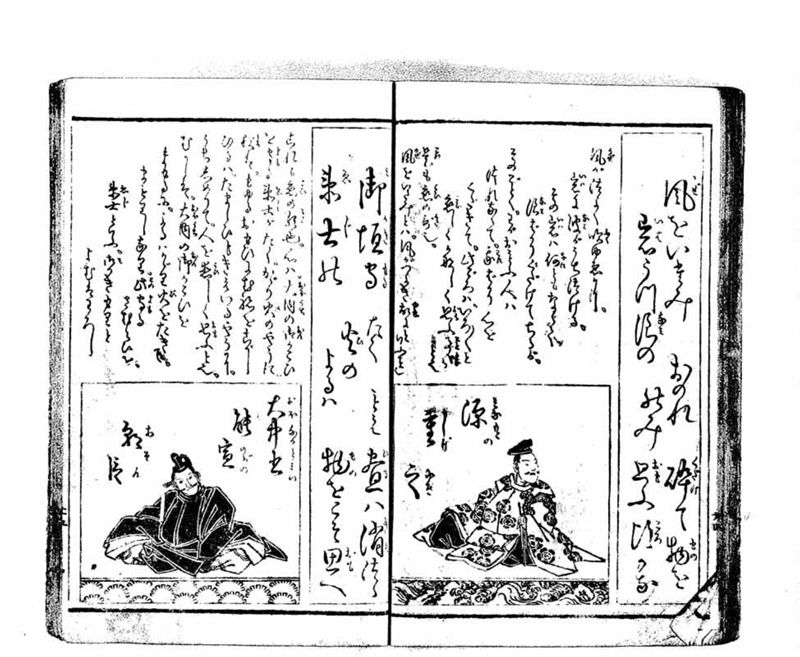
風をいたみ おのれ 砕て物を
岩うつ波の のみ 思ふ頃かな
風がつよく吹ゆゑに
岩に波がつちつける
その岩に何ともならで
波ばかりくだけてちるが
そのごとくわがおもふ人は
つれなくて我ばかり心を
くだきて此のごとはいろ〳〵と 源
恋しくかなしく思ふ事哉
と也 重
是も恋の哥也之
風をいたみとは風がつよき故にと 之
いふ也
【左丁】
御垣守 たく もえ 昼は消つゝ
火の
衛士の よるは 物をこそ思へ
これも恋の歌也心は大内の御かこひ
を守る衛士がたくかゞり火のやうに 大中臣
夜はもゆるおもひにむねをこがし 能
ひるはたましひもきえいるやうに 宣
うちしめりて人を恋しく思ふと也
むかしは大内の御かこひを
まもるによるはかゞり火をたきて
まもりしなり此守る
さむらひを 朝
衛士といふみかきもりと 新
よむはわろし
現代語訳
【右丁】
風をいたみ 岩うつ波の おのれのみ 砕けて物を 思ふ頃かな
風が強く吹くために、岩に波が打ちつける。その岩に何ともならずに、波ばかりが砕けて散る。そのように、私が思う人はつれなくて、私ばかりが心を砕いて、このように色々と恋しく悲しく思うことであるという意味である。
これも恋の歌である。「風をいたみ」とは風が強いためにということである。
【左丁】
御垣守 衛士のたく火の 夜は燃え 昼は消えつつ 物をこそ思へ
これも恋の歌である。心は、大内の御垣を守る衛士が焚くかがり火のように、夜は燃える思いに胸を焦がし、昼は魂も消え入るように打ちしめって人を恋しく思うという意味である。
昔は大内の御垣を守るために、夜はかがり火を焚いて守ったのである。この守る侍を衛士という。「みかきもり」と読むのは間違いである。
英語訳
【Right Page】
Because the wind is fierce, the waves crash against the rocks, only to be broken apart themselves, while I suffer in my thoughts of love.
Because the wind blows strongly, waves strike against the rocks. Unable to affect the rocks at all, only the waves are broken and scattered. In the same way, the person I love is cold and indifferent, and only I break my heart, thinking of them with such longing and sadness.
This is also a love poem. "Kaze wo itami" (because the wind is fierce) means "because the wind is strong."
【Left Page】
The palace guards who tend the watchfires burn at night and fade by day, as I suffer in my thoughts of love.
This is also a love poem. The meaning is: like the watchfires that the guards tending the imperial palace enclosure kindle, at night my heart burns with passionate thoughts, and by day my spirit seems to fade away as I pine for my beloved.
In ancient times, to guard the imperial palace enclosure, watchfires were lit and tended through the night. These guarding samurai were called "eji" (guards). Reading it as "mikakimori" is incorrect.