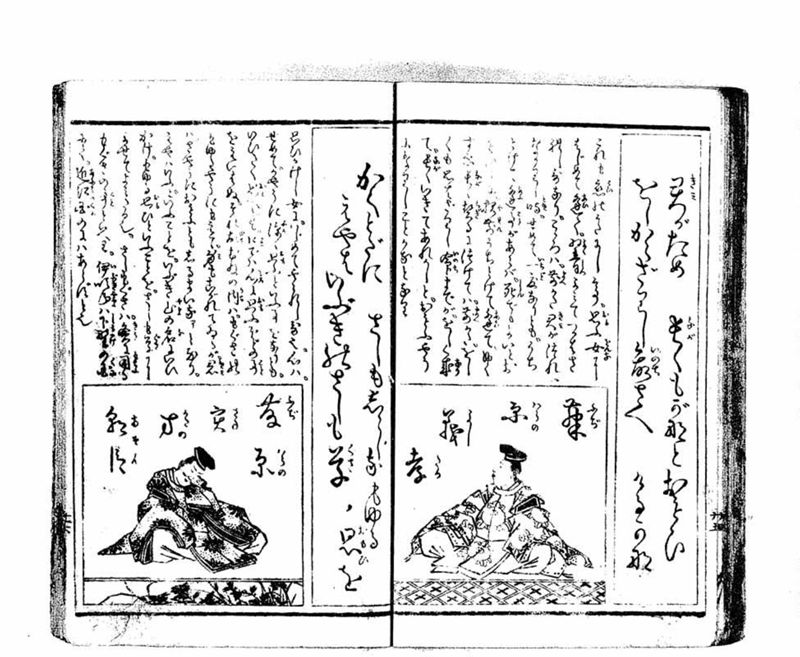
翻刻
【右丁】
君がため 長くもがなとおもひ
をしからざりし命さへ けるかな
これも恋のうたにして思ふ女に
はじめて逢て翌日よみてつかはさ 藤
れし哥なりこゝろは前かた君がつれ
なかりし時せめて一度なりともうち
とけるて逢があれば死でもよいとお 原
も■■■に夜前うちとけて逢てゆく
すゑ長く契るにつけては前かたをし
くも思はざりし命までがをしく成 義
て長くいきてあれかしとおもふやう
になりしことかなとなり 孝
【左丁】
かくとだに さしもしらじな もゆる
えやは 思ひを
いぶきのさしも草
思ひかけし女にはじめてやられし哥也心は
せめてかやうに深く思ふといふ事なりとも 藤
いひたく思へども口では心に思ふをどの事 原
をえいはぬそれをむねのうちはもぐさの
もゆるやうにもえて身もこがれてゐるが君 実
はさやうにおもふともしるまいなぁとなり
えやはいふといふことをいぶき山の名にいひ 方
かけもゆる思ひといふことをさしも草に
かけてよみたる也灸に用る 朝臣
もぐさの事をいへり伊吹山は下野の国
にて近江の国にはあらずと也
現代語訳
【右丁】
君がため 惜しからざりし 命さへ 長くもがなと 思ひけるかな
これも恋の歌で、思いを寄せる女性に初めて会った翌日に詠んで送った歌である。心は、以前あなたがつれなかった時は、せめて一度でもうち解けて会えるなら死んでもよいと思っていたのに、昨夜うち解けて会って、将来長く契りを結ぶにつけては、以前惜しくも思わなかった命までが惜しくなって、長く生きていたいと思うようになったことだなあ、という意味である。
【左丁】
かくとだに えやは伊吹の さしも草 さしも知らじな 燃ゆる思ひを
思いをかけた女性に初めて送った歌である。心は、せめてこのように深く思っているということだけでも言いたいと思うけれども、口では心に思っていることを言うことができない。それで胸の内はもぐさが燃えるように燃えて身も焦がれているが、あなたはそのように思っているとも知らないだろうなあ、という意味である。「えやは言う」ということを伊吹山の名前にかけて言い、「燃ゆる思ひ」ということをさしも草にかけて詠んだのである。灸に用いるもぐさのことを言っている。伊吹山は下野の国で、近江の国ではないということである。
英語訳
【Right Page】
For your sake, even this life I once thought nothing of, I now wish could last forever.
This is also a love poem, composed and sent the day after first meeting the woman he loved. The meaning is: previously, when you were cold to me, I thought that if I could meet you intimately even once, I would be content to die. But after we met intimately last night, as we pledge our love for the future, even this life that I previously thought nothing of has become precious to me, and I have come to wish I could live long.
【Left Page】
Even this much I cannot say - does she know of my burning love, like the mugwort of Mount Ibuki?
This was the first poem sent to a woman he had feelings for. The meaning is: I want to tell you at least that I love you this deeply, but I cannot speak what is in my heart. So my heart burns like burning mugwort, and my body is consumed with longing, but you probably don't know that I feel this way about you. He uses a play on words with "eyaha iu" (cannot say) and the name of Mount Ibuki, and links "burning thoughts" with "sashimo-gusa" (mugwort). This refers to the mugwort used for moxibustion. Mount Ibuki is in Shimotsuke Province, not in Omi Province.