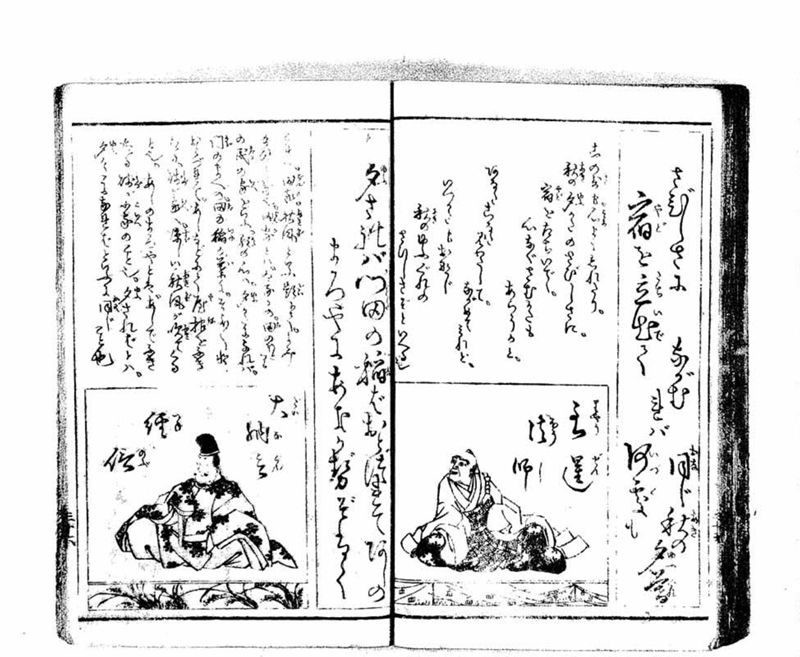
翻刻
【右丁】
さびしさに ながむ 同じ秋の
宿を立出て れば 夕暮
何処も
この哥も心にて れたり
秋の夕かたのさびしさに 良暹
宿をたちいでゝ
心なぐさむかたも 法
あらうかと 師
あなた
こなた
見わたして
ながめて
みれど
いつかたもおなじ
秋のふゆぐれの
さひしさぞといへる也
【左丁】
夕されば門田の稲ばおとづれてあしの
まろやにあきかぜぞふく
これは 秋風といふ題にてよみ
給ひし哥也門田とはゐなかの門の り 大
の民の家の他の家といふ歌の心は夕かたになれば 納言
門のまへの田の稲の葉にそよ〳〵と
おとづれてあしなどにて屋根をふき
たる賎が家へ涼しい秋風が吹てくる 經
と也あしのまろやとはあしでふき
たる賎が小家のこと也夕さればとは 信
夕かたになればといふに同じこと也
現代語訳
【右丁】
寂しさに宿を立ち出でて眺むれば何処も同じ秋の夕暮
この歌も心にて作られたものである。
秋の夕方の寂しさに、宿を立ち出て心を慰める方法もあろうかと、あちらこちらを見渡して眺めてみるけれど、どこを向いても同じ秋の夕暮の寂しさであるということを詠んだものである。
良暹法師
【左丁】
夕されば門田の稲葉音づれて葦の丸屋に秋風ぞ吹く
これは秋風という題で詠まれた歌である。門田とは田舎の門の前にある田のことで、民の家や他の家という意味である。歌の心は、夕方になると門の前の田の稲の葉にそよそよと音を立てて、葦などで屋根を葺いた粗末な家へ涼しい秋風が吹いてくるということである。葦の丸屋とは葦で葺いた粗末な小家のことである。夕さればとは夕方になればということと同じ意味である。
大納言經信
英語訳
【Right Page】
In loneliness I leave my dwelling to gaze about, but everywhere is the same autumn evening
This poem was also composed from the heart.
In the loneliness of an autumn evening, I left my dwelling thinking there might be some way to comfort my heart, and looked around in all directions, but no matter where I turned, it was the same lonely autumn evening.
Ryōzen Hōshi (Buddhist priest Ryōzen)
【Left Page】
When evening comes, the rice leaves in the gate-field rustle, and autumn wind blows through the reed-thatched round hut
This is a poem composed on the theme of "autumn wind." "Gate-field" refers to fields in front of the gates in the countryside, meaning the fields of commoners' houses and other homes. The heart of the poem is that when evening comes, the autumn wind rustles through the leaves of rice plants in the fields before the gate, and a cool autumn wind blows into humble dwellings with roofs thatched with reeds and such. "Reed-thatched round hut" refers to a humble small house thatched with reeds. "When evening comes" has the same meaning as "when it becomes evening."
Dainagon Tsunenobu (Major Counselor Tsunenobu)