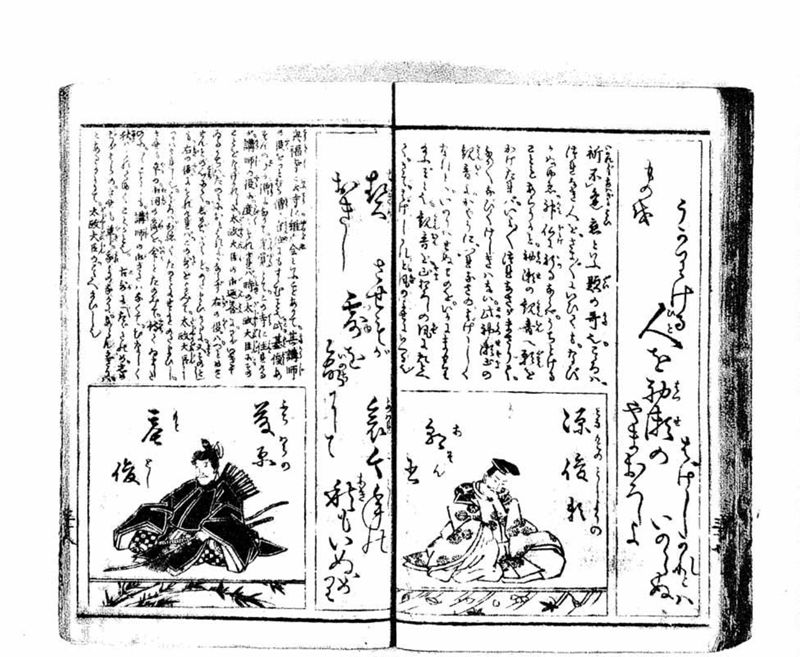
翻刻
【右丁】
うかりける はげしかれとは
人を初瀬の いのらぬ
ものを やまおろしよ
祈不逢恋といふ題の哥也これは
つれなき人をさま〴〵にいひてもなび 源俊頼
かぬゆゑ神仏に祈るならばうちとける
こともあらうと初瀬の観音へ願を
かけたればいよ〳〵つれなさがまさりて
なか〳〵なびくけしきはないこの初瀬山の
観音にかやうにみなはげ〳〵しく
なれとはいのりはせぬものをいかにまもり 朝
給ふぞと也観音を山おろしの風にたとへ
てさてはげしかれと風のよせていへる也 信
【左丁】
契 させもが 哀今年の
おきし 露を あきもいぬめ
命にて り
興福寺と云寺に維摩会といふことありて其講師
の役をつとむる僧■■にもすゝむ事也此の基俊あ 藤原
そんの子が僧になりて光覚とてこの寺に住れける
が講師の役に度々もれければ時の太政大臣にその
ことをなげかれしに太政大臣の御返答にわがいきて
いるうちにはたのみにおもはれよかならず右の役はつとめさ
せんとの心にてしめぢがはらとのたまひけるにまたそのとし
も右の役にもれけばこの哥をよみて太政大臣に
つかはされし也こゝろはかね〳〵たのみにせよとのたまひし
させも■の御詞の露を命とたのみて待てゐました 基
のに又ことしも講師の御さたはなくてむなしく
秋は■られてゆくことかと也右哥にたゞたのめ 俊
ぢがはらのさせも我よのなかにあらんかぎりは
とあるよりて太政大臣のこたへ給ひし也
現代語訳
【右丁】
憂かりける人を初瀬の山おろしよ激しかれとは祈らぬものを
「祈不逢恋」という題の歌である。これは、つれない人を様々に言っても靡かないゆえ、神仏に祈るならば心を開くこともあろうと初瀬の観音へ願をかけたところ、いよいよつれなさが増して、なかなか靡く気色はない。この初瀬山の観音に、このように皆激しくなれとは祈りはしなかったものを、いかにお守りくださるのかということである。観音を山おろしの風に例えて、それで「激しかれ」と風に寄せて言ったのである。
源俊頼朝臣
【左丁】
契りおきし命にて候もが哀れ今年の秋も去りけり
興福寺という寺に維摩会ということがあって、その講師の役を務める僧に進むことである。この基俊朝臣の子が僧になって光覚として、この寺に住んでいたが、講師の役に度々漏れたので、時の太政大臣にそのことを嘆かれた。太政大臣の御返答に、「我が生きているうちには頼みに思われよ。必ずその役は務めさせん」との心にて「させもがは」とおっしゃったが、またその年もその役に漏れたので、この歌を詠んで太政大臣に遣わされたのである。心は、かねがね頼みにせよとおっしゃった「させもが」の御言葉の露を命と頼んで待っていましたのに、また今年も講師のお沙汰はなくて、むなしく秋は過ぎられていくことかということである。この歌に「ただ頼め」「しがらの」「させもが」「我が世の中にあらん限りは」とあるより、太政大臣がお答えになったのである。
藤原基俊
英語訳
【Right Page】
How cruel this person has been to me - O mountain wind of Hatsuse, I never prayed for you to blow so fiercely
This is a poem on the theme "praying but not meeting in love." The meaning is: this heartless person would not yield no matter how I approached them in various ways, so I thought that if I prayed to the gods and Buddha, they might soften their heart, and I made a vow to the Kannon of Hatsuse. However, their coldness only increased, and there was no sign at all of them yielding. I never prayed to this Kannon of Hatsuse Mountain for everyone to become so fierce - how are you protecting me? The poet compares Kannon to the mountain wind, and thus speaks of "being fierce" in reference to the wind.
Minamoto no Toshiyori Ason
【Left Page】
If only I could live by the promise you made - alas, this year's autumn too has passed away
At a temple called Kofukuji, there is something called the Yuima-e (Vimalakirti Assembly), and monks advance to serve in the role of lecturer for this. This Kijun Ason's son became a monk called Kokaku and lived at this temple, but he was repeatedly passed over for the lecturer role, so he lamented this to the Prime Minister of the time. The Prime Minister replied with the intention that "while I am alive, trust in me - I will surely have you serve in that role," saying "sasemo ga wa." But again that year he was passed over for the role, so he composed this poem and sent it to the Prime Minister. The meaning is: I have been waiting, trusting in the dew of your words "sasemo ga" that you spoke, telling me to rely on you, as my very life, yet again this year there was no appointment as lecturer, and autumn passes by emptily. This comes from the poem containing "tada tanome" (just trust), "shigara no," "sasemo ga," and "waga yo no naka ni aran kagiri wa" (as long as I am in this world), to which the Prime Minister responded.
Fujiwara no Mototoshi