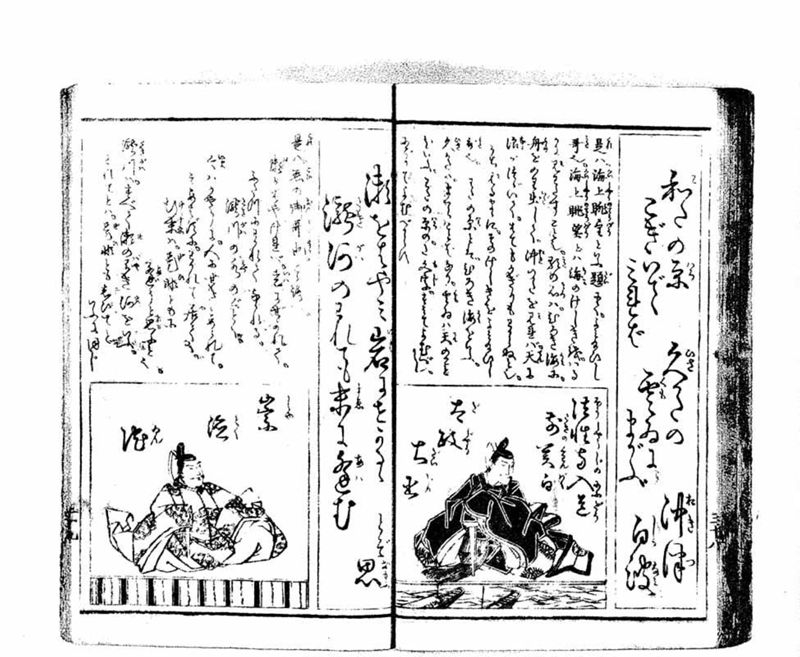
翻刻
【右丁】
わたの原 久かたの 沖津
こぎいでゝ 雲ゐに
みれば まがふ 白波
是は海上眺望といふ題にてよみ給ひし
哥也海上眺望とは海のけしきをはる 法性寺入道
かに見わたすこと也歌の心はひろき海に 前関白
舟をのり出して沖のかたを見れば天に
浪がつゞいてはてもかぎりもわかぬと也
うちはるまゝにそのけしきをよみ給ひし
哥也わたの原とはひろき海をいふ 太
久かたはまくらことばなり雲ゐは天のこと 政
をいふわたの原のた文字すきてよみべし 大
のごりてよみべからず 臣
【左丁】
瀬をはやみ岩にせかるゝ とそ思
瀧河のわれても末に逢む
是は恋の御哥也こゝをは
瀬がはやければ岩にせかれて 崇
ふた河にわかれてせかれる
瀧川の水のごとく
今はかやうに人にせきとめられて 徳
えあはずにわかれて
行末は是非ともに
逢うと思ふと也
瀧川はすべて瀬の早き河をいふ 院
われてもとは是非ともしひてと
いふに同じ
現代語訳
【右丁】
わたの原 こぎ出でて見れば 久方の 雲居にまがふ 沖つ白波
これは海上眺望という題で詠まれた歌である。海上眺望とは海の景色を遥かに見渡すことである。歌の心は、広い海に舟を乗り出して沖の方を見ると、天に波が続いて果ても限りも分からないということである。心を晴らすままに、その景色を詠まれた歌である。わたの原とは広い海をいう。久方は枕詞である。雲居は天のことをいう。わたの原の「た」文字を省いて読むべし。残して読んではならない。
法性寺入道前関白太政大臣
【左丁】
瀬を早み 岩にせかるる 滝川の われても末に 逢はむとぞ思ふ
これは恋の御歌である。心は、
瀬が早いので岩にせき止められて二つの川に分かれてせき止められる滝川の水のように、今はこのように人にせき止められて会うことができずに分かれているが、行く末は是非とも逢おうと思うということである。滝川はすべて瀬の早い川をいう。「われても」とは「是非とも」「強いて」というのと同じである。
崇徳院
英語訳
【Right Page】
Rowing out onto the vast ocean and looking around, the white waves in the offing seem to blend with the distant clouds in the sky
This is a poem composed on the theme "gazing out over the ocean." Ocean gazing means looking far out over the seascape. The heart of the poem is: rowing a boat out onto the wide sea and looking toward the offing, the waves continue up to the heaven with no end or limit visible. This is a poem composed while clearing one's heart, describing that scenery. "Wata no hara" means the wide ocean. "Hisakata" is a makurakotoba (pillow word). "Kumoi" refers to the heavens. The letter "ta" in "wata no hara" should be omitted when reciting; it should not be left in.
Hōshōji Nyūdō, Former Regent, Grand Minister
【Left Page】
Because the current runs so swift, blocked by the rocks, like the rapids that divide yet continue - I believe we shall meet again in the end
This is a love poem. The meaning is:
Because the current runs swift and is blocked by rocks, dividing into two streams - like the water of swift rapids that is blocked and divided, now we are similarly blocked by people and cannot meet, being separated, but in the future we will surely meet. "Takigawa" refers to any river with swift currents. "Warete mo" means the same as "absolutely" or "forcibly."
Emperor Sutoku