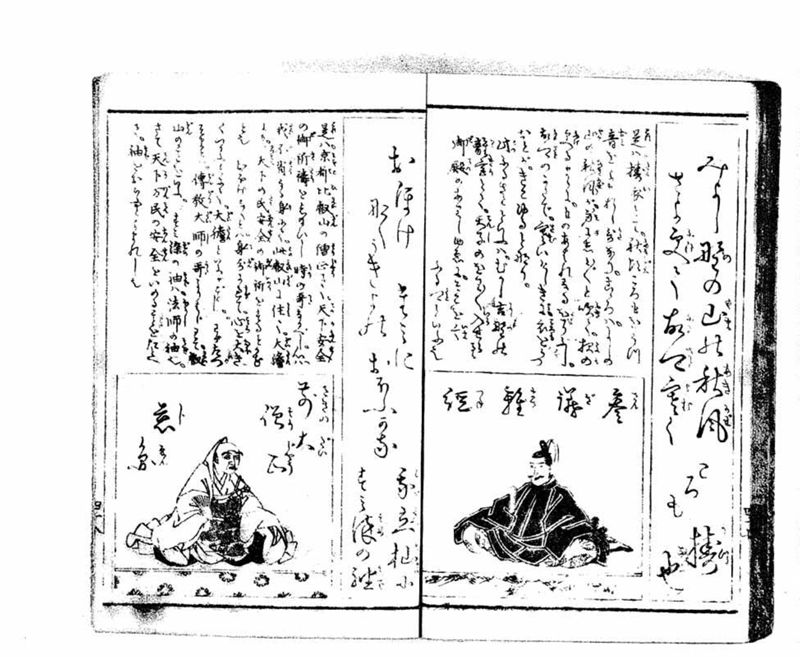
翻刻
【右丁】
みよし野の秋風 こ 打
ろ
さよ更て山里寒く も 也
是は擣衣して秋比ころもをうつ
音をよまれし哥なりこゝろはよしの 参
山の秋風にしみ〴〵と吹て夜の
更るやうにものあはれなるをりふし 議
古里のかたで寒いけしきに衣をうつ
おとがきこゆるとなり
此のふるさとといふは吉野の 隆
宮とて天使のをり〳〵入せらるゝ
御殿のありしゆゑにそこを今 経
ふる里といふ也
【左丁】
おほけ たみに 我立つ杣に
なく かな
うきよの おほふ すみ染の袖
是は京都比叡山の僧正にて天下安全
の御祈祷をし給ひし時の哥なるべし心は 前大
我不肖なる身にて比叡山に住て大澹
より天下の氏安全の御祈をするとかな 僧正
と也 おほけなくとは身分に過て心大き
くいかにとて大澹といふがごとしわがたつ
そまとは傳教大師の哥よしはじめて叡
山のことをいふ すみ染の袖は法師の袖也 慈
さて天下万民の安全をいのることをたとへ
て袖をおほふとよまれし也 円
現代語訳
【右丁】
み吉野の山の秋風さ夜更けて古里寒く衣打つなり
これは擣衣(たくい)して秋頃に衣を打つ音を詠まれた歌である。心は、吉野山の秋風がしみじみと吹いて、夜が更けるように物悲しい折に、古里の方で寒い景色の中、衣を打つ音が聞こえる、という意味である。
この古里というのは、吉野の宮といって、天皇が時々入られる御殿があったので、そこを今「古里」というのである。
参議隆経
【左丁】
おおけなく憂き世の民におおうかな我が立つ杣に墨染の袖
これは京都比叡山の僧正であって、天下安全の御祈祷をなさった時の歌であろう。心は、我が不肖な身で比叡山に住んで、身分を越えて天下の民の安全の御祈りをすることよ、という意味である。「おおけなく」とは、身分に過ぎて心を大きく持つことで、いかにも身分不相応ということのようである。「我が立つ杣」とは、伝教大師の歌から始まって叡山のことをいう。「墨染の袖」は法師の袖である。そして天下万民の安全を祈ることを、譬えて袖で覆うと詠まれたのである。
前大僧正慈円
英語訳
【Right Page】
The autumn wind of beautiful Yoshino - late into the night, in the cold mountain village, the sound of beating cloth
This is a poem composed about the sound of beating cloth (takui) in autumn to prepare clothing. The meaning is: The autumn wind of Mount Yoshino blows penetratingly, and in the melancholy time as night deepens, from the direction of the old village in the cold scenery, the sound of beating cloth can be heard.
This "old village" refers to the Yoshino Palace, where there was a imperial residence that the Emperor would occasionally visit, so that place is now called "the old village."
Sangi Takatsune
【Left Page】
How presumptuous of me - covering the suffering people of this world with my ink-black sleeves in the mountain forest where I stand
This is a poem by a head priest of Mount Hiei in Kyoto, composed when he was conducting prayers for the peace and safety of the realm. The meaning is: With my unworthy self living on Mount Hiei, how presumptuous to pray for the safety of all people in the land, beyond my station. "Presumptuous" means to have grand ambitions beyond one's proper station, truly acting above one's place. "The mountain forest where I stand" refers to Mount Hiei, beginning with a poem by the great teacher Dengyō Daishi. "Ink-black sleeves" refers to a Buddhist priest's sleeves. The prayer for the safety of all people under heaven is expressed metaphorically as covering them with his sleeves.
Former Head Priest Jien