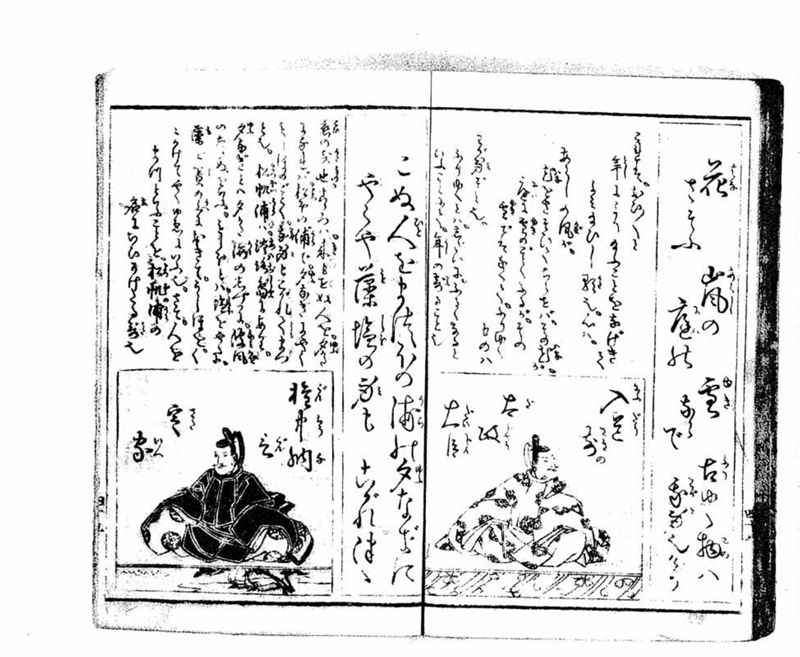
翻刻
【右丁】
花 嵐の 雪 古ゆく物は
さそふ 庭の なら
で 我身なりけり
これそおひ〳〵と
年にとり給ふことをなげきて 入道
よみ給ひし歌也心は 前
あらしの風が
花をさそひてちらすをばその花が
庭に雪のごとくふるがその 太
雪ではなくてふりゆく
ものは 政
わが身とぞ也
ふりゆくとはしだいにふるくなると 大臣
いふことにて年の寄ること也
【左丁】
こぬ人をまつほの浦の夕なぎに
やくや藻塩の身もこがれつゝ
恋の哥也こゝろは来もせぬ人を夕かた
になれば松ほの浦で夕なぎにやく 権中納
もしほのごとく我身とこがれつゝまつ
と也松帆浦は淡路島にあり 言
夕なぎとは夕かた海のしづかに海風
のたゝぬをいふもしほとは塩をやくに
藻を■の上におきてうしほを■
■にかけてやくゆゑにいふ也さて人を 定
まつといふことを松帆浦の
名にかけたる哥也 家
現代語訳
【右丁】
花さそふ嵐の庭の雪ならで古りゆく物は我が身なりけり
これは次第に年を取られることを嘆いて詠まれた歌である。心は、嵐の風が花を誘って散らすのを、その花が庭に雪のように降るが、その雪ではなくて古りゆくものは我が身である、ということである。
「古りゆく」とは次第に古くなるということで、年を取ることである。
入道前太政大臣
【左丁】
来ぬ人を松帆の浦の夕凪に焼くや藻塩の身もこがれつつ
恋の歌である。心は、来もしない人を夕方になると松帆の浦で夕凪に焼く藻塩のように、我が身も焦がれながら待つ、ということである。松帆浦は淡路島にある。
夕凪とは夕方に海が静かで海風が立たないことをいう。藻塩とは塩を焼くのに海藻を[欠字]の上に置いて潮水を[欠字]にかけて焼くので、そういうのである。そして人を待つということを松帆浦の名にかけた歌である。
権中納言定家
英語訳
【Right Page】
It is not the snow in the garden where storm winds scatter the blossoms - what grows old is my own body
This is a poem lamenting the gradual aging of oneself. The meaning is: The storm wind scatters the blossoms, and though they fall like snow in the garden, it is not that snow but my own body that grows old.
"Growing old" means gradually becoming ancient, referring to aging.
Nyūdō Former Prime Minister
【Left Page】
Waiting for one who does not come, like the seaweed salt burned in the evening calm at Matsuho Bay, my body too burns with longing
This is a love poem. The meaning is: Waiting for someone who never comes, like the seaweed salt burned in the evening calm at Matsuho Bay, my body too burns with longing while I wait. Matsuho Bay is located on Awaji Island.
"Evening calm" refers to when the sea is quiet in the evening and no sea breeze stirs. "Seaweed salt" refers to making salt by placing seaweed on [missing character] and pouring seawater over [missing character] to burn it. This poem plays on the connection between waiting for a person and the name Matsuho Bay (Pine Bay).
Gon-chūnagon Teika