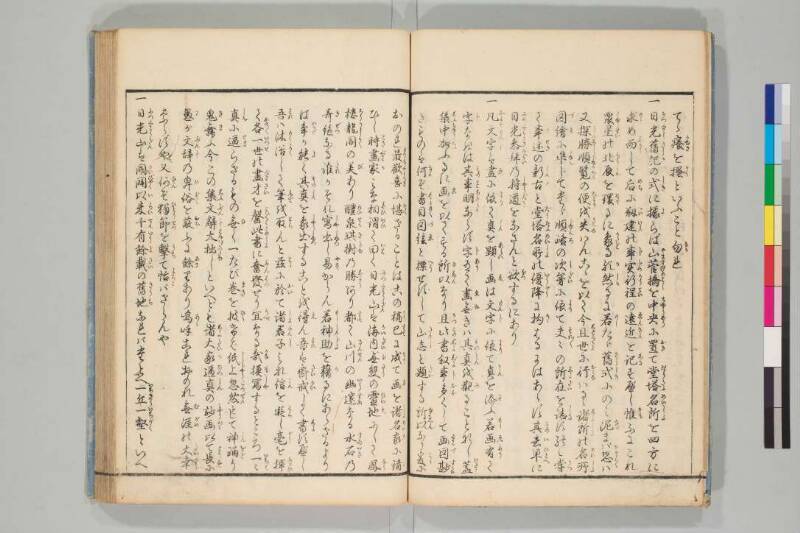
翻刻
【右丁】
てゝ癢(かゆき)を掻(かく)といふこと勿(なか)れ
一《振り仮名:日光𦾔記|につくわうきうき》の式(しき)に據(よ)らば山菅橋(やますげのはし)を中央(ちゆうあう)に置(おき)て堂塔(だうたふ)名所(めいしよ)を四方に
求(もと)め而(しかう)して后(のち)に剏建(へいけん)の事実(じじつ)行程(かうてい)の遠近(ゑんきん)を記(しる)すべし惟(おも)ふにこれ
衆星(しゆうせい)の北辰(ほくしん)を環(めぐ)るに象(かたど)る欤(か)然(しか)るに若(もし)たゞ《振り仮名:𦾔式|きうしき》にのみ泥(なづ)まば恐(おそらく)は
又 探勝(たんしよう)順覧(じゆんらん)の便(たより)を失(うしな)はんこゝを以て今 且(しばらく)世(よ)に行(おこな)はるゝ諸所(しよしよ)の名所(めいしよ)
図繪(づゑ)に凖(じゆん)じてたゞ順路(じゆんろ)の次第(しだい)に依(より)て《振り仮名:夫〻|それ〳〵》の所在(しよざい)を誌(しる)すのみ甞(かつ)
て事迹(じせき)の新古(しんこ)と堂塔(だうたふ)名所(めいしよ)の優降(いうがう)に抅(かゝ)はるにはあらず其(その)意(い)単(ひとへ)に
日光(につくわう)叅拜(さんばい)の将道(しやうだう)をなさんと欲(ほつ)するにあり
一 凡(およそ)文字(もんじ)は畫(ゑ)に依(より)て真(しん)を顕(あらは)し画(ゑ)は文字(もんじ)に依(より)て真(しん)を添(そ)ふ若(もし)画(ゑ)有(あり)て
字(じ)なきは其(その)事(こと)明(あきらか)ならず字(じ)有(あり)て畵(ゑ)無(な)きは其(その)真(しん)を觀(み)ることなし蓋(けだし)
集中(しふちゆう)加(くは)ふるに画(ゑ)を以てする所以(ゆゑん)なり且(かつ)此(この)書(しよ)叙事(じよじ)多(おほ)くして画図(ぐわづ)尠(すくな)
きものは何(なん)ぞ書目(しよもく)図繪(づゑ)と標(へう)せずして山志(さんし)と題(だい)する所以(ゆゑん)なり爰(こゝ)に
【左丁】
おのれ最(もつとも)歡喜(くわんぎ)に堪(たへ)ざることはこの稿(かう)已(すで)に成(なり)て画(ゑ)を諸(しよ)名家(めいか)に請(こ)
ひし時(とき)畵家(ぐわか)みな相(あひ)謂(いひ)て曰(いは)く日光山(につくわうざん)は海内(かいだい)無雙(ぶさう)の靈地(れいち)にして鳳(ほう)
楼(ろう)龍閣(りようかく)の美(び)あり醴泉(れいせん)琪樹(きじゆ)の勝(しよう)あり都(すべ)て山川(さんせん)の幽邃(いうすゐ)なる水石(すゐせき)の
竒絶(きぜつ)なる誰(たれ)かそれ寫出(しやしゆつ)し易(やす)からん若(もし)神助(しんじよ)を藉(か)るにあらざるより
は争(いかで)か能(よ)く其(その)真(しん)を象出(しやうしゆつ)することを得(え)ん吾(われ)は齋戒(さいかい)して書(しよ)すべし
吾(われ)は沐浴(もくよく)して筆(ふで)を取(とら)んと茲(こゝ)に於(おい)て諸(しよ)君子(くんし)みな信(しん)を凝(こら)し毫(がう)を揮(ふるひ)
て各(おの〳〵)一世(いつせ)に畵才(ぐわさい)を罄(こと〴〵く)此(この)書(しよ)に奮發(ふんはつ)せり冝(うべ)なる哉(かな)摸冩(もしや)するところ《振り仮名:一〻|いち〳〵》
真(しん)に逼(せま)らざるもの無(な)く一たび巻(まき)を披(ひら)けば紙上(しじやう)忽然(こつぜん)として神(しん)踊(をど)り
鬼(き)舞(ま)ふ今この集(しふ)文辭(ぶんじ)太(はなはだ)拙(つたな)しといへども諸(しよ)大家(たいか)逼真(ひつしん)の玅画(みやうぐわ)以て長(とこしなへ)に
愚(わ)が文辭(ぶんじ)の卑俗(ひぞく)を蔽(おほ)ふに餘(あま)りあり嗚呼(あゝ)これおのれ無涯(むがい)の大幸(たいかう)
ならずや又 何(なん)ぞ獨(ひとり)節(せつ)を擊(うち)て怡(よろこ)ばざらんや
一 日光山(につくわうざん)は開闢(かいびやく)以来(いらい)千(せん)有餘(いうよ)載(さい)の《振り仮名:𦾔地|きうち》なればたとへ一丘(いちきう)一壑(いちがく)といへ
現代語訳
【右丁】
靴を隔てて痒いところを掻くようなことはしないでほしい。
一 『日光旧記』の式によれば、山菅橋を中央に置いて堂塔・名所を四方に求め、そして後に創建の事実・行程の遠近を記すべきである。思うにこれは衆星が北辰を巡るのに象っているのであろうか。しかしながら、もしただ旧式にのみ泥むならば、おそらくまた探勝・順覧の便を失うであろう。ここをもって今しばらく世に行われる諸所の名所図絵に準じて、ただ順路の次第によってそれぞれの所在を記すのみである。かつて事跡の新古と堂塔・名所の優劣にかかわるのではない。その意図は単に日光参拝の将来の道案内をしようと欲するにある。
一 およそ文字は絵によって真実を顕し、絵は文字によって真実を添える。もし絵があって字がなければその事は明らかでなく、字があって絵がなければその真実を観ることはない。けだし集中に絵を加える所以である。かつこの書は叙事が多くて画図が少ないのは、なぜ書目を「図絵」と標さずして「山志」と題する所以である。ここに
【左丁】
私が最も歓喜に堪えないことは、この原稿がすでに成って絵を諸名家に請うた時、画家がみな相談して言うことには「日光山は海内無双の霊地にして鳳楼・龍閣の美があり、醴泉・琪樹の勝がある。すべて山川の幽邃なる、水石の奇絶なる、誰がそれを写し出しやすいであろうか。もし神助を借りるのでなければ、どうして能くその真実を象出することを得ようか。我は斎戒して書こう。我は沐浴して筆を取ろう」と。ここにおいて諸君子はみな信念を凝らし毫を振るって、各々一世に画才を尽くしてこの書に奮発した。もっともなことである。模写するところ一々真に迫らないものはなく、一度巻を開けば紙上忽然として神が躍り鬼が舞う。今この集は文辞がはなはだ拙いといえども、諸大家の逼真の妙画をもって永遠に愚かな私の文辞の卑俗を覆うに余りある。ああ、これは私の無限の大幸ではないか。また何ぞ独り節を打って喜ばないでいられようか。
一 日光山は開闢以来千有余年の旧地なれば、たとえ一丘一壑といえども
英語訳
【Right Page】
Do not try to scratch an itch through your shoe [i.e., don't approach things indirectly when directness is needed].
One: According to the style of the "Nikkō Kyūki" (Old Records of Nikkō), one should place Yamasuge Bridge at the center and seek temple towers and famous places in all four directions, then afterward record the facts of their founding and the distances of the routes. I think this perhaps symbolizes the way all stars revolve around the North Star. However, if we were to adhere only to the old style, we would probably also lose the convenience of scenic exploration and systematic viewing. Therefore, for now I will follow the various famous place illustrated guides that are popular in the world, and simply record the locations of each according to the order of the route. This has nothing to do with whether historical events are new or old, or whether temple towers and famous places are superior or inferior. The intention is simply to serve as a future guide for Nikkō pilgrimage.
One: Generally, text reveals truth through pictures, and pictures add truth through text. If there are pictures but no text, the matter is not clear; if there is text but no pictures, one cannot observe the truth. This is indeed why pictures are added to this collection. Moreover, this book has much narrative and few illustrations—this is why the title is not labeled "Illustrated Guide" but rather "Mountain Chronicle." Here
【Left Page】
What I find most impossible to contain my joy about is this: when this manuscript was already complete and I requested paintings from various master artists, the painters all consulted together and said: "Mount Nikkō is an unparalleled sacred place in all the land, with the beauty of phoenix towers and dragon pavilions, and the excellence of sweet springs and jade-like trees. Altogether, with the profound seclusion of its mountains and rivers and the extraordinary uniqueness of its rocks and waters, who could easily depict them? Unless we borrow divine assistance, how could we possibly succeed in portraying their truth? I will observe ritual purification and paint. I will bathe and take up the brush." Thereupon all these gentlemen concentrated their faith, wielded their brushes, and each exhausted their lifetime's artistic talent in devoted effort on this book. How fitting! Everything they copied approached the truth without exception, and once the scroll is opened, on the paper gods suddenly dance and spirits perform. Now, though the literary expression in this collection is quite clumsy, the lifelike masterful paintings of these great artists more than suffice to forever cover the vulgarity of my poor writing. Ah, is this not my boundless great fortune? How could I not beat time and rejoice alone?
One: Since Mount Nikkō has been a sacred site for over a thousand years since the beginning of the world, even a single hill or valley...