翻刻
【右丁】
中禅寺走大黒影像(ちゆうぜんじはしりだいこくのえいざう)
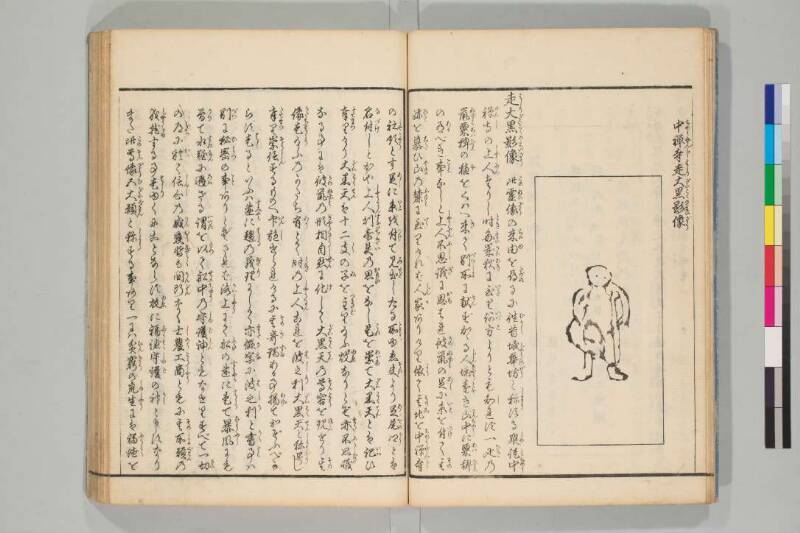
【図】
走大黒影像(はしりだいこくのえいざう) 此(この)靈像(れいざう)の來由(らいゆ)を尋(たづぬ)るに徃昔(むかし)城蕐坊(じやうげばう)と称(しよう)する衆徒(しゆと)中(ちゆう)
禅寺(ぜんじ)の上人(しやうにん)たりし时(とき)毎歳(まいさい)秋(あき)に至(いた)り何方(いづこ)よりとも知(し)れず一 疋(ひき)の
鼠(ねずみ)粟(あは)稗(ひえ)の穂(ほ)をくはへ來(き)て別所(べつしよ)に献(けん)ずかゝる人境(じんきやう)遠(とほ)き山中(さんちゆう)に粟(あは)稗(ひえ)
の有(ある)べき事(こと)なしと上人(しやうにん)不思議(ふしぎ)に思(おも)はれ彼鼠(かのねずみ)の足(あし)に糸(いと)を付(つけ)て其(その)
跡(あと)を慕(した)ひ山(やま)の麓(ふもと)に至(いた)りければ人家(じんか)ありけり依(より)て其地(そのち)を中禅寺(ちゆうぜんじ)
【左丁】
の社領(しやりやう)とす足(あし)に糸(いと)を付(つけ)て見出(みいだ)したる所(ところ)ゆゑ夫(それ)より足尾郷(あしをのがう)とは
名附(なづけ)しとかや上人(しやうにん)則(すなはち)奇異(きい)の思(おもひ)をなし是(これ)を崇(あがめ)て大黒天(だいこくてん)とは祀(いは)【祝ヵ】ひ
奉(たてまつ)りけり大黒天(だいこくてん)は十二 支(し)の子(ね)を主(つかさど)り給ふ故(ゆゑ)なりとぞ亦(また)不思議(ふしぎ)
なる事には彼鼠(かのねずみ)の形相(ぎやうさう)自然(しぜん)に化(け)して大黒天(だいこくてん)の尊容(そんよう)を現(げん)せり其(その)
像(かたち)走(はしり)給ふのかたち有(あり)とて时(とき)の上人(しやうにん)これを波之利大黒天(はしりだいこくてん)と称号(しようがう)し
奉(たてまつ)り崇信(そうしん)するものへ印施(いんし)せられけるに其(その)竒瑞(きずゐ)ある事 揚(あげ)てかぞふべか
らず走(はし)るといふは速(すみやか)に趨(はしる)の義理(ぎり)にして亦(また)假字(かな)に波之利(はしり)と書(かく)事(こと)は
別(べつ)に秘密(ひみつ)の事(こと)ありとぞされば海上(かいしやう)にて舩(ふね)の速(すみやか)に走(はしり)て暴風(ばうふう)にも
曽(かつ)て水難(すゐなん)に遇(あは)ざる謂(いはれ)を以(もつ)て舩中(せんちゆう)の守護神(しゆごじん)ともなせりすべて一 切(さい)
の道(みち)に於(おい)て信心(しん〴〵)の感應(かんおう)暫(しばらく)も間断(かんだん)なく士農工商(しのうこうしやう)ともに其(その)所願(しよぐわん)の
成就(じやうじゆ)する事 走(はしり)ゆくにことならず故(ゆゑ)に福徳(ふくとく)守護(しゆご)の神(かみ)と申すなり
また此(この)尊像(そんざう)五大願(ごだいぐわん)と称(しよう)する事あり一には貧窮(ひんきう)の衆生(しゆしやう)には福徳(ふくとく)を
現代語訳
【右丁】
中禅寺走大黒影像
【図】
走大黒影像 この霊像の来由を尋ねると、昔、城華坊と称する衆徒で中禅寺の上人であった時、毎年秋になるとどこからともなく一匹の鼠が粟や稗の穂をくわえて来て別所に献上した。このような人里離れた山中に粟や稗があるはずがないと上人は不思議に思われ、その鼠の足に糸を付けてその跡を慕って山の麓まで行くと人家があった。そこでその地を中禅寺の
【左丁】
社領とした。足に糸を付けて見つけ出した所であるため、それより足尾郷と名付けたという。上人はすぐに奇異の思いをなし、これを崇めて大黒天として祀り申し上げた。大黒天は十二支の子(ね)を司り給うからである。また不思議なことには、その鼠の姿が自然に化して大黒天の尊容を現した。その像は走り給う形があるとして、時の上人はこれを「波之利大黒天」と称号し申し上げ、崇信する者へ印施された。その奇瑞あることは数え上げることができない。走るというのは速やかに趨(はし)るの義理であり、また仮名に「波之利」と書くことは別に秘密の事があるという。されば海上にて船が速やかに走って暴風にも決して水難に遭わない謂れをもって、船中の守護神ともなった。すべて一切の道において信心の感応は片時も間断なく、士農工商ともにその所願の成就することは走っていくのと同じである。故に福徳守護の神と申すのである。
またこの尊像には五大願と称することがある。一つには貧窮の衆生には福徳を
英語訳
[Right page]
The Running Daikoku Image of Chūzenji Temple
[Illustration]
Running Daikoku Image: When we inquire into the origins of this sacred image, in ancient times there was a monk-soldier called Jōge-bō who served as the head priest of Chūzenji. Every autumn, a mouse would come from somewhere unknown, carrying ears of millet and barnyard grass in its mouth, and offer them at the sacred site. The head priest found it mysterious that millet and barnyard grass should exist in such a remote mountain area far from human habitation. He attached a thread to the mouse's foot and followed its trail down to the foot of the mountain, where he found human dwellings. Therefore, that land became the
[Left page]
shrine territory of Chūzenji. Because it was a place discovered by attaching thread to the foot [of the mouse], it was named Ashio-gō (Foot-tail Village) from then on. The head priest immediately felt this was miraculous and reverently enshrined it as Daikokuten (the Great Black Deity). This is because Daikokuten governs the rat (ne) among the twelve zodiac animals. What was also mysterious was that the form of that mouse naturally transformed and manifested the sacred appearance of Daikokuten. Since the image had the form of running, the head priest of that time gave it the title "Hashiri Daikokuten" (Running Daikokuten) and bestowed printed images upon those who worshipped with faith. The miraculous signs were beyond counting. "Running" means the principle of moving swiftly, and writing it in kana as "hashiri" has special secret significance. Therefore, it became a guardian deity for ships at sea, with the belief that ships would run swiftly and never encounter shipwreck even in violent storms. In all paths of life, the responsive power of faith knows no interruption, and for all classes—warriors, farmers, artisans, and merchants—the fulfillment of their wishes proceeds as swiftly as running. Hence it is called the deity of fortune and protection.
This sacred image is also said to have Five Great Vows. First, to the poor and destitute, it grants fortune and