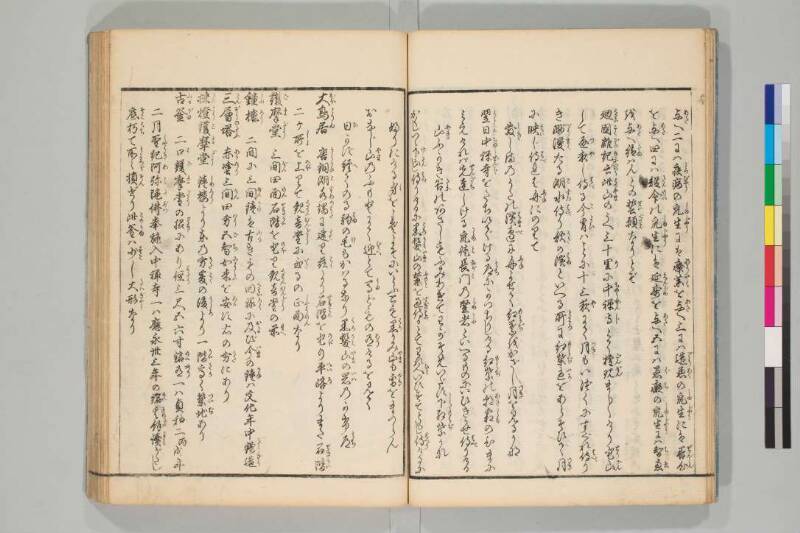
翻刻
【右丁】
与(あた)へ二には疾病(しつびやう)の衆生(しゆじやう)には療薬(れうやく)を与(あた)へ三には造悪(ざうあく)の衆生(しゆじやう)には善心(ぜんしん)
を与(あた)へ四には短命(たんめい)の衆生(しゆじやう)には延寿(えんじゆ)を与(あた)へ五には愚癡(ぐち)の衆生(しゆじゃう)には智恵(ちゑ)
を与(あた)へ給(たま)はんとの誓願(せいぐわん)なりとぞ
/𢌞(くわい)國雜記(こくざつきに)云(いはく)此山(このやま)のうへ三十 里(り)に中禅寺(ちゆうぜんじ)とて權現(ごんげん)まもけり登山(とうざん)
して通夜(つや)し侍(はべ)る今宵(こよい)はことに十三 夜(や)にて月(つき)もいづくにすぐれ侍(はべ)り
き渺漫(べうまん)たる湖水(こすゐ)侍(はべ)り歌(うた)の濱(はま)といへる所(ところ)に紅葉(もみぢ)色(いろ)をあらそひて月(つき)
に映(えい)じ侍(はべ)れば舟(ふね)にのりて
敷しまのうたの濱邊(はまべ)に舟(ふね)よせて紅葉(もみぢ)をかざし月(つき)を見るかな
翌日(よくじつ)中禅寺(ちゆうぜんじ)をたちいでける道(みち)にかつちりしける紅葉(もみぢ)の朝霜(あさしも)のひまに
みえければ先達(せんだち)しける衆徒(しゆと)長門(ながと)の竪者(じゆしや)といへるものにいひきかせ侍(はべ)りける
山(やま)ふかき谷(たに)のあさしもふみわけてわがそめいだす下紅葉(したもみぢ)かな
かくしつゝ下山(げさん)し侍(はべ)りけるに黒髪山(くろかみやま)の麓(ふもと)を過(すぎ)侍(はべ)るとてわれ人(ひと)いひすてともし侍(はべり)けるに
【左丁】
ふりにける身(み)をこそよそにいとふとも黒(くろ)かみ山(やま)も雪(ゆき)をまつらん
おなじ山(やま)のふもとにて迎(むかへ)とて馬(うま)どもの有(あり)けるを見て
日(ひ)かず經(へ)てのる駒(こま)の毛(け)もかはるなり黒髪山(くろかみやま)の岩(いは)のかけ道(みち)
大鳥居(おほとりゐ) 唐銅(からかね)湖水端(こすゐのはた)に建(たて)り兹(こゝ)より石階(せきかい)を登(のぼ)り平路(へいろ)よりまた石階(せきかい)
二ヶ所(しよ)を上(のぼ)りて觀音堂(くわんおんだう)に至(いた)るの正面(しやうめん)なり
護摩堂(ごまだう) 三 間(げん)四 面(めん)石階(せきかい)を登(のぼ)り觀音堂(くわんおんだう)の前(まへ)
鐘楼(しゆろう) 二間に三 間(げん)鐘(かね)は古(ふる)きもの囘録(くわいろく)に及(およ)び今(いま)の鐘(かね)は文化年中 鋳造(たうざう)
三層塔(さんぞうのたふ) 赤塗(あかぬり)三 間(けん)四 方(はう)五智如來(ごちによらい)を安(あん)す右の方(かた)にあり
採燈護摩堂(さいとうこまだう) 鐘楼(しゆろう)より東の方(かた)爰(こゝ)の後(うしろ)より一 階(かい)高(たか)く築地(ついぢ)あり
古釜(ふるがま) 二 口(く)護摩堂(ごまだう)の脇(わき)にあり徑(わたり)三尺五六寸 銘(めい)有(あり)一は貞和二《割書:丙| 戌》年
二月 聖記(しやうき)阿弥陀佛(あみたぶつ)奉施入中禅寺一は應永卅三年の銘(めい)其餘(そのよ)讀(よみ)がたし
底(そこ)朽(くち)て所(ところ)〻(〴〵)損(そん)ぜり此釜(このかま)は少(すこ)し大形(たいぎやう)なり
現代語訳
【右丁】
与え、二には疾病の衆生には療薬を与え、三には造悪の衆生には善心を与え、四には短命の衆生には延寿を与え、五には愚痴の衆生には智恵を与え給わんとの誓願であるという。
『回国雑記』に言うには、この山の上三十里に中禅寺として権現が守っている。登山して通夜をしていたが、今宵はことに十三夜で月もどこよりも優れていた。広大な湖水があり、歌の浜という所で紅葉が色を競って月に映えているので、舟に乗って
敷島のうたの浜辺に舟寄せて紅葉をかざし月を見るかな
翌日、中禅寺を立ち出た道で、散り敷いた紅葉が朝霜の間に見えたので、先達をしていた衆徒で長門の竪者という者に言い聞かせた。
山深き谷の朝霜踏み分けて我が染め出だす下紅葉かな
こうして下山していると、黒髪山の麓を過ぎる時に、我も人も言い捨てて詠んだ。
【左丁】
老いにける身をこそよそに厭うとも黒髪山も雪を待つらん
同じ山の麓で迎えとして馬どもがあるのを見て
日数経て乗る駒の毛も変わるなり黒髪山の岩の懸け道
大鳥居 唐銅製で湖水の端に建っている。ここより石階を登り、平路からまた石階二ヶ所を上って観音堂に至る正面である。
護摩堂 三間四面。石階を登り観音堂の前にある。
鐘楼 二間に三間。鐘は古いもので記録に及んでいるが、今の鐘は文化年中の鋳造である。
三層塔 赤塗り三間四方。五智如来を安置している。右の方にある。
採燈護摩堂 鐘楼より東の方。ここの後ろより一階高く築地がある。
古釜 二口。護摩堂の脇にある。径三尺五六寸。銘がある。一つは貞和二(丙戌)年二月聖記阿弥陀仏奉施入中禅寺。一つは応永三十三年の銘で、その余は読み難い。底が朽ちて所々損じている。この釜は少し大形である。
英語訳
[Right page]
grant fortune; second, to those suffering from illness, it grants healing medicine; third, to those who commit evil, it grants a good heart; fourth, to those with short lives, it grants longevity; and fifth, to those who are ignorant, it grants wisdom—such are said to be its vows.
The "Kaikoku Zasshi" (Record of Travels Around the Country) states: Thirty ri up this mountain there is Chūzenji Temple where a gongen deity stands guard. I climbed the mountain and spent the night in vigil. Tonight was especially the thirteenth night, and the moon was more beautiful than anywhere else. There was a vast lake, and at a place called Uta-no-hama (Song Beach), the autumn leaves competed in color, reflected in the moonlight, so I boarded a boat and composed:
"At Shikishima's Uta beach, drawing my boat to shore, I gaze at the moon with autumn leaves as my ornament"
The next day, on the path leaving Chūzenji, scattered autumn leaves were visible between the morning frost, so I spoke to a monk-soldier called Nagato no Jūsha who was serving as my guide:
"Through the morning frost of deep mountain valleys I tread, bringing out the colors of the autumn leaves below"
As I descended the mountain in this way, passing the foot of Kurokami-yama (Black Hair Mountain), both I and others composed and left behind this poem:
[Left page]
"Though I may despise this aged body of mine, even Black Hair Mountain must await the snow"
Seeing horses that had come as escorts at the foot of the same mountain:
"After many days, even the horse I ride has changed its coat on the rocky cliff path of Black Hair Mountain"
Great Torii Gate: Made of bronze, standing at the edge of the lake. From here one climbs stone steps, then from level ground climbs two more sets of stone steps to reach the front of the Kannon Hall.
Goma Hall: Three ken by four faces. Located in front of the Kannon Hall, reached by climbing stone steps.
Bell Tower: Two ken by three ken. The bell is ancient and mentioned in records, but the current bell was cast during the Bunka era.
Three-Story Pagoda: Red-lacquered, three ken square. Houses the Five Wisdom Buddhas. Located on the right side.
Saitō Goma Hall: To the east of the bell tower. Behind this building there is a wall built one story higher.
Ancient Cauldrons: Two vessels located beside the Goma Hall. Diameter of three shaku, five to six sun. They bear inscriptions. One reads "Second year of Jōwa (1346), second month, Sacred Record, Amida Buddha, respectfully donated to Chūzenji Temple." The other bears an inscription from the 33rd year of Ōei, but the rest is difficult to read. The bottoms have rotted and are damaged in places. These cauldrons are somewhat large in size.