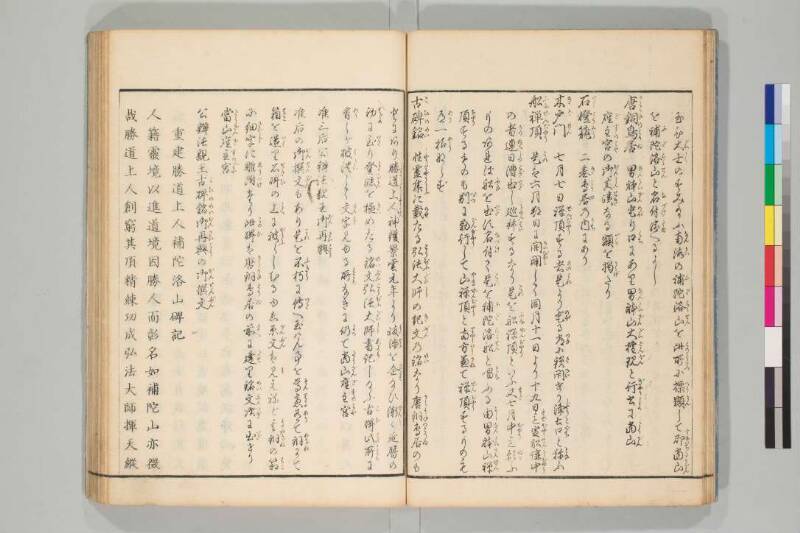
翻刻
【右丁】
玉ひ大士(だいし)のすみ給ふ南海(なんかい)の補陀洛山(ふだらくせん)を此所(このところ)に標顯(へうけん)して即(すなはち)當山(たうざん)
を補陀洛山(ふだらくせん)と名附(なづけ)給(たま)へるよし
唐銅鳥居(からかねのとりゐ) 男躰山(なんたいざん)登(のぼ)り口(くち)にあり男躰山大權現(なんたいざんだいごんげん)と行書(ぎやうしよ)に當山(たうざん)【平出】
座主宮(ざすのみや)の御真蹟(おんしんせき)なる額(がく)を掲(かゝげ)たり
石燈籠(いしとうろう) 二 基(き)鳥居(とりゐ)の内(うち)にあり
木戸門(きどもん) 七月七日 禅頂(ぜんぢやう)する者(もの)是(これ)より登(のぼ)る常(つね)に鎖閇(さへい)せり浄土口(じやうとぐち)と称(とな)ふ
舩禅頂(ふねぜんぢやう) 是(これ)は六月朔日に開闢(かいびやく)して同月十一日より十九日 迄(まで)定舩講中(ぢやうせんこうぢゆう)
の者(もの)連日(れんじつ)漕出(こぎいだ)し廵拜(じゆんはい)するなり是(これ)を舩禅頂(ふねぜんぢやう)といふ又(また)七月 中(ぢゆう)迄 願(ねが)ふ
ものあれば舩(ふね)を出(いだ)す名附(なづけ)て是(これ)を補陀洛舩(ふだらくせん)と唱(とな)ふる由(よし)男躰山禅(なんたいさんぜん)
頂(ちやう)するものも別(べつ)に勤行(ごんぎやう)して山禅頂(やまぜんぢやう)と両方(りやうはう)兼(かね)て禅頂(ぜんぢやう)するものも
有(あり)一 様(やう)ならず
古碑銘(こひのめい) 性霊集(しやうりやうしふ)に載(のせ)たる弘法大師(こうぼふだいし)の記文(きぶん)の銘(めい)なり唐銅鳥居(からかねのとりゐ)のも
【左丁】
とにあり勝道上人(しようだうしやうにん)神護景雲元年より跋渉(ばつせふ)を企(くわだて)給ひ漸(ぜん)〻(〳〵)延暦の
初(はじめ)に至(いた)り登臨(とうりん)を極(きは)めたる銘文(めいぶん)弘法大師(こうぼふだいし)書記(しよき)し給ふ古碑(こひ)此所(このところ)に
有(あり)しが破潰(はたい)して文字(もんじ)見ゆる所(ところ)なきに仍(よつ)て當山(たうざん)座主宮(ざすにみや)【平出】
准三后公辨法親王 御再興(おんさいこう)【平出】
准后の御撰文(おんせんぶん)もあり是(これ)を不朽(ふきう)に傳(つた)へ玉はん事を尊慮(そんりよ)有(あり)て銅(あかゞね)にて
箱(はこ)を造(つく)り石碑(せきひ)の上(うへ)に被(かうふ)らすむるゆゑ原文(げんぶん)は見(み)えねど其(その)銅(あかゞね)の箱(はこ)
に細字(さいじ)に雕附(ゑりつけ)たり此碑(このひ)は唐銅鳥居(からかねとりゐ)の前(まへ)に建(たて)り銘文(めいふん)次(つぎ)に出(いだ)せり
當山(たうざん)座主宮(ざすのみや)【平出】
公辨法親王 古碑銘(こひのめい)御再興(おんさいこう)の御撰文(おんせんぶん)
重建勝道上人補陀洛山碑記
人籍靈境以進道境因勝人而彰名如補陀山亦徵
哉勝道上人創窮其頂精練㓛成弘法大師揮天縱
現代語訳
【右丁】
給い、大士の住み給う南海の補陀洛山をこの所に標示して、即ち当山を補陀洛山と名付け給ったという。
唐銅鳥居 男体山登り口にある。「男体山大権現」と行書で当山座主宮の御真筆なる額を掲げてある。
石灯籠 二基、鳥居の内にある。
木戸門 七月七日に禅頂する者はここより登る。常に鎖で閉じてある。浄土口と称する。
船禅頂 これは六月朔日に開始して、同月十一日より十九日まで、定船講中の者が連日漕ぎ出して巡拝するのである。これを船禅頂という。また七月中まで願う者があれば船を出す。名付けてこれを補陀洛船と唱えるという。男体山禅頂する者も別に勤行して山禅頂と、両方兼ねて禅頂する者もあり、一様ではない。
古碑銘 性霊集に載せた弘法大師の記文の銘である。唐銅鳥居の
【左丁】
元にある。勝道上人が神護景雲元年より跋渉を企て給い、漸々延暦の初に至り登臨を極めた銘文を弘法大師が書記し給う古碑がこの所にあったが、破壊して文字の見える所がないので、当山座主宮准三后公弁法親王が御再興された。
准后の御撰文もあり、これを不朽に伝え給わんことを尊慮されて、銅で箱を造り石碑の上に被せるため、原文は見えないが、その銅の箱に細字で彫り付けてある。この碑は唐銅鳥居の前に建てられている。銘文は次に出してある。
当山座主宮公弁法親王古碑銘御再興の御撰文
重建勝道上人補陀洛山碑記
人籍霊境以進道 境因勝人而彰名 如補陀山亦徴哉 勝道上人創窮其頂 精練功成 弘法大師揮天縦
英語訳
[Right page]
He established the Fudaraku Mountain of the Southern Sea where the Great Being resides in this place, and thus named this mountain Fudaraku Mountain.
Bronze Torii Gate: Located at the entrance to Mount Nantai. An tablet inscribed with "Mount Nantai Daigongen" in semi-cursive script, written in the authentic hand of the chief priest of this mountain, is hung there.
Stone Lanterns: Two bases, located within the torii gate.
Wooden Gate: Those who perform mountain meditation on the 7th day of the 7th month climb from here. It is always locked with chains. It is called the Pure Land Entrance.
Boat Meditation: This begins on the 1st day of the 6th month, and from the 11th to the 19th day of the same month, members of the established boat lecture groups row out daily for pilgrimage. This is called boat meditation. Also, if there are those who wish to do so until the 7th month, boats are launched. This is named and called the Fudaraku Boat. Those who perform Mount Nantai meditation also separately conduct religious practices called mountain meditation, and some perform both types of meditation - it varies.
Ancient Stele Inscription: This is the inscription of Master Kōbō's record text recorded in the Shōryōshū. It is at the base of the bronze torii gate.
[Left page]
There was an ancient stele at this location where Master Kōbō recorded the inscription text describing how Priest Shōdō planned his arduous journey from the 1st year of Jingo-keiun and gradually reached the peak of his mountain climbing by early Enryaku period. However, it was destroyed and no characters could be seen, so Prince-Priest Kōben, the Quasi-Empress of the Three Ranks and chief priest of this mountain, restored it.
There is also the Prince-Priest's own composed text. Out of reverence for transmitting this for posterity, a bronze box was made and placed over the stone stele, so while the original text cannot be seen, it is carved in fine characters on that bronze box. This stele stands in front of the bronze torii gate. The inscription text is presented next.
Composed text by Prince-Priest Kōben, chief priest of this mountain, for the restoration of the ancient stele inscription:
Record of Rebuilding Priest Shōdō's Fudaraku Mountain Stele
People rely on sacred realms to advance in the Way; realms become famous through outstanding people. Mount Fudaraku is also evidence of this! Priest Shōdō pioneered and reached its summit; through spiritual refinement his achievement was completed. Master Kōbō wielded his heaven-sent talent...