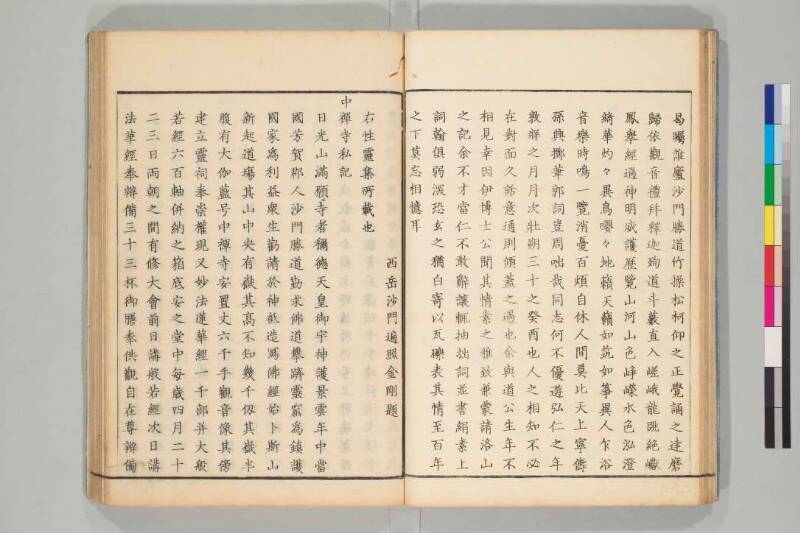
翻刻
【右丁】
曷矚誰廬沙門勝道竹操松柯仰之正覺誦之達磨
歸依觀音禮拜釋迦殉道斗藪𥄂入嵯峨龍跳絶巘
鳳擧經過神明威護歷覽山河山色峥嶸水色泓澄
綺華灼々異鳥嚶々地籟天籟如筑如筝異人乍浴
音樂時鳴一覽消憂百煩自休人間莫比天上寧儔
孫興擲茟郭詞豈周咄哉同志何不優遊弘仁之年
敦牂之月月次壯朔三十之癸酉也人之相知不必
在對面久話意通則傾蓋之遇也余與道公生年不
相見幸因伊博士公聞其情素之雅致兼𫎇請洛山
之記余不才當仁不敢辭讓輒抽拙詞並書絹素上
詞翰俱弱㴱恐玄之猶白寄以瓦礫表其情至百年
之下莫忘相憶耳
【左丁】
西岳沙門遍照金剛題
右性靈集所載也
中禪寺私記
日光山滿願寺者穪德天皇御宇神護景雲年中當
國芳賀郡人沙門勝道勤求佛道攀躋靈窟爲鎮護
國家爲利益衆生勸請於神祗造冩佛經始卜斯山
新起道塲其山中央有嶽其髙不知幾千仭其嶽半
腹有大伽藍号中禪寺安置丈六千手觀音像其傍
建立靈祠奉崇權現又妙法蓮華經一千部并大般
若經六百軸併納之箱底安之堂中每歳四月二十
二三日両朝之間有修大會前日講般若經次日講
法華經奉辨備三十三杯御膳奉供觀自在尊辨僃
現代語訳
【右丁】
誰が沙門勝道の竹操松柯(清廉な志操と高潔な品格)を仰ぎ見て、その正覚を誦し、達磨に帰依し、観音を礼拝し、釈迦に殉道するであろうか。険しい山に入り、嵯峨たる龍のように跳躍し、絶壁を越え、鳳のように舞い上がって経過していく。神明の威護により、山河を歴覧すれば、山色は峥嶸として高く聳え、水色は泓澄として清らかである。綺華は灼々と輝き、異鳥は嚶々と鳴く。地籟天籟は筑や筝のような音を奏で、異人がたちまち音楽に浴し、時として鳴り響く。一覧すれば憂いは消え、百の煩いは自然と休まる。人間世界には比べるものなく、天上にも並ぶものはない。孫興が茟を擲ち、郭詞が周囲を巡るのも当然である。ああ、同志よ、何ゆえ弘仁の年、敦牂の月、月次壮朔三十の癸酉に優遊しないのか。人の相知は必ずしも対面する必要はなく、久しく話せば意が通じ、傾蓋の遇いとなる。余と道公は生年を異にして相見えないが、幸いに伊博士公を通じて、その情素の雅致を聞き、兼ねて洛山の記を請われた。余は不才であるが、当仁として辞譲を敢えてせず、拙い詞を抽んで絹素に書き上げた。詞翰ともに弱く、深く玄を恐れるも猶お白く、瓦礫を寄せてその情の至りを表し、百年の下にも相憶することを忘れないようにしたい。
【左丁】
西岳沙門遍照金剛題
右は性霊集に載せられたものである
中禅寺私記
日光山満願寺は、称徳天皇の御代、神護景雲年中、当国芳賀郡の人、沙門勝道が仏道を勤求し、霊窟に攀じ登り、国家鎮護のため、衆生利益のため、神祇に勧請して仏経を造写し、始めてこの山に卜して新たに道場を起こした。その山の中央に岳があり、その高さは幾千仞かわからない。その岳の半腹に大伽藍があり、中禅寺と号し、丈六千手観音像を安置している。その傍らに霊祠を建立して権現を奉崇し、また妙法蓮華経一千部並びに大般若経六百軸を併せて箱底に納め、堂中に安置した。毎歳四月二十二、三日の両朝の間に大会を修し、前日に般若経を講じ、次日に法華経を講じ、三十三杯の御膳を奉弁備して観自在尊に奉供し、弁備する。
英語訳
【Right page】
Who could gaze upon the monk Shōdō's bamboo integrity and pine virtue (pure moral conduct and noble character), chant his enlightenment, take refuge in Dharma, worship Kannon, and follow the path of Shakyamuni? Entering the steep mountains, leaping like a towering dragon, crossing precipices, and soaring like a phoenix through the passage. Protected by the divine power, when surveying the mountains and rivers, the mountain colors rise majestically, and the water colors are clear and deep. The beautiful flowers shine brilliantly, and exotic birds sing sweetly. The earthly and heavenly sounds resonate like zither and koto music, and extraordinary beings bathe in music that sometimes rings out. At a glance, worries disappear and a hundred troubles naturally cease. Nothing in the human world compares, and nothing in heaven can match it. It is natural that Sun Xing casts his divining sticks and Guo Ci circles around. Alas, fellow seekers, why not leisurely wander in the Kōnin era, in the Dunchang month, on the thirtieth day of the strong new moon, the day of Mizunoto-Tori? Human understanding does not necessarily require face-to-face meeting; if one speaks long, minds connect, creating an encounter of instant friendship. Though Master Dō and I were born in different years and have never met, fortunately through Master I, I heard of his refined sensibilities and was additionally requested to write a record of Mount Raku. Though I am untalented, I dare not decline when duty calls, and have drawn forth humble words to write upon silk. Both my words and calligraphy are weak, and though I deeply fear the profound yet remain simple, I offer these fragments to express the sincerity of my feelings, hoping not to forget our mutual remembrance even a hundred years hence.
【Left page】
Inscribed by Henjō Kongō, monk of the Western Peak
The above is recorded in the Shōryōshū
Private Record of Chūzenji Temple
Nikkō-san Manganji Temple: During the reign of Empress Shōtoku, in the Jingo-keiun era, a person from Haga District of this province, the monk Shōdō, diligently sought the Buddha Way, climbed to the sacred cave, and for the protection of the nation and benefit of all beings, petitioned the deities, copied Buddhist sutras, and first established this mountain as a site to create a new temple. In the center of this mountain is a peak whose height is unknown—perhaps thousands of fathoms. On the halfway slope of this peak is a great monastery called Chūzenji, where a jōroku (life-size) Thousand-Armed Kannon statue is enshrined. Beside it, a sacred shrine was built to venerate the gongen (avatar deity), and one thousand copies of the Lotus Sutra together with six hundred scrolls of the Great Prajñāpāramitā Sutra were stored in boxes and placed in the hall. Every year on the twenty-second and twenty-third days of the fourth month, during both morning services, a great assembly is held. On the first day the Prajñāpāramitā Sutra is lectured, on the next day the Lotus Sutra is lectured, and thirty-three trays of sacred food are prepared and offered to Avalokiteshvara.