翻刻
【右丁】
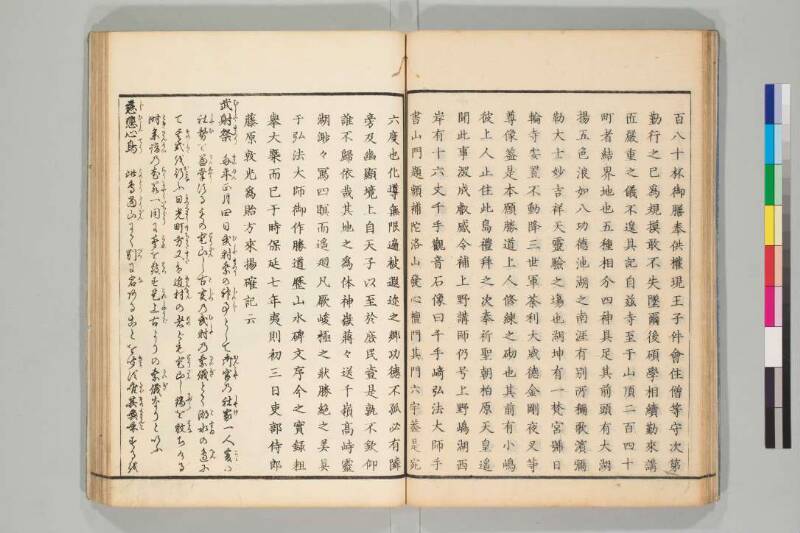
百八十杯御膳奉供權現王子件會住僧等守次第
勤行之巳爲規摸敢不失墜爾後碩學相續勤求講
匠嚴重之儀不遑具記自兹寺至于山頂二百四十
町者結界地也五種相分四神具足其前頭有大湖
揚五色浪如八功德池湖之南涯有別所穪歌濵彌
勒大士妙吉祥天靈驗之塲也湖坤有一梵宮號日
輪寺安置不動降三世軍荼利大威德金剛夜叉等
尊像葢是本願勝道上人修練之砌也其前有小嶋
彼上人止住此島禮拜之次奉祈聖朝柏原天皇遥
聞此事㴱成叡感令補上野講師仍号上野嶋湖西
岸有十六丈千手觀音石像曰千手﨑弘法大師手
書山門題額補陀洛山發心檀門其門六宇葢是宛
【左丁】
六度也化導無限遍被遐迩之郷功德不孤必有隣
旁及幽顯境上自天子以至於庻民壹是孰不欽仰
誰不歸依哉其地之爲体神嶽蔣々送千嶺髙峙靈
湖渺々冩四瞑而遥𢌞凡厥峻極之狀勝絶之美具
于弘法大師御作勝道歷山水碑文序今之實録粗
擧大槩而巳于時保延七年夷則初三日吏部侍郎
藤原敦光爲貽方來揚確記云
武射祭(むしやまつり) 毎年(まいねん)正月四日 武射祭(むしやまつり)の神事(じんじ)として御宮(おんみや)の社家(しやけ)一人 爰(こ々)の
社務(しやむ)を兼掌(けんしやう)するもの登山(とうざん)し古実(こじつ)の武射(むしや)の祭儀(さいぎ)とて湖水(こすゐ)の邊(へん)に
て其式(そのしき)を行(おこな)ふ日光町方(につくわうまちかた)又(また)は近村(きんそん)の者(もの)ども登山(とうざん)し鏑(かぶら)を放(はな)ちける
时(とき)参詣(さんけい)の老若(らうにやく)一同(いちどう)に聲(こゑ)を發(はつ)す是(これ)上古(しやうご)よりの祭儀(さいぎ)なりといふ
慈悲心鳥(じひしんてう) 此鳥(このとり)當山(たうざん)にて別(べつ)に名(な)あることを聞(きか)ず唯(たゞ)其(その)喚呼(くわんこ)するを
現代語訳
【右丁】
百八十杯の御膳を権現王子に奉供し、この法会に住僧等が次第を守って勤行することが規模となっており、決して失墜することはない。その後、碩学が相続して講匠を勤求し、厳重な儀式は具に記すことができないほどである。この寺から山頂まで二百四十町は結界地である。五種相分四神が具足している。その前頭に大湖があり、五色の波を揚げて八功徳池のようである。湖の南涯に別所があり、歌浜と称し、弥勒大士・妙吉祥天の霊験の場である。湖の坤(南西)に一つの梵宮があり、日輪寺と号し、不動明王・降三世明王・軍荼利明王・大威徳明王・金剛夜叉明王等の尊像を安置している。これは本願の勝道上人が修練した場所である。その前に小島があり、その上人がこの島に止住して礼拝の次第で聖朝を祈ったところ、柏原天皇が遥かにこの事を聞かれて深く叡感され、上野講師に補任されたため、上野島と号する。湖の西岸に十六丈の千手観音石像があり、千手崎と呼ばれる。弘法大師の手書きによる山門の題額「補陀洛山発心檀門」があり、その門は六宇である。これは
【左丁】
六度のことである。化導は無限で、遍く遐迩の郷に被り、功徳は孤ならず必ず隣がある。傍ら幽顕の境に及び、上は天子より庶民に至るまで、一つとして欽仰せぬ者はなく、誰が帰依しないであろうか。その地の体たるや、神嶽は蒼々として千嶺を送り高く峙ち、霊湖は渺々として四冥を写して遥かに回っている。およそその峻極の状、勝絶の美は、弘法大師御作の「勝道歴山水碑文序」に具わっている。今の実録は粗々大概を挙げたのみである。時に保延七年夷則初三日、吏部侍郎藤原敦光が方来に貽すため確記すると云う。
武射祭 毎年正月四日、武射祭の神事として御宮の社家一人、ここの社務を兼掌する者が登山し、古実の武射の祭儀として湖水の辺でその式を行う。日光町方又は近村の者どもが登山し、鏑を放った時、参詣の老若一同に声を発する。これは上古よりの祭儀なりという。
慈悲心鳥 この鳥は当山にて別に名があることを聞かず、ただその喚呼するを
英語訳
【Right page】
One hundred and eighty trays of sacred food are offered to the Gongen Prince, and the resident monks maintain the proper order in conducting these services as an established practice, never allowing it to fall into decline. Thereafter, learned scholars continued in succession seeking lecture masters, and the solemn ceremonies are too numerous to record in detail. From this temple to the mountain peak, 240 chō constitute the sacred boundary (kekkai). The five types of phases and four guardian deities are complete. At the front is a great lake that raises waves of five colors like the Pool of Eight Merits. On the southern shore of the lake is a separate place called Utahama, which is a site of miraculous power of Maitreya Bodhisattva and Myōkichijō-ten. In the southwest of the lake stands a Buddhist temple called Nichirin-ji, where statues of Fudō Myōō, Gōzanze Myōō, Gundari Myōō, Daiitoku Myōō, Kongō Yasha Myōō and other honored deities are enshrined. This is the place where the original vow-maker, Master Shōdō, practiced his spiritual disciplines. In front of it is a small island where the master resided and conducted worship services, praying for the imperial court. Emperor Kashiwabara heard of this from afar and was deeply moved with imperial appreciation, appointing him as Kōzuke Lecturer, hence it is called Kōzuke Island. On the western shore of the lake stands a sixteen-jō stone statue of Thousand-Armed Kannon, called Senjusaki. There is a mountain gate plaque inscribed by Kōbō Daishi reading "Mount Potalaka Gate of Awakening Faith," and the gate has six buildings, which represent
【Left page】
the Six Perfections (pāramitā). The guidance and salvation are limitless, universally covering far and near villages. Merit is never isolated but always has companions. It extends to both the visible and invisible realms, and from the emperor above to the common people below, who among them does not revere it, and who does not take refuge in it? As for the nature of this land: the sacred peaks stretch magnificently, sending forth a thousand ridges standing tall, and the sacred lake extends vastly, reflecting the four quarters of darkness and circling far into the distance. All the majesty of its steep heights and the beauty of its supreme excellence are contained in Kōbō Daishi's composition "Preface to the Stele Inscription on Shōdō's Journey Through Mountains and Waters." The present record roughly presents only the main points. At this time, on the third day of the first month of Hōen 7 (1141), Court Councillor Fujiwara no Atsumitsu made this firm record to leave for future generations.
Musha Festival: Every year on the fourth day of the first month, as the Shinto ritual of the Musha Festival, one shrine family member of the imperial shrine, who also serves as shrine administrator, climbs the mountain and performs the ceremony at the lakeside as an ancient archery ritual. When people from Nikkō town or nearby villages climb the mountain and shoot whistling arrows, all the pilgrims, young and old, raise their voices together. This is said to be a ritual from ancient times.
Jihi-shin Bird (Compassionate Heart Bird): This bird has no other particular name known at this mountain; only its call