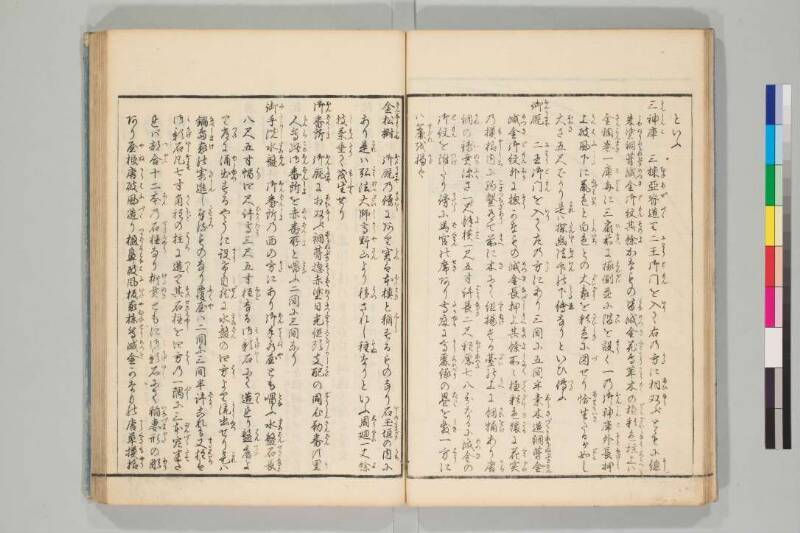
翻刻
【右丁】
といふ
三神庫(さんしんこ) 三 棟(むね)亞脊造(あぜづく)り二王御門(にわうごもん)を入(いり)て右の方(かた)に相双(あひなら)ぶともに總(そう)
朱塗(しゆぬり)銅葺(あかゞねぶき)滅金(めつき)御紋(ごもん)其餘(そのよ)かなもの皆(みな)滅金(めつき)花鳥草木(くわてうさうもく)の極彩色(ごくざいしき)柱上(はしらうへ)は
金襴巻(きんらんまき)一 庫(こ)毎(ごと)に三 扉(ひ)前(まへ)に椽側(えんがは)並に階(かい)を設(まう)く一の御神庫(おんしんこ)外(そと)長押(なげし)
上(うへ)破風下(はふした)に鼡色(ねづみいろ)と白色(しろいろ)との大象(だいざう)を彩色(さいしき)に図(づ)せり恰(あたかも)生(いき)たるが如(ごと)し
大(おほき)さ五尺ばかり是(これ)は探幽法印(たんいうほふいん)の下繪(したゑ)なりといひ傳(つた)ふ
御厩(おんうまや) 二王御門(にわうごもん)を入(いり)て左の方(かた)にあり三間に五間半 素木造(しらきづくり)銅葺(あかゞねぶき)金(きん)
滅金(めつき)御紋(ごもん)外(ほか)に揔(そう)かなもの滅金(めつき)長押上(なげしうへ)其餘(そのよ)所(しよ)〻(〳〵)極彩色(ごくざいしき)猿(さる)に花実(くわじつ)
の摸様(もやう)内(うち)に駒繫(こまつなぎ)有(あり)て前(まへ)に木(き)にて組揚(くみあげ)たる臺(だい)の上(うへ)に飼桶(かひをけ)あり唐(から)
銅(かね)の鋳貫(いぬき)深(ふか)さ一尺 餘(よ)横(よこ)一尺五寸 許(ばかり)長(ながさ)二尺 程(ほど)厚(あつさ)七八分なるに滅金(めつき)の
御紋(ごもん)を附(つけ)たり傍(かたはら)に馬官(ばくわん)の席(せき)あり高床(たかゆか)に高麗縁(かうらいべり)の疂(たゝみ)を敷(しき)一 方(はう)に
は簾(すだれ)を掲(かゞ)ぐ
【左丁】
金松(きんしよう)𣗳(じゆ) 御厩(おんうまや)の傍(かたはら)にあり実(じつ)は本槙(ほんまき)と穪(しよう)するものなり石玉垣(いしのたまがき)の内(うち)に
あり是(これ)は弘法大師(こうぼふだいし)高野山(かうやさん)より移(うつ)されし種(たね)なりといふ周廽(しうくわい)一丈 餘(よ)
枝葉(しえふ)垂(たり)て茂生(もしやう)せり
御番所(おんばんしよ) 御厩(おんうまや)に相双(あひなら)ぶ銅葺(あかゞねぶき)揔赤塗(そうあかぬり)日光組頭支配(につくわうくみがしらしはい)の同心(どうしん)勤番(きんばん)す里(り)
人等(じんら)此(この)御番所(おんばんしよ)を赤番所(あかばんしよ)と唱(とな)ふ二間に三間なり
御手洗水盤(みたらしすゐばん) 御番所(おんばんしよ)の西の方(かた)にあり御手水屋(おてうづや)とも唱(とな)ふ水盤石(すゐばんせき)長(ながさ)
八尺五寸 幅(はゞ)四尺 許(ばかり)高(たかさ)三尺五寸 程(ほど)なる御影石(みかげいし)にて造(つく)れり盤底(はんてい)よ
り常(つね)に涌出(ゆしゆつ)するやうに設(まう)け自然(しぜん)に水盤(すゐばん)の四 方(はう)より流出(りうしゆつ)せり是(これ)は
鍋島家(なげしまけ)の寄進(きしん)し奉(たてまつ)るものなり覆屋(ふくや)は二間に三間半 許(ばかり)これも又(また)柱(はしら)は
御影石(みかげいし)凡(およそ)七寸 角(かく)程(ほど)の柱(はしら)に造(つく)り其(その)石柱(せきちゆう)を四 方(はう)の一 隅(ぐう)に三 本(ぼん)宛(づゝ)建(たて)た
れば都合(つがふ)十二 本(ほん)の石柱(せきちゆう)なり桁(けた)貫(ぬき)ともに御影石(みかげいし)にて稲妻形(いなづまがた)の彫(ほり)
あり屋根(やね)唐破風造(からはふづく)り楹(つかばしら)鼻(はな)破風板(はふいた)屋棟(やむね)等(とう)滅金(めつき)かなもの唐草摸様(からくさもやう)
現代語訳
【右丁】
という
三神庫 三棟の校倉造り。仁王御門を入って右の方に並んでいる。ともに総
朱塗り、銅葺き、滅金の御紋、その他の金物は皆滅金。花鳥草木の極彩色で、柱上は
金襴巻き。一庫ごとに三扉、前に縁側並びに階段を設ける。一の御神庫の外長押
上の破風下に鼠色と白色の大象を彩色で描いている。あたかも生きているかのようである。
大きさ五尺ばかり。これは探幽法印の下絵なりと言い伝えられている。
御厩 仁王御門を入って左の方にある。三間×五間半、素木造り、銅葺き、金
滅金の御紋、その他総ての金物は滅金。長押上その他の所々に極彩色の猿に花実
の模様。内に駒繋ぎがあって、前に木で組み上げた台の上に飼桶がある。唐
銅の鋳物で、深さ一尺余り、横一尺五寸ばかり、長さ二尺程、厚さ七八分に滅金の
御紋を付けている。傍らに馬官の席があり、高床に高麗縁の畳を敷き、一方に
は簾を掛けている。
【左丁】
金松樹 御厩の傍らにある。実は本槙と称するものである。石玉垣の内に
ある。これは弘法大師が高野山より移されし種なりという。周囲一丈余り、
枝葉垂れて茂生している。
御番所 御厩に並んでいる。銅葺き、総赤塗り。日光組頭支配の同心が勤番する。
人々はこの御番所を赤番所と呼ぶ。二間×三間である。
御手洗水盤 御番所の西の方にある。御手水屋とも呼ぶ。水盤石は長さ
八尺五寸、幅四尺ばかり、高さ三尺五寸程の御影石で造られている。盤底よ
り常に湧出するように設け、自然に水盤の四方より流出している。これは
鍋島家の寄進したものである。覆屋は二間×三間半ばかり。これもまた柱は
御影石、およそ七寸角程の柱に造り、その石柱を四方の一隅に三本ずつ建てた
ので都合十二本の石柱である。桁・貫ともに御影石で稲妻形の彫り
がある。屋根は唐破風造り、柱鼻・破風板・屋根棟等は滅金の金物で唐草模様。
英語訳
【Right Page】
...is called.
Three Sacred Storehouses - Three buildings in azekura (log storehouse) style. Located to the right after entering through the Niō Gate. All are entirely
painted vermillion, with copper roofing, gilt imperial crests, and all other metalwork is gilt. Polychrome decoration of flowers, birds, grass and trees, with pillars wrapped in gold brocade. Each storehouse has three doors, with verandas and stairs in front. On the first sacred storehouse, above the outer nageshi beam under the gable, gray and white elephants are depicted in color. They appear as if alive.
Size is about five shaku each. These are said to be based on preliminary drawings by Kanō Tan'yū Hōin.
Imperial Stables - Located to the left after entering the Niō Gate. Three ken by five and a half ken, plain wood construction, copper roofing, with gilt
imperial crests, and all other metalwork gilt. Above the nageshi beams and in various other places are polychrome designs of monkeys with flowers and fruits.
Inside are horse tethering posts, and in front is a feeding trough on a platform constructed of wood. Cast from
Chinese bronze, about one shaku deep, one shaku five sun wide, about two shaku long, seven to eight bu thick, with gilt
imperial crests attached. Beside it is a seat for the horse official, with Kōrai-bordered tatami mats on a raised floor, and on one side
bamboo blinds are hung.
【Left Page】
Golden Pine Tree - Located beside the imperial stables. Actually what is called hon-maki (Japanese yew plum pine). Within
the stone jewel fence. This is said to be from seed transplanted by Kōbō Daishi from Mount Kōya. Circumference over one jō,
with drooping branches and leaves growing luxuriantly.
Imperial Guard Station - Adjacent to the imperial stables. Copper roofing, entirely painted red. Dōshin under the command of Nikkō group leaders serve guard duty.
People call this guard station the "Red Guard Station." It is two ken by three ken.
Sacred Ablution Water Basin - Located to the west of the guard station. Also called御手水屋 (sacred water house). The water basin stone is
eight shaku five sun long, about four shaku wide, about three shaku five sun high, made of mikage granite. From the basin bottom
water is arranged to constantly well up, naturally flowing out from all four sides of the water basin. This was
donated by the Nabeshima family. The covering building is about two ken by three and a half ken. The pillars are also
mikage granite, about seven sun square pillars, with three stone pillars erected at each corner of the four sides,
making twelve stone pillars in total. Both girders and crossbeams are mikage granite with lightning-shaped carvings.
The roof is Chinese gable style, with pillar caps, gable boards, roof ridges, etc. in gilt metalwork with arabesque patterns.