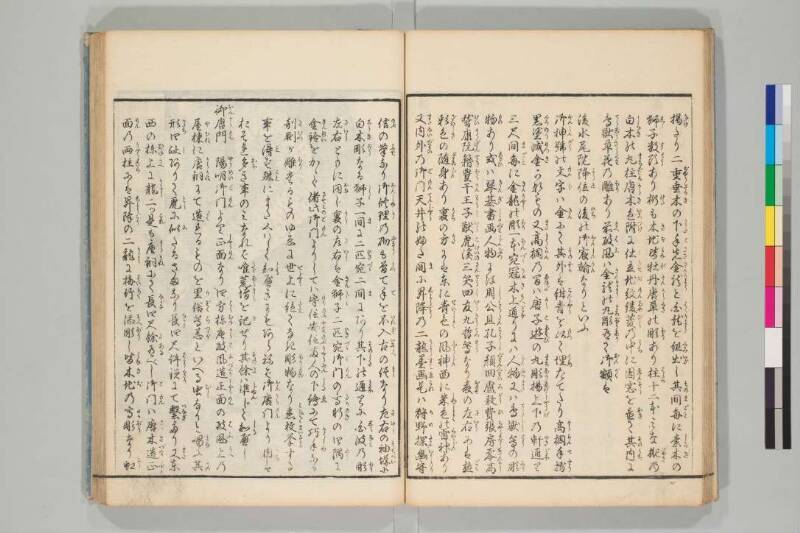
翻刻
【右丁】
掲(かゞけ)たり二 重垂木(ぢゆうだるき)の下(した)手先(てさき)金龍(きんりよう)と白龍(はくりよう)を組出(くみいだ)し其間(そのま)每(ごと)に素木(しらぎ)の
獅子(しゝ)数頭(すとう)あり桁(けた)も木地(きぢ)皆(みな)牡丹(ぼたん)唐草(からくさ)の彫(ほり)あり柱(はしら)十二本みな槻(けやき)の
白木(しらき)の丸柱(まろばしら)唐木色附(からきいろつけ)に仕立(したて)地紋(ぢもん)綾菱(あやびし)の中(うち)に圓窓(ゑんそう)を置(おき)て其内(そのうち)に
鳥獣草花(てうじうさうくわ)の雕(ほり)あり前破風(まへはふ)は金龍(きんりよう)の丸彫(まろぼり)有(あり)て御額(おんがく)は【平出】
後水尾院 降位(こうゐ)の後(のち)の御宸翰(おんしんかん)なりといふ
御神號(おんしんがう)の文字(もんじ)は金(きん)にて其外(そのほか)は紺青(こんじやう)を以(もつ)て埋(うめ)たてたり髙欄(かうらん)手摺(てすり)
黒塗(くろぬり)滅金(めつき)かなもの又 髙欄(かうらん)の間(あひだ)は唐子逰(からこあそび)の丸彫(まろほり)揚(あげ)上下(じやうげ)の軒通(のきどほ)り
三尺 間每(まごと)に金龍(きんりやう)の彫(ほり)一 本(ほん)宛(づゝ)冠木上通(かぶきうへどほ)りには人物(じんぶつ)又(また)は鳥獣(てうじう)等(とう)の彫(ほり)
物(もの)あり或(あるひ)は琴碁書画(きんぎしよぐわ)人物(じんぶつ)には周公旦(しうこうたん)孔子(こうし)顏囬(ぐわんくわい)盧敖(ろがう)費張房(ひちやうばう)琴髙(きんかう)
稽康(けいかう)阮籍(げんせき)豊干(ほうかん)王子猷(わうしいう)虎溪三笑(こけいのさんせう)四友(しいう)九哲(きうてつ)等(とう)なり表(おもて)の左右(さいう)には極(ごく)
彩色(ざいしき)の随身(ずゐじん)あり裏(うら)の方(かた)には東に青色(せいしよく)の風神(ふうじん)西に朱色(しゆしよく)の雷神(らいじん)あり
又(また)内外(ないぐわい)の御門(ごもん)天井(てんじやう)のふた間(ま)に昇降(しようごう)の二 龍(りよう)墨画(すみゑ)是(これ)は狩野探幽守(かのたんいうもり)
【左丁】
信(のぶ)の筆(ふで)なり御修理(おんしゆり)の砌(みぎり)も曽(かつ)て手(て)を不入(いれず)古(いにしへ)の侭(まゝ)なり左右(さいう)の袖塀(そでべい)に
白木彫(しらきぼり)なる獅子(しゝ)一 間(ま)に二 匹(ひき)宛(づゝ)二 間(ま)にあり其下(そのした)の通(とほ)りに白波(しらなみ)の彫(ほり)
左右(さいう)ともに同(おな)じ裏(うら)の左右(さいう)は金獅子(きんじゝ)二 匹(ひき)宛(づゝ)御門(ごもん)の高軒(たかのき)の四 隅(ぐう)に
金鈴(きんれい)をかゝぐ偖(さて)此(この)御門(ごもん)よりしては守信(もりのぶ)安信(やすのぶ)両人(りやうにん)の下繪(したゑ)にて巧手(かうしゆ)なる
剞劂(きけつ)が雕(ほり)たるものゆゑに世上(せじやう)に絶(たえ)てなき彫物(ほりもの)なり悉(こと〴〵く)枚挙(まいきよ)する
事を得(え)ず殊(こと)にまたくはしく知(しる)べきにもあらねば御唐門(おんからもん)より内(うち)は
おそれ多(おほ)き事のみなれば唯(たゞ)荒増(あらまし)を記(き)せり其餘(そのよ)は凖(しゆん)じて知(しる)べし
御唐門(おんからもん) 陽明御門(やうめいごもん)より正面(しやうめん)なり四 方棟唐破風造(はうむねからはふづくり)正面(しやうめん)の破風上(はふうへ)の
屋棟(やむね)に唐銅(からかね)にて造(つく)れるものを里俗等(りぞくら)恙(つゝが)といへる虫(むし)なりと唱(とな)ふ其(その)
形(かたち)四 趾(し)ありて虎(とら)に似(に)たるさまなり長(ながさ)四尺 許(ばかり)鎖(くさり)にて繫(つなぎ)たり又(また)東
西の棟上(むねうへ)に龍(りよう)二ッ是(これ)も唐銅(からかね)にて長(ながさ)四尺 餘(よ)有(ある)べし御門(ごもん)は唐木造(からきづくり)正(しやう)
面(めん)の両柱(りやうはしら)には昇降(しようごう)の二 龍(りよう)に梅竹(ばいちく)を添彫(そへぼり)し皆(みな)木地(きぢ)の高彫(たかぼり)なり虹(こう)
現代語訳
【右丁】
掲げている。二重垂木の下、手先に金龍と白龍を組み出し、その間ごとに素木の
獅子数頭がある。桁も木地も皆牡丹唐草の彫りがある。柱十二本は皆欅の
白木の丸柱で、唐木色付けに仕立て、地紋綾菱の中に円窓を置いて、その内に
鳥獣草花の彫りがある。前破風は金龍の丸彫りがあって、御額は
後水尾院が譲位の後の御宸翰であるという。
御神号の文字は金で、その外は紺青で埋めてある。高欄手摺りは
黒塗り滅金の金物、また高欄の間は唐子遊びの丸彫り。上下の軒通りは
三尺間ごとに金龍の彫り一本ずつ、冠木上通りには人物または鳥獣等の彫り
物がある。あるいは琴棋書画、人物には周公旦、孔子、顔回、盧敖、費長房、琴高、
嵆康、阮籍、豊干、王子猷、虎渓三笑、四友、九哲等である。表の左右には極
彩色の随身がある。裏の方には東に青色の風神、西に朱色の雷神がある。
また内外の御門天井の二間に昇降の二龍の墨画、これは狩野探幽守
【左丁】
信の筆である。御修理の際も決して手を入れず、古のままである。左右の袖塀に
白木彫りなる獅子を一間に二匹ずつ、二間にある。その下の通りに白波の彫り、
左右ともに同じ。裏の左右は金獅子二匹ずつ。御門の高軒の四隅に
金鈴を掛ける。さて、この御門よりしては守信、安信両人の下絵にて、巧手なる
彫刻師が彫ったものゆえに、世上に絶えてない彫物である。悉く枚挙する
ことを得ず、殊にまた詳しく知るべきにもあらねば、御唐門より内は
恐れ多きことのみなれば、ただ荒ましを記せり。その余は準じて知るべし。
御唐門 陽明御門より正面なり。四方棟唐破風造り、正面の破風上の
屋棟に唐銅にて造れるものを里俗等が「恙」という虫なりと唱う。その
形は四肢ありて虎に似たる様なり。長さ四尺ばかり、鎖にて繋いである。また東
西の棟上に龍二つ、これも唐銅にて長さ四尺余あるべし。御門は唐木造り、正
面の両柱には昇降の二龍に梅竹を添え彫りし、皆木地の高彫りなり。虹
英語訳
【Right Page】
hanging. Below the double rafters, at the bracket arms, golden dragons and white dragons are carved out, and between each there are several lions of plain wood.
The horizontal beams and wood surfaces all have peony and arabesque carvings. The twelve pillars are all zelkova
plain wood round pillars, finished in Chinese wood coloring, with diamond-patterned ground designs containing circular windows, inside which are
carvings of birds, animals, plants and flowers. The front gable has round carvings of golden dragons, and the imperial plaque is
said to be the imperial calligraphy of Retired Emperor Go-Mizunoo after his abdication.
The characters of the divine name are in gold, and the rest is filled with ultramarine blue. The balustrade handrails are
black lacquered with gold-plated metal fittings, and between the balustrades are round carvings of Chinese children at play. The upper and lower eave areas have
one golden dragon carving every three shaku interval, and along the upper lintel are carvings of
human figures or birds and animals. Some depict the four arts (music, go, calligraphy, painting), and the human figures include Duke of Zhou, Confucius, Yan Hui, Lu Ao, Fei Changfang, Qin Gao,
Ji Kang, Ruan Ji, Fenggan, Wang Ziyou, the Three Laughers of Tiger Creek, the Four Friends, the Nine Worthies, etc. On the left and right of the front are extremely
colorful attendant figures. On the back, there is a blue wind god to the east and a vermillion thunder god to the west.
Also, in the two bays of the inner and outer gate ceiling are ink paintings of ascending and descending dragons, painted by Kano Tanyu Mori-
【Left Page】
nobu. Even during repairs, no hand was ever laid on them, remaining as in ancient times. On the left and right wing walls are
white wood carved lions, two per bay in two bays. Below them are carvings of white waves,
the same on both left and right. On the back left and right are two golden lions each. Golden bells hang at
the four corners of the gate's high eaves. Now, from this gate onward, based on preliminary sketches by Morinobu and Yasunobu, skilled
carvers have carved these works, making them carvings unparalleled in the world. It is impossible to enumerate them all
completely, and since it would not be appropriate to know them in great detail, and since everything inside the Chinese gate is
too sacred to describe, only a rough outline is recorded here. The rest can be inferred accordingly.
Chinese Gate Directly facing the Yomei Gate. Four-sided ridge with Chinese gable construction. On the roof ridge above the front gable
is something made of Chinese bronze that the common people call a "tsutsunga" insect. Its
form has four limbs and resembles a tiger. About four shaku long, it is bound with chains. Also, on the east
and west ridges are two dragons, also of Chinese bronze, probably over four shaku long. The gate is made of Chinese wood, and on the front
both pillars have high relief carvings of ascending and descending dragons with plum and bamboo added, all carved in relief from the wood surface. The rainbow