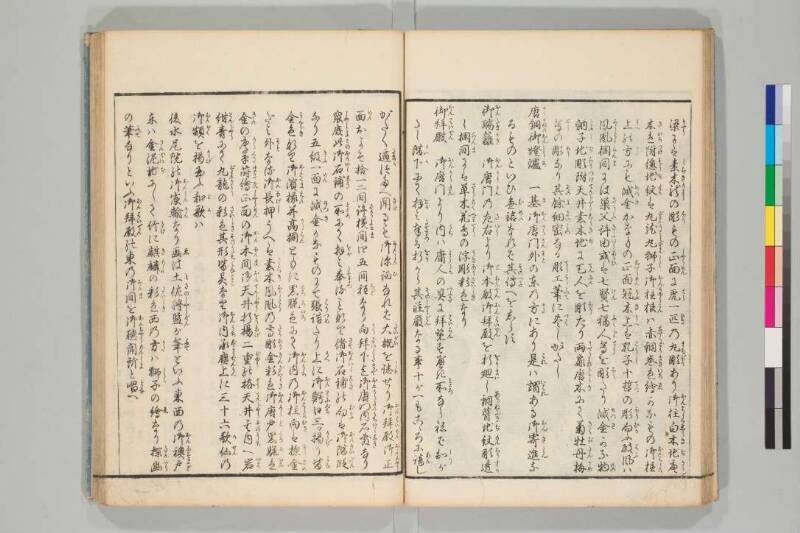
翻刻
【右丁】
梁(りやう)には素木(しらき)龍(りよう)の彫(ほり)もの正面(しやうめん)に虎(とら)一 匹(ひき)の丸彫(まるぼり)あり御柱(おんはしら)白木地(しらきぢ)唐(から)
木色附(きいろつけ)總地紋(そうぢもん)は丸龍(ぐわんりよう)丸獅子(ぐわんしゝ)御柱根(おんちゆうこん)は赤銅巻(しやくどうまき)色繪(いろゑ)かなもの御柱(おんはしら)
上(うへ)の方(かた)にも滅金(めつき)かなもの正面(しやうめん)冠木上(かぶきうへ)は孔子(こうし)十 哲(てつ)の彫(ほり)向(むか)ふ破風(はふ)は
鳳凰(ほうわう)欄間(らんま)には巣父許由(さうふきよいう)或(あるひ)は七 賢(けん)七 福人(ふくじん)等(とう)を彫(ほり)たり滅金(めつき)かな物(もの)
魶子地(たふしぢ)彫附(ほりつけ)天井(てんじやう)素木地(しらきぢ)に天人(てんにん)を彫(ほり)たり両扉(りやうとびら)唐木(からき)にて菊(きく)牡丹(ぼたん)梅(うめ)
等(とう)の彫(ほり)なり其餘(そのよ)細密(さいみつ)なる彫工(てうこう)筆(ふで)に尽(つく)しがたし
唐銅御燈爐(からかねのおんとうろ) 一 基(き)御唐門外(おんからもんそと)の東の方(かた)にあり是(これ)は謂(いはれ)ある御寄進(おんきしん)な
るものといひ無銘(むめい)なれば其傳(そのつた)へをしらす
御瑞籬(おんたまがき) 御唐門(おんからもん)の左右(さいう)より御本殿(おんほんでん)御拜殿(おんはいでん)を折廽(をりまは)し銅葺(あかゞねぶき)地紋(ぢもん)彫透(ほりすか)
し欄間(らんま)には草木花鳥(さうもくくわてう)の浮彫(うきぼり)彩色(さいしき)なり
御拜殿(おんはいでん) 御唐門(おんからもん)より内(うち)は庸人(ようじん)の具(つぶさ)に拜覧(はいらん)すべき所(ところ)ならねば知(しり)が
たし階下(かいか)にて拝(をが)み奉(たてまつ)る折(をり)から其(その)荘厳(しやうごん)なる事十が一もこゝろに諳(あん)し
【左丁】
がたく適(たま〳〵)つたへ聞(きけ)るも御深秘(おんしんひ)なれば大概(たいがい)を誌(しる)せり御拜殿(おんはいでん)御正(おんしやう)
面(めん)およそ拾一二間 許(ばかり)横間(よこま)四五間 程(ほど)なり向拜下(かうばいした)迄(まで)御唐門(おんからもん)内(うち)石敷(いししき)なり
衆庻(しゆしよ)此(この)御石鋪(おんいししき)の所(ところ)にて拝(をが)み奉(たてまつ)ることなり偖(さて)御石鋪(おんいししき)の向(むかふ)は御階段(おんかいだん)
なり五 級(きふ)一 面(めん)に滅金(めつき)かなものにて張詰(はりつめ)たり上(うへ)に御鰐口(おんわにぐち)三ッ掲(かゝげ)り皆(みな)
金色(こんじき)なり御濵椽(おんはまえん)并 髙欄(かうらん)ともに黒(くろ)■(ろ)【蝋】色(いろ)にて御内(おんうち)の御柱(おんはしら)向(むき)は揔金(そうきん)
だみ外(そと)なる御長押(おんなげし)うへは素木(しらき)鳳凰(ほうわう)の高彫(たかほり)金彩色(きんざいしき)御唐戸(おんからど)黒(くろ)■(ろ)【蝋】色(いろ)
金(きん)の唐草(からくさ)蒔繪(まきゑ)正面(しやうめん)の御本間(おんほんま)御天井(おんてんじやう)折揚(をりあげ)二 重(ぢゆう)の格天井(がうてんじやう)其内(そのうち)へ岩(いは)
紺青(こんじやう)にて丸龍(ぐわんりよう)の彩色(さいしき)其形(そのかたち)皆(みな)異(こと)なり御内(おんうち)承塵上(じようぢんうへ)に三十六 歌仙(かせん)の
御額(おんがく)を掲(かゝげ)玉ふ和歌(わか)は【平出】
後水尾院の御宸翰(おんしんかん)なり画(ゑ)は土佐将監(とさのしやうげん)が筆(ふで)といふ東西の御襖戸(おんふすまど)
東は金泥地(きんでいぢ)にして竹(たけ)に麒麟(きりん)の彩色(さいしき)西の方(かた)は獅子(しゝ)の繪(ゑ)なり探幽(たんいう)
の筆(ふで)なりといふ御拜殿(おんはいでん)の東の御間(おんま)を御聴聞所(おんちやうもんしよ)と唱(とな)へ【平出】
現代語訳
【右丁】
梁には素木の龍の彫り物があり、正面に虎一匹の丸彫りがある。御柱は白木地で唐木色付け、総地紋は丸龍と丸獅子である。御柱根は赤銅巻きで色絵の金物、御柱の上の方にも滅金の金物がある。正面の冠木上には孔子十哲の彫り物があり、向かい側の破風には鳳凰がある。欄間には巣父許由、或いは七賢、七福神等を彫っている。滅金の金物で、魶子地に彫り付けてある。天井は素木地に天人を彫っている。両扉は唐木で菊、牡丹、梅等の彫り物である。その他、細密な彫工は筆に尽くし難い。
唐銅御燈籠 一基、御唐門外の東の方にある。これは謂れのある御寄進のものと言うが、無銘なのでその伝えは分からない。
御瑞垣 御唐門の左右より御本殿、御拝殿を折り回し、銅葺きで地紋を彫り透かしている。欄間には草木花鳥の浮彫りで彩色されている。
御拝殿 御唐門より内は庸人が詳しく拝覧できる所ではないので分かり難い。階下で拝み奉る時でも、その荘厳なことの十分の一も心に記すことが
【左丁】
難しく、たまたま伝え聞くことも御深秘なので大概を記した。御拝殿の御正面はおよそ十一、二間ばかり、横間は四、五間程である。向拝下まで御唐門内は石敷きになっている。衆庶はこの御石敷きの所で拝み奉ることになる。さて御石敷きの向かいは御階段で、五級、一面に滅金の金物で張り詰めている。上に御鰐口三つを掲げており、皆金色である。御浜縁並びに高欄ともに黒蝋色で、御内の御柱向きは総金だみ、外なる御長押上は素木の鳳凰の高彫りで金彩色である。御唐戸は黒蝋色で金の唐草蒔絵、正面の御本間の御天井は折上二重の格天井で、その内へ岩紺青にて丸龍の彩色があり、その形は皆異なっている。御内の承塵上に三十六歌仙の御額を掲げ玉う。和歌は後水尾院の御宸翰である。画は土佐将監の筆という。東西の御襖戸は、東は金泥地にして竹に麒麟の彩色、西の方は獅子の絵である。探幽の筆と言う。御拝殿の東の御間を御聴聞所と唱え
英語訳
【Right Page】
On the beams are carvings of dragons in plain wood, and on the front is a round carving of one tiger. The pillars are white wood with Chinese wood coloring, and the overall ground pattern consists of round dragons and round lions. The pillar bases are wrapped in red copper with colored metal fittings, and the upper parts of the pillars also have gilt metal fittings. Above the front lintel are carvings of Confucius and his Ten Disciples, and on the opposite gable is a phoenix. In the transoms are carved Chao Fu and Xu You, or the Seven Sages, Seven Lucky Gods, and others. These are gilt metal fittings with carvings attached to a textured ground. The ceiling has celestial beings carved in plain wood. Both doors are made of Chinese wood with carvings of chrysanthemums, peonies, plums, and other flowers. The other intricate carving work is beyond description.
Bronze Sacred Lantern: One base, located to the east outside the Chinese Gate. This is said to be a meaningful donation, but since it bears no inscription, its history is unknown.
Sacred Fence: Extending from both sides of the Chinese Gate around the Main Hall and Worship Hall, with copper roofing and openwork carving in ground patterns. The transoms have relief carvings of plants, flowers, and birds in color.
Worship Hall: The interior beyond the Chinese Gate is not a place where ordinary people can observe in detail, so it is difficult to know. Even when worshipping from the lower level, it is impossible to retain even one-tenth of its magnificence in one's mind.
【Left Page】
It is difficult, and even what one occasionally hears is deeply secret, so only the general aspects are recorded here. The front of the Worship Hall is approximately eleven to twelve ken, and the width is about four to five ken. From the front worship area to inside the Chinese Gate is stone-paved. The common people worship at this stone-paved area. Now, facing the stone pavement are the sacred steps - five levels completely covered with gilt metal fittings. Above hang three sacred gongs, all golden in color. The front veranda and railings are both black lacquered, the interior pillar facings are entirely gold-leafed, and the outer wall plates above have high-relief phoenixes in plain wood with gold coloring. The Chinese doors are black lacquered with gold arabesque maki-e. The ceiling of the front main room is a double coffered ceiling with folded edges, within which are colored round dragons in rock ultramarine, each different in form. On the interior ceiling beams hang plaques of the Thirty-six Immortal Poets. The waka poems are in the imperial calligraphy of Emperor Go-Mizunoo. The paintings are said to be by Tosa-no-shōgen. The sliding doors on the east and west sides - the east has bamboo and qilin in color on gold ground, while the west side has paintings of lions. These are said to be by Tan'yū. The eastern room of the Worship Hall is called the Sacred Audience Chamber.