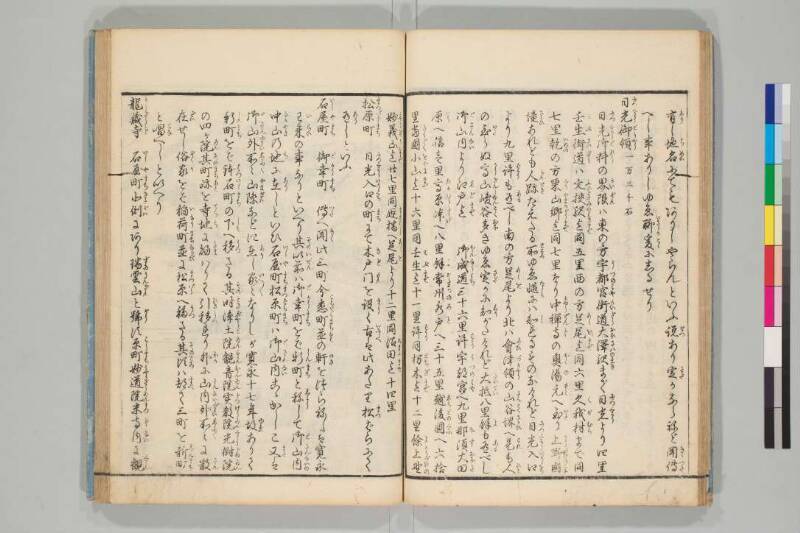
翻刻
【右丁】
有(あり)し地名(ちめい)にてもありしやらんといふ説(せつ)あり定(さだ)かならねど聞(きゝ)傳(つた)
へし事ありしゆゑ聊(いさゝか)爰(こゝ)にしるせり
日光御領(につくわうごりやう)《割書:一万三千石》
日光御料(につくわうごれう)の界限(かいげん)は東の方 宇都宮街道(うつのみやかいだう)大澤駅(おほさはのえき)まで日光(につくわう)より四里
壬生街道(みぶかいだう)は文挾駅(ふばさみのえき)迠(まで)同五里西の方 足尾(あしを)迠(まで)同六里 久我村(くがむら)まで同
七里 乾(いぬゐ)の方 栗山郷(くりやまのがう)迠(まで)同七里なり中禅寺(ちゆうぜんじ)の奥湯本(おくゆもと)へ至(いた)り上野國(かみつけのくに)
境(さかひ)あれども人跡(じんせき)たえたる所(ところ)ゆゑ慥(たしか)には知(し)れるものなけれど日光(につくわう)入口(いりくち)
より九里 許(ばかり)も有(ある)べし南の方 足尾(あしを)より北は會津領(あひづりやう)の山谷堺(さんこくさかひ)へ是(これ)も人(ひと)
の至(いた)らぬ高山(かうざん)峻谷(しゆんこく)多(おほ)きゆゑ定(さだ)かに知(しり)がたけれど大抵(たいてい)八里 餘(よ)も有(ある)べし
御山内(ごさんない)より江戸(えど)迠(まで) 御成道(おんなりみち)三十六里 許(ばかり)宇都宮(うつのみや)へ九里 那須(なす)大田(おほた)
原(はら)へ拾壱里 高原峠(たかはらたうげ)へ八里 餘(よ)常州(ひたちの)水戸(みと)へ三十五里 越後國(ゑちごのくに)へ六拾
里 當國(たうごく)小山(をやま)迠(まで)十六里同 壬生(みぶ)迠(まで)十一里 許(ばかり)同 栃木(とちぎ)迠(まで)十二里 餘(よ)上野(かうづけの)
【左丁】
妙義山(みやうぎさん)迠(まで)廿七里同 厩橋(まえばし)へ足尾(あしを)より十二里同 沼田(ぬまた)迠(まで)十四里
松原町(まつばらまち) 日光(につくわう)入口(いりくち)の町(まち)にて木戸門(きどもん)を設(まう)く古(いにしへ)は此あたり松(まつ)ばらにて
有(あり)しといふ
石屋町(いしやまち) 御幸町(ごかうまち) 傳(つた)へ聞(きく)此三町今 悉(こと〴〵く)町並(まちなみ)の軒(のき)をつらねたは寛永
已来(いらい)の事なりといへり其(その)以前(いぜん)は御幸町(ごかうまち)をば新町(しんまち)と称(しよう)して御山内(ごさんないの)
中山(なかやま)の地(ち)に在(あり)しといひ石屋町(いしやまち)松原町(まつばらまち)は御山内(ごさんない)こゝかしこ又(また)は
御山外(ごさんぐわい)《振り仮名:所〻|しよ〳〵》山際(やまぎは)などに在(あり)し《振り仮名:家〻|いへ〳〵》なりしが寛永十七年 故(ゆゑ)ありて
新町(しんまち)をば鉢石町(はついしまち)の下(しも)へ移(うつ)さる其(その)时(とき)淨土院(じやうどゐん)観音院(くわんおんゐん)実敎院(じつけうゐん)光樹院(くわうじゆゐん)
の四ヶ院(ゐん)其(その)町跡(まちあと)を寺地(てらち)に賜(たま)はりて引移(ひきうつ)れり外(ほか)に山内外(さんないぐわい)《振り仮名:所〻|しよ〳〵》に散(さん)
在(ざい)せし俗家(ぞくか)をば稲荷町(いなりまち)並(ならび)に松原(まつばら)へ移(いつ)さる其(その)頃(ころ)は都(すべ)て三町を新町(しんまち)
と唱(とな)へしといへり
龍藏寺(りうざうじ) 石屋町(いしやまち)北側(きたがは)にあり瑞雲山(ずゐうんざん)と號(がう)【号+乕】す原町(はらまち)妙道院(みやうだうゐん)末寺(まつじ)内(ない)に観(くわん)
現代語訳
【右丁】
あった地名でもあったのかもしれないという説があり、確かではないが聞き伝えた事があったので、少しここに記しておく。
日光御領(一万三千石)
日光御料の境界は、東の方は宇都宮街道の大沢駅まで日光より四里、壬生街道は文挾駅まで同じく五里、西の方は足尾まで同じく六里、久我村まで同じく七里、乾(北西)の方は栗山郷まで同じく七里である。中禅寺の奥、湯本へ至り上野国境があるが、人跡の絶えた所なので確かには知る者はいないが、日光入口より九里ばかりもあるだろう。南の方、足尾より北は会津領の山谷境へ、これも人の至らない高山峻谷が多いので確かに知りがたいが、大体八里余りもあるだろう。
御山内より江戸まで御成道三十六里ばかり、宇都宮へ九里、那須大田原へ十一里、高原峠へ八里余り、常陸水戸へ三十五里、越後国へ六十里、当国小山まで十六里、同じく壬生まで十一里ばかり、同じく栃木まで十二里余り、上野の
【左丁】
妙義山まで二十七里、同じく前橋へ足尾より十二里、同じく沼田まで十四里。
松原町 日光入口の町で木戸門を設ける。古くはこの辺り松原であったという。
石屋町 御幸町 伝え聞くところによると、この三町が今ことごとく町並みの軒を連ねたのは寛永以来の事であるという。その以前は御幸町を新町と称して御山内の中山の地にあったといい、石屋町・松原町は御山内のあちこち、また御山外の所々山際などにあった家々であったが、寛永十七年(1640年)事情があって新町を鉢石町の下へ移された。その時浄土院・観音院・実教院・光樹院の四ヶ院がその町跡を寺地に賜わって引き移った。他に山内外の所々に散在していた俗家は稲荷町並びに松原へ移された。その頃はすべて三町を新町と唱えたという。
龍蔵寺 石屋町北側にあり、瑞雲山と号す。原町妙道院末寺、内に観
英語訳
【Right page】
There is a theory that it might have been a place name that existed there, and though it is not certain, since there were things I had heard handed down, I have recorded them briefly here.
Nikkō Imperial Domain (13,000 koku)
The boundaries of the Nikkō Imperial Domain are: to the east, along the Utsunomiya Highway to Ōsawa Station, four ri from Nikkō; along the Mibu Highway to Fubasami Station, five ri; to the west, to Ashio, six ri; to Kuga Village, seven ri; to the northwest (inui direction), to Kuriyama Village, seven ri. Going to the inner area of Chūzenji, reaching Yumoto, there is the border with Kōzuke Province, but since it is a place where human traces have disappeared, no one knows for certain, though it would be about nine ri from the Nikkō entrance. To the south, from Ashio northward to the mountain valley border of Aizu Domain, this too has many high mountains and steep valleys that people do not reach, so it is difficult to know for certain, but it would be about eight ri or more.
From the sacred mountain precincts to Edo via the Onari road is about thirty-six ri; to Utsunomiya nine ri; to Nasu Ōtahara eleven ri; to Takahara Pass about eight ri; to Mito in Hitachi Province thirty-five ri; to Echigo Province sixty ri; to Oyama in this province sixteen ri; to Mibu about eleven ri; to Tochigi about twelve ri; to Kōzuke's
【Left page】
Myōgi Mountain twenty-seven ri; to Maebashi twelve ri from Ashio; to Numata fourteen ri.
Matsubara Town: This is the entrance town to Nikkō where a gate is established. In ancient times, this area is said to have been a pine grove.
Ishiya Town, Gokō Town: It is handed down that these three towns came to line up their eaves in complete town rows only from the Kan'ei era onward. Before that time, Gokō Town was called Shin-machi (New Town) and was located in the Nakayama area within the sacred mountain precincts. Ishiya Town and Matsubara Town consisted of houses scattered here and there within the sacred precincts, or in various places outside the sacred precincts near the mountain edges. In the 17th year of Kan'ei (1640), for certain reasons, Shin-machi was moved below Hatsuishi Town. At that time, the four temples—Jōdoin, Kan'onin, Jitsukyōin, and Kōjuin—were granted the former town site as temple grounds and relocated there. Other lay houses scattered in various places inside and outside the mountain precincts were moved to Inari Town and Matsubara. At that time, all three towns were called Shin-machi.
Ryūzōji Temple: Located on the north side of Ishiya Town, it is called Zuiunzan. It is a branch temple of Myōdōin in Hara Town, and inside there is a Kan[non statue]