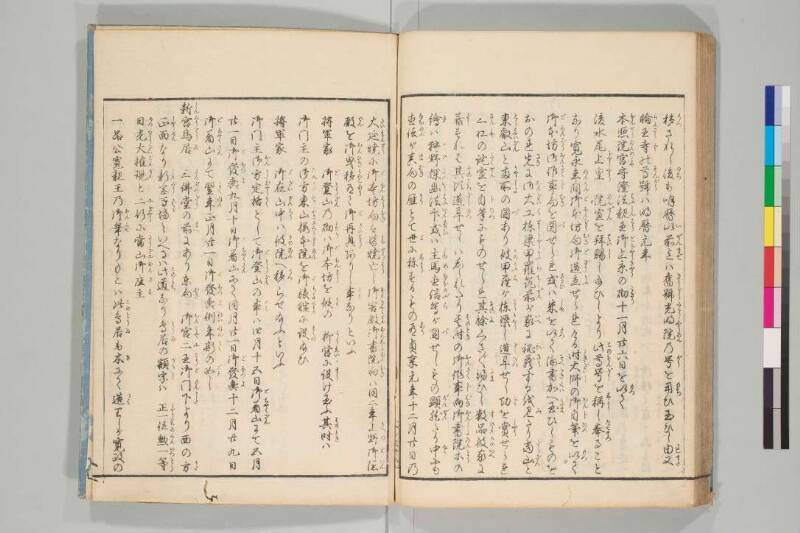
翻刻
【右丁】
移(うつ)されし後(のち)も明歷 以前(いぜん)迄(まで)は《振り仮名:舊號|きうがう》光明院(くわうみやうゐん)の号(がう)を用(もち)ひ玉ひし由(よし)又(また)
輪王寺(りんわうじ)の尊號(そんがう)は明歷元年【平出】
本照院(ほんせうゐんの)宮(みや)守澄 法親王(はふしんわう)御上京(ごじやうきやう)の砌(みぎり)十一月廿六日を以(もつ)て【平出】
後水尾 上皇(じやうくわう) 院宣(ゐんぜん)を拜賜(はいし)し給ひしより此(この)尊号(そんがう)を稱(しよう)し奉(たてまつ)ること
なり寛永 年間(ねんかん)御本坊(ごほんばう)向(むき)御造立(ござうりふ)せられける时(とき)大師(だいし)の御自筆(おんじひつ)を以(もつ)て
御本坊(ごほんばう)御作事(おんさくじ)向(むき)を図(づ)せられ或(あるひ)は朱(しゆ)を以(もつ)て添書(そへかき)加(くは)へ玉(たま)ひしものを
おのれ先(さき)に御大工(おんだいく)棟梁(とうりやう)甲羅(かふら)筑前(ちくぜん)が家(いへ)に秘蔵(ひさう)するを見(み)たり當山(たうざん)と
東叡山(とうえいざん)と両所(りやうしよ)の図(づ)あり彼(かの)甲羅(かふら)が棟梁(とうりやう)し造畢(ざうひつ)せし功(こう)を賞(しやう)せられ
三社(さんしや)の詫宣(たくせん)を自筆(じひつ)にものせられ其餘(そのよ)くさ〴〵賜(たま)ひし数品(すひん)彼家(かのいへ)に
蔵(ざう)すれば其頃(そのころ)造畢(ざうひつ)せしはしられたり其时(そのとき)の御作事(おんさくじ)向(むき)御書院(おんしよゐん)等(とう)の
繪(ゑ)は狩野探幽法印(かのたんいうはふいん)或(あるひ)は主馬(しゆめ)直信(なほのぶ)等(ら)が図(づ)せしもの顕然(げんぜん)たり中(なか)にも
直信(なほのぶ)が真向(まむき)の雁(かり)とて世(よ)に称(しよう)するもの有(あり)貞享元年十二月廿日の
【左丁】
大延焼(たいえんせう)に御本坊(ごほんばう)向(むき)は皆(みな)焼亡(せうばう)し御客殿(おんきやくでん)御書院(おんしよゐん)向(むき)は同二年 上野御隠(うへのごいん)
殿(でん)を御曳移(おんひきうつし)有(あり)て御再興(ごさいこう)ありし事(こと)なりといふ
将軍家 御登山(ごとうざん)の砌(みぎり)は御本坊(ごほんばう)を假(かり)の 柳営(りうえい)に設(まう)け玉ふ其时(そのとき)は【平出】
御門主の御方(おんかた)東山(ひがしやま)桜本院(さくらもとゐん)を御旅舘(ごりよくわん)に設(まうけ)給ひ【平出】
将軍家 御在山中(ございざんちう)は彼院(かのゐん)へ移(うつ)らせ給ふといふ【平出】
御門主 御方(おんかた)定格(ぢやうかく)として御登山(ごとうざん)の事(こと)は四月十五日 御着山(ごちやくざん)にて五月
廿一日 御發輿(ごはつよ)九月十日 御着山(ごちやくさん)にて同月廿一日 御發輿(ごはつよ)十二月廿九日
御着山(ごちやくさん)にて翌年(よくねん)正月廿一日 御發輿(ごはつよ)例年(れいねん)斯(かく)の如(ごと)し
新宮鳥居(しんぐうとりゐ) 三佛堂(さんぶつだう)の前(まへ)にあり東 向(むき) 御宮(おんみや)二王御門(にわうごもん)下(した)より西の方(かた)
正面(しやうめん)なり新宮馬場(しんぐうばゞ)といへるは此道(このみち)なり鳥居(とりゐ)の額字(がくじ)は 正一位(しやういちゐ)勲一等(くんいつとう)
日光大権現(につくわうだいごんげん)と二行(にぎやう)に當山(たうざん)御座主(おんざす)【平出】
一品公寬親王の御筆(おんふで)なりもとは此(この)鳥居(とりゐ)も木(き)にて造(つく)りしが寛政の
現代語訳
【右丁】
移された後も明暦以前までは旧号である光明院の号を用いられたという。また
輪王寺の尊号は明暦元年に
本照院の宮守澄法親王が御上京の際、十一月二十六日をもって
後水尾上皇の院宣を拝賜されたことより、この尊号を称し奉ることと
なった。寛永年間に御本坊向きを御造立された時、大師の御自筆をもって
御本坊の御作事向きを図面に描かれ、あるいは朱をもって添え書きを加えられたものを、
私は先に御大工棟梁甲羅筑前の家で秘蔵されているのを見た。当山と
東叡山と両所の図面がある。かの甲羅が棟梁として造り終えた功を賞せられ、
三社の託宣を自筆に記され、その他種々賜った数品をかの家に
蔵しているので、その頃造り終えたことが知られる。その時の御作事向き、御書院等の
絵は狩野探幽法印あるいは主馬直信等が描いたものは明らかである。中でも
直信の真向きの雁として世に称するものがある。貞享元年十二月二十日の
【左丁】
大延焼で御本坊向きは皆焼失し、御客殿・御書院向きは同二年に上野御隠居
殿をお引き移しになって御再興があったことであるという。
将軍家の御登山の際は御本坊を仮の柳営に設けられる。その時は
御門主の方は東山桜本院を御旅館に設けられ、
将軍家の御在山中はかの院へお移りになるという。
御門主の方の定格として御登山のことは、四月十五日御着山にて五月
二十一日御発輿、九月十日御着山にて同月二十一日御発輿、十二月二十九日
御着山にて翌年正月二十一日御発輿と、例年このようである。
新宮鳥居 三仏堂の前にあり、東向き。御宮二王御門下より西の方の
正面である。新宮馬場というのはこの道である。鳥居の額字は「正一位勲一等
日光大権現」と二行に、当山御座主
一品公寛親王の御筆である。元はこの鳥居も木で造ったが、寛政の
英語訳
【Right Page】
Even after being moved, until before the Meireki era, the old name "Kōmyōin" continued to be used. Also,
the honorary title "Rinnōji" was established in Meireki 1 (1655) when
Prince Morisumi Hōshin'nō of Honshōin went to Kyoto, and on the twenty-sixth day of the eleventh month received
an imperial decree from Retired Emperor Go-Mizunoo, from which time this honorary title came to be used.
During the Kan'ei years when the main temple buildings were constructed, using Daishi's own handwriting,
he drew plans for the main temple construction work, and added notes in red ink. I previously saw these
secretly treasured in the house of the master carpenter Kōra Chikuzen. There are plans for both this mountain and
Tōeizan. In recognition of Kōra's achievement as master builder who completed the construction,
[the Daishi] personally wrote down the oracles of the Three Shrines, and various other items bestowed are
stored in that house, so it is known that construction was completed at that time. The construction work of that time, the paintings in the guest halls, etc.
were clearly done by Kanō Tan'yū Hōin or Shume Naonobu and others. Among them,
there is what is known to the world as Naonobu's "frontal view of wild geese." On the twentieth day of the twelfth month of Jōkyō 1 (1684),
【Left Page】
in the great fire, all the main temple buildings were burned down, and the guest hall and study hall buildings were restored in the second year by moving the Ueno retirement
palace. It is said that this was the reconstruction.
When the Shogun family climbs the mountain, the main temple is set up as a temporary military headquarters. At that time,
the head priest uses Higashiyama Sakuramotoin as a temporary lodging, and
during the Shogun family's stay on the mountain, [the head priest] moves to that temple.
As a regular practice for the head priest's mountain visits: arriving on the mountain on April 15th and departing on May
21st; arriving on the mountain on September 10th and departing on the 21st of the same month; arriving on the mountain on December 29th
and departing on January 21st of the following year - this is the annual pattern.
Shingū Torii: Located in front of the Sanbutsudō, facing east. It is the
front view from the west of the Omiya Niō Gate area below. What is called Shingū Baba is this road. The inscription on the torii reads "Senior First Rank, First Class Merit,
Nikkō Daigongen" in two lines, written by the head priest of this mountain,
First Rank Prince Kan Shin'nō. Originally this torii was also made of wood, but in the Kansei era