翻刻
【右丁】
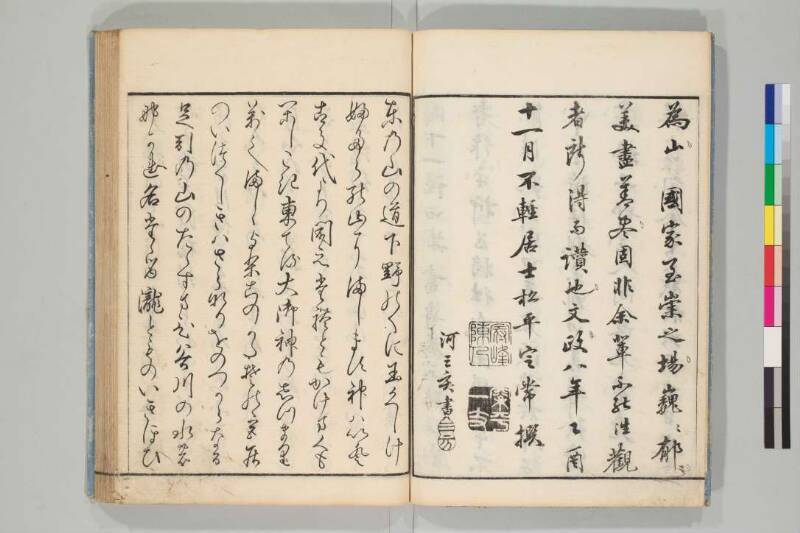
為山。 国家至崇之場。巍々郁々。
美尽善尽。固非余輩不能往観
者所得而讃也。文政八年乙酉
十一月不軽居士松平定常撰
【落款二つ】
河三亥書【落款】
【左丁】
東の山の道下野のくに玉くしけ
ふたらの山にまします神はいと
古き代より聞えたれともかけまくも
かしこき東てる大御神のしつまり
ましましゝより古のかたその宮居
のいつくしきはさらなりをのつからなる
足引の山のたゝすまひ谷川の水の
なかれ名たゝる瀧とものいきほひ
現代語訳
【右丁】
山として、国家が最も崇敬する場所である。威厳があり豊かで美しく、美しさも善良さも極まっている。もとより私たち実際に行って観ることのできない者が讃えることのできるものではない。文政八年乙酉十一月 不軽居士松平定常撰
河三亥書
【左丁】
東の山の道、下野国の玉櫛笥、二荒の山にいらっしゃる神は、いと古い時代から知られているけれども、恐れ多くて口にするのもはばかられる、東を照らす大御神がお鎮まりになってからというもの、昔からその宮居の美しさは言うまでもなく、自然のままの足引きの山の佇まい、谷川の水の流れ、名高い滝などの勢い
英語訳
【Right Page】
As a mountain, it is the place most revered by the nation. Majestic and magnificent, it has exhausted all beauty and goodness. It is certainly not something that we who cannot go and observe it personally are able to praise adequately. Bunsei 8th year, Year of the Metal Rooster, 11th month. Composed by Fukyo Koji Matsudaira Sadatsune.
Written by Kazo Iga.
【Left Page】
The mountain path to the east, in Shimotsuke Province with its jeweled comb box, the deity who resides on Mount Futara has been known since ancient times, but since the great deity who illuminates the east—so awesome that it is fearful even to speak of—came to dwell there, from ancient times the beauty of that sacred dwelling goes without saying, and the natural appearance of the foot-drawing mountains, the flow of valley streams, the vigor of the famous waterfalls