翻刻
【右丁】
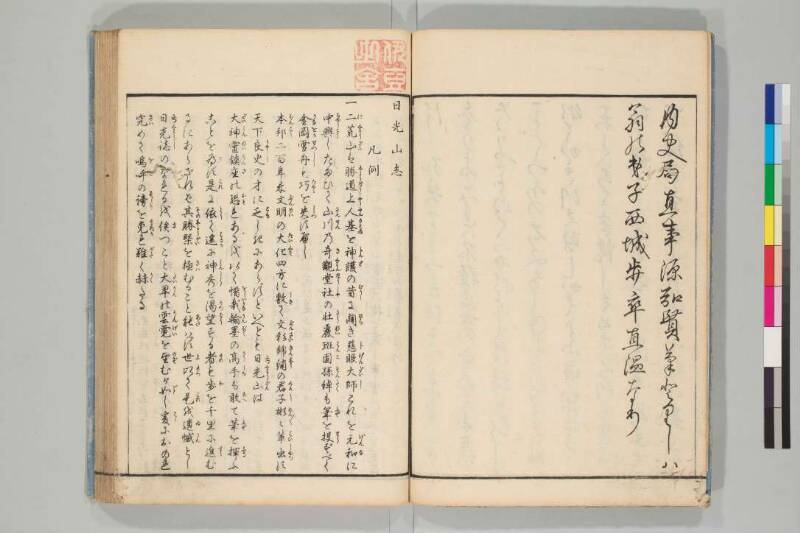
内史局直事源弘賢筆とりしは
翁の弟子西城歩卒直温なり
【左丁】
日 光 山 志
凡 例
一 二荒山(にくわうざん)は勝道上人(しようだうしやうにん)基(もとゐ)を神護(じんご)の昔(むかし)に開(ひら)き慈眼大師(じげんだいし)これを元和(げんな)に
中興(ちゆうこう)したまひて山川(さんせん)の奇観(きくわん)堂社(だうしや)の壮麗(さうれい)班固(はんこ)孫綽(そんたく)も筆(ふで)を投(とう)ずべく
金岡(かなをか)雪舟(せつしう)も巧(たくみ)を失(しつ)すべし
本邦(ほんはう)二百年来 文明(ぶんめい)の大化(たいくわ)四方に敷(しき)て文彩(ぶんさい)錦繍(きんしう)の君子(くんし)《振り仮名:彬〻|ひん〳〵》輩出(はいしゆつ)す
天下 良史(りやうし)の才に乏(とも)しきにあらずといへども日光山(につくわうざん)は
大神霊(だいしんれい)鎮座(ちんざ)の恐(おそ)れあるを以て惜哉(をしいかな)翰墨(かんぼく)の高手(かうしゆ)も敢(あへ)て筆(ふで)を揮(ふる)ふ
ことを為(せ)ず是(これ)に依(より)て遥(はるか)に神秀(しんしう)を渇望(かつばう)する者(もの)も歩(ほ)を千里に進(すゝ)む
るにあらざれば其(その)勝概(しようがい)を極(きは)むること能(あた)はず世(よ)以(もつ)て是(これ)を遺憾(ゐかん)とし
日光誌(につくわうし)のなれるを俟(ま)つこと大旱(たいかん)の雲霓(うんげい)を望(のぞ)むが如(ごと)し爰(こゝ)におのれ
究(きは)めて鳴呼(をこ)の謗(そしり)を免(まぬか)れ難(がた)く赫(かく)たる
現代語訳
【右丁】
内史局直事源弘賢が筆を取ったのは、翁の弟子である西城歩卒直温である。
【左丁】
日光山志
凡例
一 二荒山は勝道上人が神護景雲年間の昔に基礎を開き、慈眼大師がこれを元和年間に中興されて、山川の奇観、堂社の壮麗さは、班固や孫綽も筆を投げ出すほどで、巨勢金岡や雪舟も技巧を失うほどである。
我が国は二百年来、文明の大きな変化が四方に敷かれて、文彩錦繍のような優雅な君子が輩出している。天下には良史の才に乏しくないとはいえ、日光山は大神霊が鎮座される畏れがあるため、惜しいことに筆墨の高手も敢えて筆を振るうことをしない。これによって、遥かに神秀を渇望する者も、千里の歩を進めるのでなければ、その勝景を極めることができない。世の人はこれを遺憾とし、日光誌ができるのを待つことは、大旱魃の時に雲や虹を望むようである。ここに私は、極めて愚かであるという謗りを免れ難く、輝かしい
英語訳
【Right Page】
The one who took up the brush for Minamoto Kōken, Direct Official of the Inner History Bureau, was Naōon, a foot soldier of the Western Castle and disciple of the old man.
【Left Page】
Records of Mount Nikkō
General Principles
One: Mount Futaara was first established by the monk Shōdō in the ancient days of the Jingo-keiun era, and Jigen Daishi restored it during the Genna period. The magnificent views of the mountains and rivers and the splendor of the halls and shrines are such that even Ban Gu and Sun Chuo would throw down their brushes, and Kanaoka and Sesshū would lose their artistic skills.
In our country, for the past two hundred years, the great transformation of civilization has spread in all directions, and refined gentlemen like beautiful literary brocade have appeared in succession. Although the realm does not lack talent for good historiography, Mount Nikkō has the awe-inspiring presence of great divine spirits, so regrettably even master calligraphers and painters dare not wield their brushes. Due to this, those who yearn from afar for the divine beauty cannot fully experience its magnificent scenery unless they advance a thousand ri on foot. The world considers this regrettable, and awaits the creation of a Record of Nikkō like looking for clouds and rainbows during a great drought. Here I, though I cannot escape the criticism of being extremely foolish, with brilliant