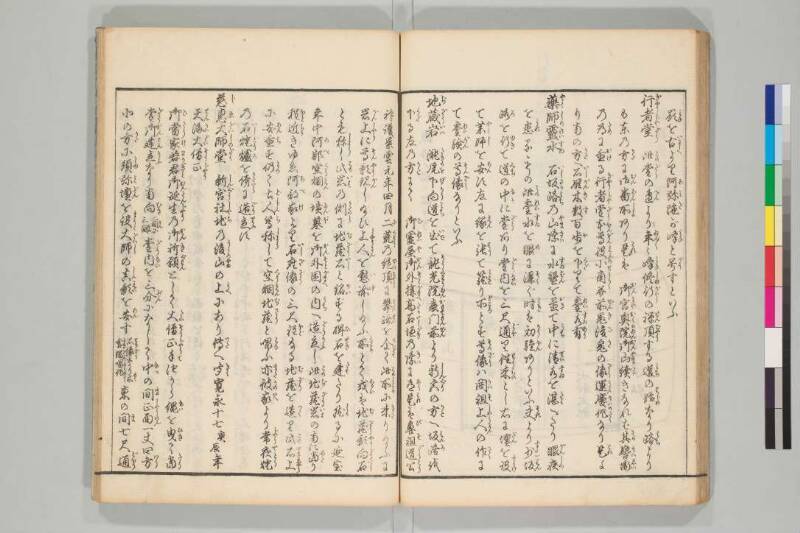
翻刻
【右丁】
嶺(みね)を古(いにしへ)より阿弥陀(あみだ)が峰(みね)と号(がう)すといふ
行者堂(ぎやうじやだう) 此堂(このだう)の邊(へん)より年(ねん)〻(〳〵)峰修行(みねしゆぎやう)の禅頂(ぜんぢやう)する道(みち)の始(はじめ)なり路(みち)より
も東の方(かた)に御番所(おんばんしよ)あり是(これ)は 御宮(おんみや)奥院(おくのゐん)御山續(おんやまつゞ)きなれば其(その)警衞(けいゑい)
の為(ため)に置(おけ)る行者堂(ぎやうじやだう)本尊(ほんぞん)役小角(えんのせうかく)并 前鬼後鬼(ぜんきごき)の像(ざう)運慶作(うんけいのさく)なり是(これ)よ
り南の方(かた)へ石雁木(いしがんき)数(す)百 歩(ほ)を下(くだ)りて靈水(れいすゐ)有(あり)
藥師靈水(やくしのれいすゐ) 石坂路(いしさかみち)の山際(やまきは)に水盤(すゐばん)を置(おき)て中(うち)に清水(せいすゐ)を湛(たゝ)へたり眼疾(がんしつ)
を患(うれ)るもの此(この)靈水(れいすゐ)を眼(め)に灑(そゝ)ぐ时(とき)は効驗(かうげん)ありといふ夫(それ)より少(すこし)坂(はん)
路(ろ)を行(ゆき)て道(みち)の中(なか)に堂(だう)あり堂内(だうない)を三尺 通(とほ)り徃來(わうらい)とし右に壇(だん)を設(まうけ)
て薬師(やくし)を安(あん)す左に縁(えん)を張(はり)て籠(こも)り所(どころ)とす尊像(そんざう)は開祖上人(かいそしやうにん)の作(さく)に
て靈験(れいげん)の尊像(そんざう)なりといふ
地蔵岩(ぢざういは) 瀧尾下向道(たきのをげかうみち)を出(いで)て龍光院(りうくわうゐん)表門前(おもてもんぜん)より新宮(しんぐう)の方(かた)へ坂路(はんろ)を
下(くだ)る左の方(かた)にて 御靈屋(ごれいや)御外構(おんそとがまへ)高石垣(たかいしがき)の際(きは)に有(あり)是(これ)は鼻祖(びそ)道公(だうこう)
【左丁】
神護景雲元年四月 二荒(にくわう)の絶頂(ぜつちやう)に攀跡(はんせい)を企(くはだて)て此所(このところ)に來(きた)り給ふに
岩上(がんしやう)に尊影(そんやう)現(げん)し給ひ上人(しやうにん)を慰諭し給ふ所(ところ)とて或(あるひ)は地蔵影向石(ぢざうやうがういし)
とも称(しよう)し此岩(このいは)の側(かたはら)に地蔵石(ぢざういし)と銘(めい)ずる碑石(ひせき)を建(たて)たり然(しか)るに延宝
年中 阿部空烟(あべくうえん)の墳墓(ふんぼ)を御外圍(おんそとがまへ)の内(うち)へ造立(ざうりふ)し此(この)地蔵岩(ぢざういは)の南に當(あた)り
程近(ほどちか)きゆゑ阿部家(あべけ)より石座像(いしざざう)の三尺 程(ほど)なる地蔵(ぢざう)を造(つく)り此(この)石上(せきしやう)
に安置(あんち)す仍(よつ)て土人等(どじんら)称(しよう)して空烟地蔵(くうえんぢざう)と唱(とな)ふ亦(また)彼家(かのいへ)より常夜燈(じやうやとう)
の石燈爐(いしどうろ)を傍(かたはら)に造立(ざうりふ)す
慈惠大師堂(じゑだいしのだう) 新宮社地(しんぐうしやち)の後山(うしろやま)の上(うへ)にあり傳(つた)へ聞(きく)寛永十七《割書:庚| 辰》年
天海大僧正(てんかいだいそうじやう)
御當家(ごたうけ)若君(わかぎみ)御誕生(おんたんじやう)の御祈願(おんきぐわん)として大僧正(たいそうじやう)手(て)づから縄(なは)を曳(ひき)て當(たう)
堂(だう)御建立(おんこんりふ)なり南 向(むき)《割書:二 間(けん)に|三 間(けん)》堂内(だうない)を三 分(ぶん)になして中(なか)の間(ま)正面(しやうめん)一丈四 方(はう)
北の方(かた)に須弥壇(しゆみだん)を設(まうく)大師(だいし)の真影(しんえい)を安(あん)す《割書:石像(せきざう)なり木(もく)|食(じき)端唱作(たんしやうのさく)》東の間(ま)七尺 通(どほり)
現代語訳
【右丁】
この峰を古来より阿弥陀が峰と呼ぶという。
行者堂 この堂の辺りから毎年峰修行の禅定をする道の始まりである。路よりも東の方に御番所がある。これは御宮奥院の御山続きであるため、その警備のために置かれている。行者堂の本尊は役小角並びに前鬼後鬼の像で、運慶作である。これより南の方へ石段を数百歩下って霊水がある。
薬師霊水 石坂道の山際に水盤を置いて、中に清水を湛えている。眼病を患う者がこの霊水を目に注ぐ時は効験があるという。そこから少し坂道を行って道の中に堂がある。堂内を三尺通りの往来とし、右に壇を設けて薬師を安置し、左に縁を張って籠り所とする。尊像は開祖上人の作で、霊験あらたかな尊像であるという。
地蔵岩 瀧尾下向道を出て龍光院表門前より新宮の方へ坂道を下る左の方で、御霊屋御外構の高石垣の際にある。これは鼻祖道公が
【左丁】
神護景雲元年四月、二荒の絶頂への登頂を企ててこの所に来られた時に、岩上に尊影が現れて上人を慰めいたわられた所として、或いは地蔵影向石とも称し、この岩の側に「地蔵石」と銘ずる碑石を建てた。然るに延宝年中、阿部空烟の墳墓を御外囲の内へ造立し、この地蔵岩の南に当たり程近いゆえ、阿部家より石座像の三尺程の地蔵を造り、この石上に安置した。よって土地の人等は称して空烟地蔵と唱える。また彼の家より常夜灯の石灯籠を傍らに造立した。
慈恵大師堂 新宮社地の後山の上にある。伝え聞くところでは寛永十七(庚辰)年、天海大僧正が御当家若君御誕生の御祈願として、大僧正が手づから縄を曳いて当堂を御建立された。南向き(二間に三間)で、堂内を三分になして、中の間正面一丈四方、北の方に須弥壇を設け、大師の真影を安置する(石像なり、木食端唱作)。東の間七尺通り
英語訳
【Right Page】
This peak has been called Amida-ga-mine since ancient times.
Gyōja-dō (Ascetic Hall) From the vicinity of this hall begins the path for annual peak ascetic practices and meditation. To the east of the road there is a guard post. This is placed for security because it continues with the sacred mountain of the shrine's inner sanctuary. The principal image of the Gyōja-dō is a statue of En no Shōkaku along with Zenki and Goki, created by Unkei. Going south from here, descending several hundred steps of stone stairs, there is sacred water.
Yakushi Sacred Water A water basin is placed at the mountainside of the stone slope road, holding clear water within. It is said that when those suffering from eye diseases pour this sacred water on their eyes, it is efficacious. Going a little further along the slope road, there is a hall in the middle of the path. The interior of the hall serves as a three-shaku-wide passage for coming and going, with a platform set up on the right where Yakushi is enshrined, and a veranda built on the left as a retreat place. The sacred statue is said to be made by the founding master and is a spiritually powerful sacred image.
Jizō Rock Exiting the Takino-o descent path and going down the slope road from in front of the main gate of Ryūkō-in toward Shingū, on the left side, near the high stone wall of the outer enclosure of the sacred mausoleum. This is where the founding ancestor Dōkō
【Left Page】
In the fourth month of the first year of Jingo-keiun, when he planned to climb to the summit of Nikō and came to this place, a sacred figure appeared on the rock to comfort and console the master. This place is also called Jizō-yōgō-ishi (Jizō Manifestation Stone), and a stone monument inscribed "Jizō Rock" was erected beside this rock. However, during the Enpō years, when Abe Kūen's tomb was built within the outer enclosure, it was located close to the south of this Jizō Rock, so the Abe family created a three-shaku stone seated Jizō statue and placed it on this rock. Therefore, the local people call it Kūen Jizō. The family also built a stone lantern for perpetual lighting nearby.
Jie Daishi Hall Located on top of the mountain behind the Shingū shrine grounds. It is said that in the 17th year of Kan'ei (Kōshin year), Tenkai Dai-sōjō personally pulled ropes to build this hall as a prayer for the birth of a young lord of the ruling house. Facing south (two ken by three ken), the hall interior is divided into three parts, with the central room having a front area of one jō square, a Sumeru platform set up to the north, and the true image of the Great Master enshrined there (a stone statue, made by Mokujiki Tanshō). The eastern room is seven shaku wide.