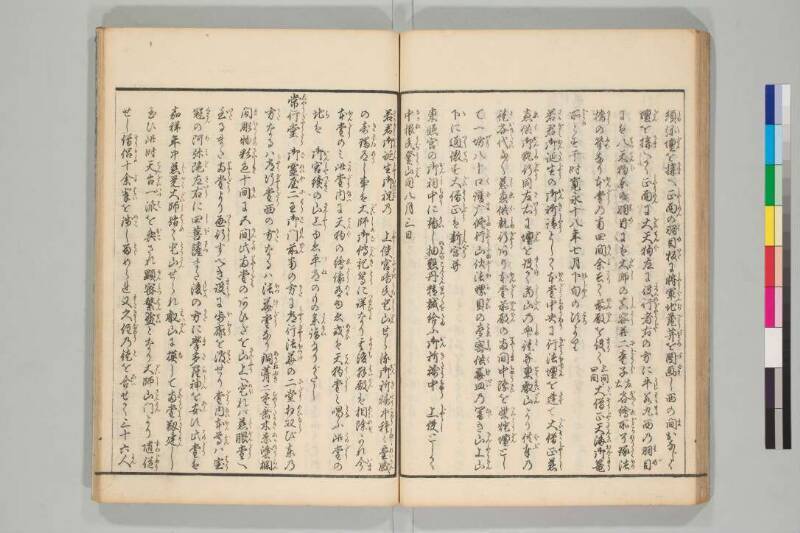
翻刻
【右丁】
須弥壇(しゆみだん)を構(かま)へ正面(しやうめん)の羽目板(はめいた)に將軍地蔵茾(しやうぐんぢざうぼさつ)【𦬇】を圖画(づぐわ)し西の間(ま)おなじく
壇(だん)を構(かま)へて正面(しやうめん)に大天狗(たいてんぐ)左に役行者(えんのぎやうじや)右の方に牛若丸(うしわかまる)西の羽目(はめ)
には八天狗(はつてんぐ)東の羽目(はめ)には大師(だいし)の真容(しんよう)并 二童子(にどうじ)《割書:左|右》各(おの〳〵)繪所(えどころ)了琢法(れうたくほつ)
橋(けう)の筆(ふで)なり本堂(ほんだう)の南四 間余(けんよ)去(さり)て前殿(ぜんでん)を設(まう)く《割書:三間 ̄に|四間》大僧正(だいそうじやう)天海(てんかい)御篭(おんこもり)
所(どころ)とす于时寛永十八年七月 下旬(げじゆん)の頃(ころ)より【平出】
若君(わかぎみ)御誕生(おんたんじやう)の御祈請(おんきしやう)として本堂(ほんだう)中央(ちゆうあう)に行法壇(ぎやうほふだん)を建(たて)て大僧正(だいそうじやう)慈(じ)
恵供御執行(ゑくおんしゆぎやう)同 左右(さいう)に壇(だん)を設(まうけ)て當山(たうざん)の衆徒(しゆと)并 東叡山(とうえいざん)より供奉(ぐぶ)の
徒(と)各(おの〳〵)代(かは)る〴〵慈恵供執行(じゑぐしゆぎやう)あり本堂(ほんだう)前殿(ぜんでん)の両間中際(りやうまちゆうさい)を柴燈壇(さいとうだん)とし
て一 坊(ばう)八十 口(く)護广修行(ごましゆぎやう)山伏(やまぶし)法螺貝(ほらがひ)の聲(こゑ)密供(みつく)養皿(けべい)の響(ひゞ)き三上(さんしやう)山(さん)
下(か)に通徹(つうてつ)す大僧正(だいそうじやう)は新宮(しんぐう)并【平出】
東照宮の御祠中(おんしちゆう)に詣(けい)し抽(ぬきんで)_二懇丹(こんたん)精誠(せい〳〵を)_一給(たま)ふ御祈祷中(おんきたうちゆう) 上使(じやうし)として
中根氏(なかねうぢ)登山(とうざん)同八月三日【平出】
【左丁】
若君(わかぎみ)御誕生(おんたんじやう)御祝(おんいはひ)の 上使(じやうし)宮崎氏(みやざきうぢ)登山(とうざん)せらる御祈祷中(おんきたうちゆう)種(しゆ)〻(〴〵)靈感(れいかん)
の竒瑞(きずゐ)有(あり)し事は大師御傳記(だいしのごでんき)等(とう)に詳(つまひらか)なり其後(そのゝち)拜殿(はいでん)は相除(あひのぞ)かれ今(いま)
本堂(ほんだう)のみ此(この)堂内(だうない)に天狗(てんぐ)の繪像(ゑざう)有(ある)ゆゑ或(あるひ)は天狗堂(てんぐだう)と唱(とな)ふ此堂(このだう)の
地(ち)は 御宮續(おんみやつゞき)の山上(さんしやう)ゆゑ平常(つね)のもの参詣(さんけい)なりがたし
常行堂(じやうぎやうだう) 御靈屋(ごれいや)二王御門前(にわうごもんぜん)南の方(かた)に常行(じやうぎやう)法華(ほつけ)の二堂(にだう)相双(あひなら)び東の
方(かた)なるは常行堂(じやうぎやうだう)西の方(かた)なるは法華堂(ほつけだう)なり銅葺(あかゞねぶき)二 重垂木(ぢゆうたるき)赤塗(あかぬり)欄(らん)
間(ま)彫物(ほりもの)彩色(さいしき)十 間(けん)に五 間(けん)此(この)両堂(りやうだう)のあひだを山上(さんしやう)へ登(のぼ)れば慈眼堂(じげんだう)へ
至(いた)るまた両堂(りやうだう)より通行(つうかう)すべき設(まうけ)に歩廊(ほらう)を渡(わた)せり堂内(だうない)本尊(ほんぞん)は宝(はう)
冠(くわん)の阿弥陀(あみだ)左右(さいう)に四菩薩(しぼさつ)また後(うしろ)の方(かた)に摩多羅神(またらじん)を安(あん)す此堂(このだう)は
嘉祥年中 慈覚大師(じがくだいし)始(はじめ)て登山(とうざん)せられ叡山(えいざん)に摸(も)して両堂(りやうだう)剏建(さうけん)し
玉ひ此时 天台一派(てんだいいつは)を興(おこ)され顕密(げんみつ)繁盛(はんせい)となり大師(だいし)山門(さんもん)より随従(ずゐじやう)
せし僧侶(そうちよ)十 余(よ)輩(はい)を残(のこ)し留(とゞ)められ又(また)久住(きうぢゆう)の徒(と)を合(あは)せて三十六 人(にん)
現代語訳
【右丁】
須弥壇を構え、正面の羽目板に将軍地蔵菩薩を図画し、西の間も同じく壇を構えて正面に大天狗、左に役行者、右の方に牛若丸、西の羽目には八天狗、東の羽目には大師の真容並びに二童子(左右)を各々絵所了琢法橋の筆で描いている。本堂の南四間余り離れて前殿を設ける(三間に四間)。大僧正天海の御籠り所とする。この時寛永十八年七月下旬の頃より、若君御誕生の御祈請として本堂中央に行法壇を建てて大僧正が慈恵供を執行し、同じく左右に壇を設けて当山の衆徒並びに東叡山より供奉の徒が各々代わる代わる慈恵供を執行した。本堂前殿の両間中際を柴燈壇として一坊八十口の護摩修行、山伏法螺貝の声、密供養器の響きが三上山下に通徹した。大僧正は新宮並びに東照宮の御祠中に詣し、懇丹精誠を抽んでて給う。御祈祷中、上使として中根氏が登山し、同八月三日
【左丁】
若君御誕生御祝いの上使宮崎氏が登山される。御祈祷中種々霊感の奇瑞があった事は大師御伝記等に詳しい。その後拝殿は相除かれ、今は本堂のみである。この堂内に天狗の絵像があるゆえ、或いは天狗堂と唱える。この堂の地は御宮続きの山上ゆえ、平常の者は参詣し難い。
常行堂 御霊屋二王御門前南の方に常行・法華の二堂が相並び、東の方にあるのは常行堂、西の方にあるのは法華堂である。銅葺き二重垂木、赤塗り欄間彫物彩色で十間に五間である。この両堂の間を山上へ登れば慈眼堂へ至る。また両堂より通行すべき設えに歩廊を渡している。堂内の本尊は宝冠の阿弥陀、左右に四菩薩、また後ろの方に摩多羅神を安置する。この堂は嘉祥年中、慈覚大師が初めて登山され、叡山に模して両堂を創建された。この時天台一派を興され、顕密が繁盛となり、大師が山門より随従した僧侶十余輩を残し留められ、また久住の徒を合わせて三十六人
英語訳
【Right Page】
A Sumeru platform is constructed, with Shōgun Jizō Bodhisattva painted on the front panel board. The western room similarly has a platform constructed with Dai-tengu on the front, En no Gyōja on the left, Ushiwakamaru on the right, eight tengu on the western panel, and the true image of the Great Master along with two child attendants (left and right) on the eastern panel, all painted by the brush of Eshi Ryōtaku Hokkyō. A front hall is established four ken and more south of the main hall (three ken by four ken). This serves as the retreat place of Dai-sōjō Tenkai. From around late July of the 18th year of Kan'ei, as a prayer for the birth of the young lord, a ritual platform was built in the center of the main hall where the Dai-sōjō performed the Jie ritual offering. Similarly, platforms were set up on the left and right where monks from this mountain and attendant monks from Tōeizan took turns performing the Jie ritual. The space between the main hall and front hall served as a fire ritual platform where eighty monks from one temple performed goma fire rituals, with the sounds of yamabushi conch shells and the resonance of esoteric offering vessels penetrating throughout the upper and lower mountains. The Dai-sōjō visited the shrine halls of Shingū and Tōshōgū, offering sincere devotion. During the prayers, Nakane-shi climbed the mountain as an imperial messenger, and on the third day of the eighth month,
【Left Page】
Miyazaki-shi climbed the mountain as an imperial messenger for celebrating the birth of the young lord. During the prayers, there were various miraculous signs of spiritual response, which are detailed in the Great Master's biography and other records. Afterward, the worship hall was removed, and now only the main hall remains. Because there are painted images of tengu in this hall, it is sometimes called Tengu-dō. Since this hall is located on the mountaintop continuing from the shrine, it is difficult for ordinary people to visit for worship.
Jōgyō-dō South of the front of the Niō Gate of the Sacred Mausoleum, the two halls of Jōgyō and Hokke stand side by side - the eastern one is Jōgyō-dō and the western one is Hokke-dō. They have copper roofing, double rafters, red-painted railings with carved decorations and coloring, measuring ten ken by five ken. Climbing the mountain between these two halls leads to Jigen-dō. A covered corridor connects the two halls for passage. The principal image in the hall is Amida with a jeweled crown, with four bodhisattvas on the left and right, and Matara-jin enshrined at the back. This hall was first built when Jikaku Daishi initially climbed the mountain during the Kashō years, creating both halls in imitation of Mt. Hiei. At this time he established the Tendai sect, leading to the prosperity of both esoteric and exoteric Buddhism. The Great Master left behind more than ten monks who had followed him from the mountain temple, and together with long-term residents, there were thirty-six people.