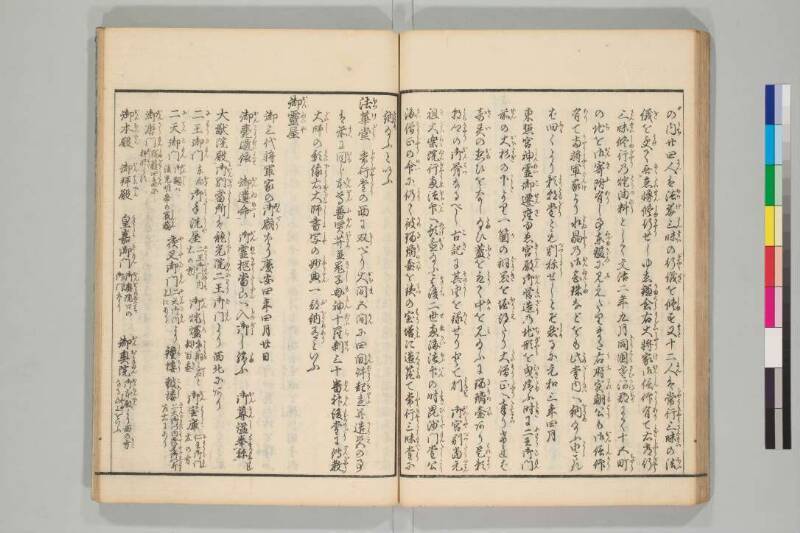
翻刻
【右丁】
の内(うち)廿四 人(にん)は法華三昧(ほつけさんまい)の行儀(ぎやうぎ)を修(しゆ)す又(また)十二 人(にん)は常行三昧(じやうきやうさんまい)の法(ほふ)
儀(ぎ)を受(うけ)て無(なく)_二怠慢(たいまん)_一修行(しゆきやう)せしゆゑ鎌倉(かまくら)右大將家(うだいしやうけ)御信仰(おんしんかう)有(あり)て右(みぎ)常行(じやうぎやう)
三昧(さんまい)修行(しゆぎやう)の燈油料(とうゆれう)として文治二年九月 同國(どうこく)寒河郡(さむかはごほり)にて十五 町(ちやう)
の地(ち)を御寄附(おんきふ)有(あり)し事 東鑑(あづまかゞみ)に見(み)えたりまた右府(うふ)実朝公(さねともこう)も御信仰(おんしんかう)
有(あり)て両將軍家(りやうしやうぐんけ)より水晶(すゐしやう)の御念珠(おんねんじゆ)などをも此(この)堂内(だうない)へ納(をさめ)給ふ由(よし)され
ば旧(ふる)くより頼朝堂(よりともだう)とも別称(ばつしよう)せしとぞ然(しか)るに元和三年四月【平出】
東照宮 神霊(しんれい)御遷座(ごせんざ)ゆゑ宮殿(きうでん)御営造(おんえいざう)の地形(ぢぎやう)を曳(ひき)給(たま)ふ时(とき)に二王御門(にわうごおもん)
前(ぜん)の大杉(おほすぎ)の下(した)より一 箇(か)の銅器(どうき)を堀得(ほりえ)たり大僧正(たいそうじやう)へ奉(たてまつ)りければ
奇異(きい)の想(おも)ひをなし給(たま)ひ蓋(ふた)を取(とり)て中(なか)を見(み)給ふに瑠璃壷(るりのつぼ)あり是(これ)頼(より)
朝卿(ともきやう)の御骨(おんこつ)なるべし古記(こき)に其由(そのよし)を録(ろく)せりとて即(すなはち) 御宮(おんみや)別當(べつたう)元(ぐわん)
祖(そ)大楽院(だいらくゐん)行恵法印(ぎやうゑほふいん)へ預置(あづけおき)給ふ其後(そのゝち)二 世(せ)恵海法印(ゑかいほふいん)の时(とき)毘沙門堂(びしやもんだう)公(こう)
海僧正(かいそうじやう)の命(めい)に仍(より)て彼(かの)瑠璃壷(るりのつぼ)を銕(てつ)の宝塔(はうたふ)に造籠(つくりこめ)て常行三昧堂(じやうぎやうさんまいだう)に
【左丁】
納(をさめ)給ふといふ
法華堂(ほつけだう) 常行堂(じやうぎやうだう)の西に双(なら)べり大間(おほま)五 間(けん)に四 間(けん)許(ばかり)起立(きりふ)并 造営(ざうえ[い])の事
は前(まへ)に同(おな)じ本尊(ほんぞん)普䝨(ふげん)𦬇(ぼさつ)並 鬼子母神(きしもじん)十羅刹(じふらせつ)三十 番神(ばんじん)後堂(うしろのだう)に傳教(でんぎやう)
大師(だいし)の影像(えいざう)右(みぎ)大師(だいし)書写(しよしや)の妙典(みやうてん)一 部(ぶ)納(をさめ)有(あり)といふ
御靈屋(おんれいや)
御三代將軍家の御廟(おんべう)なり慶安四年四月廿日
御薨逝(おんこうせい)依(よつて)_二 御遺命(おんゐめいに)_一 御靈柩(おんれいきゆう)當山(たうざん)へ入御(じゆぎよ)し給(たま)ふ 御尊諡(おんそんし)奉(たてまつる)_レ称(しようし)_二
大猷院殿 ̄と_一御別當所(おんべつたうしよ)は龍光院(りうくわうゐん)二王御門(にわうごもん)より西北にあり
二王御門(にわうごもん)《割書:東 向(むき)》御手洗屋(みたらしや)《割書:二王御門内(にわうごもんのうち)|右の方(かた)》御燈爐(おんとうろ)《割書:唐銅(からかね)と石(いし)と|数(す)百 基(き)》御宝庫(おんはうこ)《割書:二王御門(にわうごもん)|左の方》
二天御門(にてんごもん)《割書:御額(おんがく)は|後光明帝の宸翰(しんかん)》夜叉御門(やしやごもん)《割書:二天御門(にてんごもん)より|上(うへ)にあり》鐘楼(しゆろう)皷楼(ころう)《割書:二天御門内(にてんごもんのうち)夜叉御門外(やしやごもんのそと)|左右にあり》
御唐門(おんからもん)《割書:瑞籬(たまがき)四邊(しへん)に|押廻(おしめぐ)らす》
御本殿(おんほんでん) 御拜殿(おんはいでん) 皇嘉御門(くわうかごもん)《割書:御奥院口(おんおくのゐんくち)の|御門(ごもん)なり》 御奥院(おんおくのゐん)《割書:御本殿(おんほんでん)より西の方(かた)|なる山上(さんしやう)をいふ》
現代語訳
【右丁】
の内二十四人は法華三昧の行儀を修め、また十二人は常行三昧の法儀を受けて怠慢なく修行したゆえ、鎌倉右大将家(源頼朝)の御信仰があって、右の常行三昧修行の灯油料として文治二年九月、同国寒川郡にて十五町の地を御寄附されたことが東鑑に見える。また右府実朝公も御信仰があって、両将軍家より水晶の御念珠などもこの堂内へ納められたということなので、古くより頼朝堂とも別称したという。しかるに元和三年四月、東照宮神霊御遷座のゆえ宮殿御営造の地形を整備された時に、二王御門前の大杉の下より一つの銅器を掘り出した。大僧正へ奉ったところ、奇異の思いをなされ蓋を取って中を見ると瑠璃壺があり、これは頼朝卿の御骨であろう、古記にその由を記してあるとして、即座に御宮別当元祖大楽院行恵法印へ預け置かれた。その後二世恵海法印の時、毘沙門堂公海僧正の命により、その瑠璃壺を鉄の宝塔に造り込めて常行三昧堂に
【左丁】
納めたという。
法華堂 常行堂の西に並んでいる。大きさは五間に四間ばかり。建立並びに造営のことは前と同じである。本尊は普賢菩薩並びに鬼子母神・十羅刹・三十番神で、後堂に伝教大師の影像があり、右には大師書写の妙典一部を納めてあるという。
御霊屋
御三代将軍家(徳川家光)の御廟である。慶安四年四月二十日御薨逝により、御遺命によって御霊柩が当山へ入御された。御尊諡は大猷院殿と称し奉る。御別当所は龍光院で、二王御門より西北にある。
二王御門(東向き)、御手洗屋(二王御門内右の方)、御灯籠(唐銅と石で数百基)、御宝庫(二王御門左の方)、二天御門(御額は後光明帝の宸翰)、夜叉御門(二天御門より上にあり)、鐘楼・鼓楼(二天御門内夜叉御門外の左右にあり)、御唐門(瑞籬を四辺に押し巡らす)、御本殿、御拝殿、皇嘉御門(御奥院口の御門なり)、御奥院(御本殿より西の方なる山上をいう)
英語訳
【Right Page】
Of these, twenty-four people practiced the rituals of the Lotus Samādhi, while twelve people received the rituals of the Constant Practice Samādhi and practiced without negligence. Therefore, the Kamakura Right General (Minamoto no Yoritomo) had faith in them, and in September of the second year of Bunji, he donated fifteen chō of land in Samukawa District of the same province as lamp oil funds for the Constant Practice Samādhi training, as recorded in the Azuma Kagami. The Right Minister Sanetomo also had faith, and both Shogun houses donated crystal prayer beads and other items to this hall, so it was also called Yoritomo-dō from ancient times. However, in April of the third year of Genna, when the land was being prepared for the construction of palace buildings due to the enshrinement of the divine spirit of Tōshōgū, a copper vessel was excavated from beneath the great cedar in front of the Niō Gate. When it was presented to the Dai-sōjō, he thought it strange and removed the lid to look inside, finding a lapis lazuli jar. Believing this to be the bones of Lord Yoritomo, and saying that ancient records documented this matter, he immediately entrusted it to Gyōe Hōin of Dairakuin, the founding head priest of the shrine. Later, during the time of the second-generation Ekai Hōin, by order of Kōkai Sōjō of Bishamondō, that lapis lazuli jar was enclosed in an iron treasure pagoda and placed in Jōgyō Samādhi Hall.
【Left Page】
It is said to have been enshrined there.
Hokke-dō This stands parallel to the west of Jōgyō-dō. It measures about five ken by four ken. The construction and building details are the same as mentioned before. The principal images are Fugen Bodhisattva along with Kishimojin, the Ten Rākṣasas, and Thirty Guardian Deities. In the rear hall is an image of Dengyō Daishi, and on the right is said to be enshrined one complete set of the Lotus Sutra copied by the Great Master.
Sacred Mausoleum
This is the mausoleum of the Third Shogun (Tokugawa Iemitsu). He passed away on April 20th of Keian 4, and according to his dying wishes, his sacred coffin was brought to this mountain. His posthumous title is respectfully called Daiyūin. The administrative office is Ryūkōin, located northwest of the Niō Gate.
Niō Gate (facing east), Sacred Ablution Hall (on the right side within Niō Gate), Sacred Lanterns (hundreds of bronze and stone ones), Sacred Treasury (on the left side of Niō Gate), Nitenmon Gate (the plaque bears the calligraphy of Emperor Kōmyō), Yaksha Gate (located above Nitenmon Gate), Bell Tower and Drum Tower (on the left and right within Nitenmon Gate and outside Yaksha Gate), Sacred Chinese Gate (with sacred fencing surrounding all four sides), Sacred Main Hall, Sacred Worship Hall, Kōka Gate (the gate to the Sacred Inner Sanctuary), Sacred Inner Sanctuary (referring to the mountaintop west of the Sacred Main Hall).