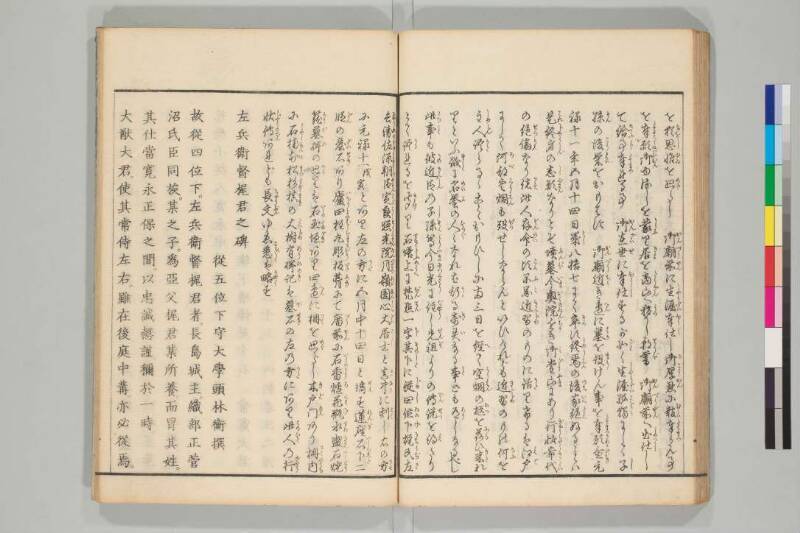
翻刻
【右丁】
を猶(なを)思惟(しゆゐ)を廻(めぐ)らし 御廟前(おんべうぜん)に生涯(しやうがい)奉仕(ほうし)し御厚恩(ごこうおん)に報(むくい)奉(たてまつ)らん事
を奉(たてまつり)_レ願(ねがひ)御(おん)ゆるしを蒙(かうふ)り居(きよ)を當山(たうざん)へ移(うつ)し朝暮(てうぼ) 御廟前(おんべうぜん)へ出仕(しゆつし)し
て給事(きふじ)奉(たてまつ)れる事 御在世(おんざいせ)に奉仕(ほうし)するが如(ごと)く生涯(しやうがい)孤獨(こどく)にして子(し)
孫(そん)の後栄(こうえい)をおもはず 御廟(おんべう)近(ちか)き邊(へん)に墓(はか)を設(まう)けん事を奉(たてまつり)_二願置(ねかひおき)_一元
禄十一年五月十四日 歳(とし)八拾七にて卒(そつ)す終焉(しゆうえん)の後(のち)家(いへ)絶(たえ)ぬることは
是(これ)終身(じゆうしん)の志願(しぐわん)なりとぞ墳墓(ふんぼ)今(いま)奥院(おくのゐん)近(ちか)き御堂山(みだうやま)にあり行状(ぎやうじやう)希代(きたい)
の絶倫(せつりん)なり偖(さて)此人 存命(ぞんめい)の頃(ころ)不圖(ふと)近習(きんじゆ)のものに話(かた)りけるは江戸(えど)
にして阿部空烟(あべくうえん)も歿(ぼつ)せしならんといひけれども近習(きんじゆ)のもの何(なに)を
主人(しゆじん)語(かた)らるゝことゝおもひしに両三日を經(へ)て空烟(くうえん)の柩(ひつ)を荷(にな)ひ來(きた)れ
りといふ誠(まこと)に名誉(めいよ)の人(ひと)〻(〴〵)なれば斯(かゝ)る奇異(きい)なる事(こと)ども有(あり)しなるべし
此事(このこと)も彼(かの)近臣(きんしん)の子孫等(しそんとう)今(いま)日光(につくわう)に住(ぢゆう)し先祖(せんぞ)よりの傳説(でんせつ)を得(え)たり
とて語(かた)れるを聞(きけ)り石塔上(せきたふのうへ)に梵點(ぼんてん)一 字(じ)其下(そのした)に従四位下(じゆしゐのげ)梶氏左(かぢうぢさ)
【左丁】
兵衛佐(ひやうゑのすけ)源朝臣定良(みなもとのあそんさだよし)照光院(せうくわんゐん)月嶺圓心大居士(ぐわつれいゑんしんだいこじ)と真中(まなか)に𠜇(こく)し右の方(かた)
に元禄十一《割書:戊| 寅》とあり左の方(かた)に五月中十四日と鐫(せん)す蓮座石下(れんざいしのした)二
段(だん)の臺石(だいせき)あり廬(いほり)四柱(よつばしら)丸彫(まるぼり)板葺(いたふき)にて庿前(べうぜん)に石香爐(いしのかうろ)花瓶(くわへい)水盥(すゐくわん)石燈(いしどう)
籠(ろう)墓碑(ぼひ)の廻(めぐ)りは石玉垣(いしのたまがき)あり四 邊(へん)に柵(さく)を廻(めぐ)らし木戸門(きどもん)あり柵内(さくのうち)
に石楠花(しやくなんげ)松(まつ)杉(すぎ)槙(まき)の大樹(たいじゆ)有(あり)碑記(ひのき)は墓石(ぼせき)の左の方(かた)にあり此人(このひと)の行(ぎやう)
状傳(じやうのでん)あれども長文(ちやうぶん)ゆゑ悉(こと〴〵く)は略(りやく)す
左兵衛督梶君之碑
從五位下守大學頭林衡撰
故從四位下。左兵衛督梶君者。長島城主。織部正菅
沼氏臣同𫞀。某之子。爲亞父梶君某所養。而冐其姓。
其仕當寛永正保之間。以忠誠慤謹。彌於一時。
大猷大君。使其常侍左右。雖在後庭中冓。亦必從焉。
現代語訳
【右丁】
を、なお思慮を巡らし、御廟前に生涯奉仕して御厚恩に報いたてまつらん事を願い、お許しを蒙り、居を当山へ移し、朝夕御廟前へ出仕して給事たてまつった事は、御在世に奉仕するが如く、生涯独身にして子孫の後栄を思わず、御廟近きあたりに墓を設けん事を願い置いた。元禄十一年五月十四日、歳八十七にて卒す。終焉の後、家が絶えることは、これ終身の志願なりとぞ。墳墓今、奥院近き御堂山にあり。行状希代の絶倫なり。さてこの人存命の頃、ふと近習のものに話したのは、江戸にして阿部空烟も歿せしならんと言ったけれども、近習のもの何を主人語らるることと思ったが、両三日を経て空烟の柩を担い来たりという。誠に名誉の人々なれば、かかる奇異なる事どもありしなるべし。この事も、かの近臣の子孫等今日光に住し、先祖よりの伝説を得たりとて語れるを聞けり。石塔上に梵字一字、その下に従四位下梶氏左
【左丁】
兵衛佐源朝臣定良照光院月嶺円心大居士と真中に刻し、右の方に元禄十一(戊寅)とあり、左の方に五月中十四日と彫す。蓮座石の下、二段の台石あり。庵四柱、丸彫り、板葺きにて、廟前に石香炉、花瓶、水盤、石灯籠。墓碑の回りは石玉垣あり。四辺に柵を巡らし木戸門あり。柵内に石楠花、松、杉、槙の大樹あり。碑記は墓石の左の方にあり。この人の行状伝あれども長文ゆえ悉くは略す。
左兵衛督梶君之碑
従五位下守大学頭林衡撰
故従四位下左兵衛督梶君者、長島城主織部正菅沼氏臣同姓某之子、為亜父梶君某所養、而冒其姓、其仕当寛永正保之間、以忠誠慤謹、弥於一時、大猷大君、使其常侍左右、雖在後庭中冓、亦必従焉。
英語訳
【Right Page】
He further contemplated and wished to serve for his entire life before the Sacred Mausoleum to repay the great benevolence. Receiving permission, he moved his residence to this mountain and served daily at the Sacred Mausoleum, attending to duties as if serving during his lord's lifetime. He remained celibate throughout his life, not thinking of the prosperity of children and grandchildren, and had previously requested that his grave be established near the Sacred Mausoleum. He died on the 14th day of the 5th month of Genroku 11 at the age of eighty-seven. That his family line would end after his death was his lifelong wish. His tomb is now located on Midō-yama near the Inner Sanctuary. His conduct was of rare and exceptional character. Now, when this person was still alive, he casually mentioned to his close attendants that Abe Kūen in Edo had probably also died. Though the close attendants wondered what their master was talking about, within two or three days, Kūen's coffin was indeed carried in. Truly, being men of such honor, such extraordinary events must have occurred. This story too was heard from descendants of those close retainers who now live in Nikkō, saying they had received this legend from their ancestors. On top of the stone pagoda is one Sanskrit character, and below it "Junior Fourth Rank, Kaji-uji Sa-"
【Left Page】
"hyōe no suke Minamoto no Asomi Sadayoshi, Shōkōin Getsurei Enshin Daikoji" is carved in the center, with "Genroku 11 (Tsuchinoe-Tora)" on the right side, and "14th day of the 5th month" carved on the left side. Below the lotus seat stone are two tiers of foundation stones. There is a hermitage with four pillars, round carving, and board roofing, with stone incense burner, flower vase, water basin, and stone lantern in front of the mausoleum. Around the grave monument is a stone sacred fence. Fencing surrounds the four sides with a wooden gate. Within the fence are large trees of rhododendron, pine, cedar, and maki. The commemorative inscription is located to the left of the gravestone. Though there exists a biographical record of this person's deeds, it is omitted in its entirety due to its length.
Monument to Sahyōe no Kami Lord Kaji
Written by Hayashi Kō, Junior Fifth Rank, Acting Director of the Bureau of Education
The late Junior Fourth Rank Sahyōe no Kami Lord Kaji was the son of a retainer of the same surname under Oribe no Kami Suganuma, lord of Nagashima Castle. He was adopted by Lord Kaji and took his surname. He served during the Kan'ei and Shōhō periods with loyalty, sincerity, and careful diligence that surpassed others of his time. The Great Lord Daiyū had him constantly attend at his side, and even when in the inner palace quarters, he would always accompany him.