翻刻
【右丁】
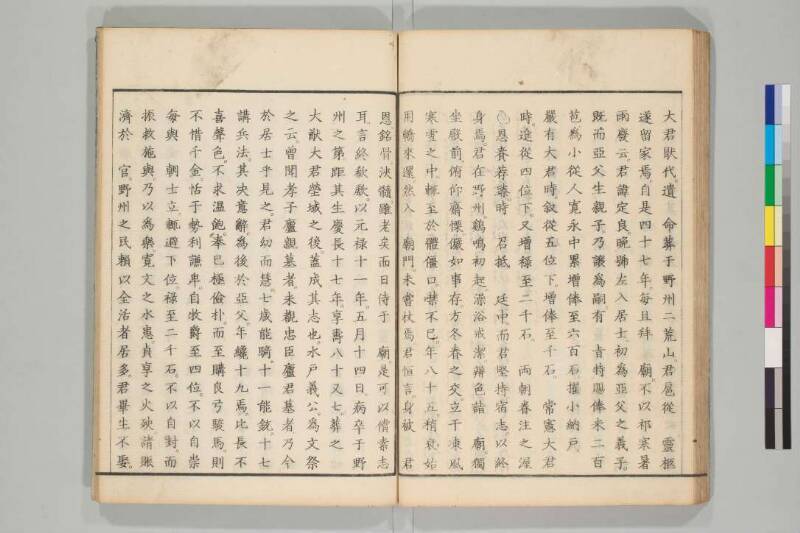
大君猒代。遺 命葬于野州二荒山。君扈從 靈柩
遂留家焉。自是四十七年。每且拜 廟。不以祁寒暑
雨廢云。君諱定良。晩號左入居士。初爲亞父之義子。
既而亞父生親子。乃譲爲嗣。有 㫖特賜俸米二百
苞。爲小從人寛永中累增俸至六百石。擢小納戸。
嚴有大君時。叙從五位下。增俸至千石。 常憲大君
時。進從四位下。又增禄至二千石。 両朝眷注之渥
▢恩賚荐臻。時 召抵 廷中。而君堅持宿志。以終
身焉。君在野州。鷄鳴初起。澡浴戒潔。辨色詣 廟。獨
坐殿前。俯仰齋慄。儼如事存。方冬春之交。立干凍風
寒雪之中。輒至於體僵口。噤不已。年八十五。稍衰。始
用轎來還。然入 廟門。未嘗杖焉。君恒言。身被 君
【左丁】
恩。銘骨。浹髓。雖老矣而日侍于 廟。是可以償素志
耳。言終欷歔。以元禄十一年。五月十四日。病卒于野
州之第。距其生慶長十七年。享壽八十又七。葬之
大猷大君塋域之後。蓋成其志也。水戸義公。爲文祭
之云。曾聞孝子廬親墓者。未覩忠臣廬君墓者。乃今
於居士乎見之。君幼而慧。七歳能騎。十一能鉉。十七
講兵法。其決意辭。爲後於亞父。年纔十九焉。比長不
喜聲色。不求温飽。奉巳極儉朴。而至購良亏駿馬。則
不惜千金。恬于勢利譙卑。自牧爵至四位。不以自崇
每與 朝士立。輒避下位。禄至二千石。不以自封。而
振救施與。乃以爲樂。寛文之水患。貞享之火殃。請賑
濟於 官。野州之民賴以全活者居多。君畢生不娶。
現代語訳
【右丁】
大君が代を終えたとき、遺命により野州二荒山に葬られた。君は霊柩に扈従し、ついにそこに家を留めた。これより四十七年間、毎朝廟に拝し、厳寒酷暑の雨天であっても怠ることがなかったという。君の諱は定良、晩年は左入居士と号した。初め養父の義子となった。やがて養父に実子が生まれると、その子に家督を譲った。特別の御沙汰により俸米二百俵を賜り、小従人となった。寛永中に累次俸禄を増され六百石に至る。小納戸に抜擢された。厳有大君の時、従五位下に叙せられ、俸を増して千石に至る。常憲大君の時、従四位下に進み、また禄を増して二千石に至る。両朝の眷注の厚きこと、恩賚しきりに至る。時に廷中に召し抵かれたが、君は宿志を堅持し、これを以て終身とした。君が野州にあって、鶏鳴とともに初めて起き、沐浴して身を清め、夜明けとともに廟に詣で、独り殿前に坐し、俯仰斎慄し、儼として生存の如く事えた。冬春の交わりの頃、凍風寒雪の中に立ち、しばしば体が硬直し口が噤んで止まないに至った。年八十五でやや衰え、初めて駕籠を用いて往来したが、しかし廟門に入るときは、未だかつて杖を用いなかった。君は恒に言った、「身は君恩を被り、骨に銘じ髄に浹した。老いたりといえども日々廟に侍するは、これ以て素志を償うべき
【左丁】
のみ」と。言い終わって欷歔した。元禄十一年五月十四日、野州の第で病により卒した。その生まれた慶長十七年からの距離は、享年八十七であった。大猷大君の塋域の後に葬られた。蓋しその志を成したのである。水戸義公が文を作ってこれを祭ったという。「かつて孝子が親の墓に廬するを聞いたが、忠臣が君の墓に廷するを見たことはない。いま居士においてこれを見る」と。君は幼にして慧く、七歳にして能く騎し、十一にして能く弦し、十七にして兵法を講じた。その決意して養父の後嗣となることを辞したのは、年わずか十九であった。長ずるに及んで声色を喜ばず、温飽を求めず、身を奉ずること極めて倹朴であった。しかし良馬駿馬を購うに至っては、千金を惜しまなかった。勢利に恬淡で謙卑に自ら牧し、爵位四位に至るも、以て自ら崇めることなく、朝士と立つ毎に、いつも下位を避けた。禄二千石に至るも、以て自ら封ずることなく、振救施与を以て楽しみとした。寛文の水患、貞享の火災の時、官に賑済を請い、野州の民でこれに頼って全活した者が多くいた。君は畢生娶らず、
英語訳
【Right Page】
When the Great Lord ended his reign, by his dying command he was buried at Futarasan in Shimotsuke Province. The lord escorted the sacred coffin and finally established his residence there. From this time for forty-seven years, he bowed at the mausoleum every morning, never neglecting this duty even in severe cold, heat, or rain. The lord's personal name was Sadayoshi, and in his later years he took the Buddhist name Sanyū Koji. Initially he became the adoptive son of his foster father. When the foster father later had a biological son, he yielded the succession to that child. By special imperial decree he was granted a stipend of 200 hyō of rice and became a minor attendant. During the Kan'ei period his stipend was repeatedly increased to 600 koku. He was promoted to minor treasurer. During the time of Lord Gen'yū, he was granted Junior Fifth Rank and his stipend increased to 1,000 koku. During the time of Lord Jōken, he advanced to Junior Fourth Rank and his stipend was again increased to 2,000 koku. The favor and attention of both reigns was profound, with honors and rewards arriving continuously. Though he was sometimes summoned to court, the lord firmly maintained his original aspiration and made this his life's work. While the lord was in Shimotsuke Province, he would rise at cockcrow, bathe and purify himself, visit the mausoleum at dawn, sit alone before the hall, bow with reverent awe, solemnly serving as if his lord were still alive. During the transition from winter to spring, standing in freezing wind and cold snow, he would often become so stiff that his body froze and his mouth could not speak. At age eighty-five he grew somewhat weak and began using a palanquin to travel, but when entering the mausoleum gate, he never used a walking stick. The lord constantly said, "Having received my lord's benevolence, engraved in my bones and penetrating my marrow, though I am old, to attend the mausoleum daily is how I can repay my original aspiration."
【Left Page】
After finishing these words, he would sigh deeply. On the 14th day of the 5th month of Genroku 11, he died of illness at his residence in Shimotsuke Province. From his birth in Keichō 17, he lived eighty-seven years. He was buried behind the burial ground of the Great Lord Daiyū. Thus his aspiration was fulfilled. Duke Yoshimune of Mito composed a memorial text for him, saying: "I have heard of filial children who built huts at their parents' graves, but I have never seen a loyal retainer who built a hut at his lord's grave. Now I see this in this lay monk." The lord was intelligent from youth: at seven he could ride, at eleven he could use a bow, at seventeen he studied military strategy. His decision to decline becoming his foster father's heir was made when he was only nineteen years old. Upon reaching maturity, he took no pleasure in music and women, sought neither warmth nor satiation, and was extremely frugal in his personal maintenance. However, when it came to purchasing fine horses, he would not begrudge a thousand gold pieces. Indifferent to power and profit, he conducted himself with humility. Though his rank reached Fourth Rank, he did not use it for self-aggrandizement. Whenever he stood with court nobles, he would always defer to a lower position. Though his stipend reached 2,000 koku, he did not use it for personal luxury, but found joy in charitable relief and giving. During the floods of Kanbun and the fires of Jōkyō, he petitioned the government for disaster relief, and many people of Shimotsuke Province relied on this to survive. The lord never married throughout his life.