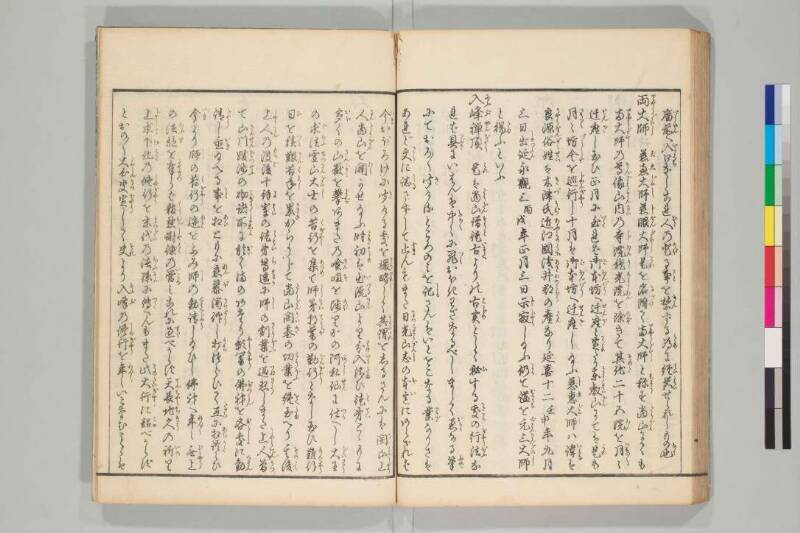
翻刻
【右丁】
庿前(べうぜん)へ入口(いりくち)なしこれ人(ひと)の登(のぼ)る事(こと)を禁(きん)ずる為(ため)に經営(けいえい)せられしもの也(なり)
両大師(りやうだいし) 慈恵大師(じゑだいし)慈眼大師(じげんだいし)是(これ)を名附(なづけ)て両大師(りやうだいし)と称(しよう)す當山(たうざん)にても
両大師(りやうだいし)の尊像(そんざう)山内(さんない)の寺院(じゐん)龍光院(りうくわうゐん)を除(のぞ)きて其他(そのた)二十五 院(ゐん)を月(つき)〻(〳〵)
迁座(せんざ)し玉ひ正月に至(いた)れば御本坊(ごほんばう)へ迁座(せんざ)と定(さだめ)たり東叡山(とうえいざん)にては是(これ)も
月(つき)〻(〳〵)坊舎(ばうしや)を巡行(じゆんぎやう)し十月は御本坊(ごほんばう)へ迁座(せんざ)し給ふ慈恵大師(じゑだいし)は諱(いみな)は
良源(りやうげん)俗姓(ぞくせい)は木津氏(きづうぢ)近江國(あふみのくに)浅井郡(あさゐのこほり)の産(さん)なり延喜十二《割書:壬| 申》年九月
三日 出誕(しゆつたん)永觀三《割書:丙| 戌》年正月三日 示寂(じじやく)し給ふ仍(よつ)て諡(おくりな)を元三大師(ぐわんさんだいし)
と賜(たま)ふといふ
入峰禅頂(にふぶぜんぢやう) 是(これ)は當山(たうざん)僧徒(そうと)古(いにしへ)よりの古実(こじつ)として秘(ひ)する處(ところ)の行法(ぎやうぼふ)な
れば具(つぶさ)にいはんは中(なか)〻(〳〵)に罪(つみ)おほきわざなるべしまして愚(おろか)なる筆(ふで)
にておろ〳〵聞(き)けるところのみを記(しる)さんはいとをこなる業(わざ)なりさは
あれど更(さら)に誌(しる)さずして止(やま)んもまた日光山志(につくわうざんし)の本意(ほい)にあらざれば
【左丁】
今(いま)おぼろげに聞(きゝ)ける處を撮略(さつりやく)して其謂(そのいはれ)をしるさんには開山上(かいさんしやう)
人(にん)當山(たうざん)を闢(ひら)かせ給ふ时(とき)初(はじめ)は出流山(いづるさん)より分入(わけいり)給(たま)ひ徒㐧(とてい)とゝもに
多(おほ)くの山嶽(さんがく)を攀(よぢ)あまたの𡸴(けん)岨(そ)を陟(のぼ)りかの阿私仙(あしせん)に仕(つか)へし大王(だいわう)
の求法(ぐほふ)雪山大士(せつさんだいし)の苦行(くぎやう)を集(あつめ)て師弟(してい)朝暮(てうぼ)の勤行(ごんぎやう)となし玉ひ難行(なんきやう)
日(ひ)を積(つみ)艱苦(かんく)年(とし)を累(かさね)からうじて當山(たうざん)開基(かいき)の㓛業(こうげふ)を終(をへ)玉(たま)へり其後(そのゝち)
上人(しやうにん)の没後(もつご)十 餘(よ)輩(はい)の徒㐧等(とていら)遥(はるか)に師(し)の創業(さうげふ)を追想(つゐさう)しまた上人(しやうにん)曽(かつ)
て山川(さんせん)跋涉(ばつせふ)の砌(みぎり)諸所(しよしよ)に於(おい)てまのあたり影響(やうきやう)の佛神(ぶつしん)を各處(かくしよ)に勸(くわん)
請(じやう)し置(おき)給へる事(こと)を相(あひ)ともに恋慕(れんぼ)渇仰(かつがう)し打(うち)つどひて互(たがひ)に相語(あひかた)らひ
今(いま)より師(し)の苦行(くぎやう)の迹(あと)をふみ師(し)の勸請(くわんじやう)し給ひし佛神へ年(ねん)〻(〳〵)無上(むしやう)
の法施(ほふせ)を奉(たてまつ)らば報恩謝德(はうおんしやとく)の営(いとな)みこれに過(すぐ)べからず天長地久(てんちやうちきう)の祈(いの)り
上求(じやうぐ)下化(げくわ)の修行(しゆぎやう)を末代(まつだい)の法孫(ほふそん)に傳(つた)へんもまた此(この)大行(たいぎやう)に報(こゆ)べからず
とおの〳〵大心(たいしん)決定(けつぢやう)して夫(それ)より入峰(にふぶ)の修行(しゆぎやう)を年(ねん)〻(〳〵)いとなむことゝは
現代語訳
【右丁】
廟前へ入口なし。これ人の登ることを禁ずるために経営されしものなり
両大師 慈恵大師、慈眼大師、これを名付けて両大師と称す。当山にても
両大師の尊像、山内の寺院、龍光院を除きてその他二十五院を月々
遷座し給い、正月に至れば御本坊へ遷座と定めたり。東叡山にてはこれも
月々坊舎を巡行し、十月は御本坊へ遷座し給う。慈恵大師は諱は
良源、俗姓は木津氏、近江国浅井郡の産なり。延喜十二《壬申》年九月
三日出誕、永観三《丙戌》年正月三日示寂し給う。仍って諡を元三大師
と賜うという
入峰禅頂 これは当山僧徒古よりの古実として秘する処の行法な
れば具にいわんは中々に罪多きわざなるべし。まして愚なる筆
にておぼろおぼろ聞けるところのみを記さんはいと愚なる業なり。さは
あれど更に誌さずして止まんもまた日光山志の本意にあらざれば
【左丁】
今おぼろげに聞ける処を撮略してその謂れを記さんには、開山上
人当山を闢かせ給う時、初は出流山より分入り給い、徒弟とともに
多くの山岳を攀じ、あまたの険阻を登り、かの阿私仙に仕えし大王
の求法、雪山大士の苦行を集めて師弟朝暮の勤行となし給い、難行
日を積み、艱苦年を累ね、辛うじて当山開基の功業を終え給えり。その後
上人の没後、十余輩の徒弟等、遥に師の創業を追想し、また上人かつ
て山川跋渉の砌、諸所において間の当たり影響の仏神を各処に勧
請し置き給える事を相ともに恋慕渇仰し、打ち集いて互いに相語らい、
今より師の苦行の跡を踏み、師の勧請し給いし仏神へ年々無上
の法施を奉らば、報恩謝徳の営みこれに過ぐべからず。天長地久の祈り、
上求下化の修行を末代の法孫に伝えんもまたこの大行に報ゆべからず
とおのおの大心決定して、それより入峰の修行を年々営むこととは
英語訳
【Right Page】
There is no entrance to the front of the mausoleum. This was designed to prohibit people from climbing up
The Two Great Masters Jie Daishi and Jigen Daishi, these are named and called the Two Great Masters. At this mountain too,
the sacred images of the Two Great Masters are moved monthly among the temples within the mountain compound, excluding Ryūkōin, to the other twenty-five temples,
and it is established that they are moved to the main temple when January arrives. At Tōeizan as well,
they make monthly rounds of the temple quarters, and in October they are moved to the main temple. Jie Daishi's personal name was
Ryōgen, his secular surname was Kizu, and he was born in Asai District, Ōmi Province. He was born on the
third day of the ninth month of Engi 12 (Year of the Water Monkey), and passed away on the third day of the first month of Eikan 3 (Year of the Fire Dog). Therefore his posthumous name
is said to have been granted as Ganzan Daishi
Mountain Asceticism and Meditation Practice This is an ascetic practice that the monks of this mountain have kept secret as an ancient tradition from olden times,
so to speak of it in detail would be a most sinful act. Moreover, to record only what I have vaguely heard with my foolish brush
would be a most foolish undertaking. Even so,
to cease entirely without recording it would also not accord with the true intention of the Nikkōzan-shi
【Left Page】
Now, to briefly summarize what I have vaguely heard and record its meaning: when the founding
master opened this mountain, initially he entered from Mount Izuru, and together with his disciples
climbed many mountain peaks and ascended numerous steep precipices. Gathering the Dharma-seeking of the great king who served the hermit Asi
and the austerities of the Great Being of the Snow Mountains, he made them the morning and evening practices of master and disciples. Accumulating difficult practices
day by day and hardships year by year, he finally completed the meritorious work of founding this mountain. Thereafter,
after the master's death, more than ten disciples, looking back upon their teacher's founding work from afar, and also remembering how the master had once
during his travels through mountains and rivers directly witnessed miraculous buddhas and deities at various places and invited them to various locations,
together felt longing and reverent admiration, gathered and spoke with one another:
"If from now on we follow in the footsteps of our master's austerities and annually offer supreme
Dharma gifts to the buddhas and deities that our master invited, no endeavor of gratitude and appreciation of virtue could surpass this. To transmit prayers for the longevity of heaven and earth,
and the practice of seeking enlightenment above and teaching below to future generations of Dharma descendants would also be incomparable to this great practice."
Each making this great resolution, from then on they undertook the practice of mountain asceticism annually.